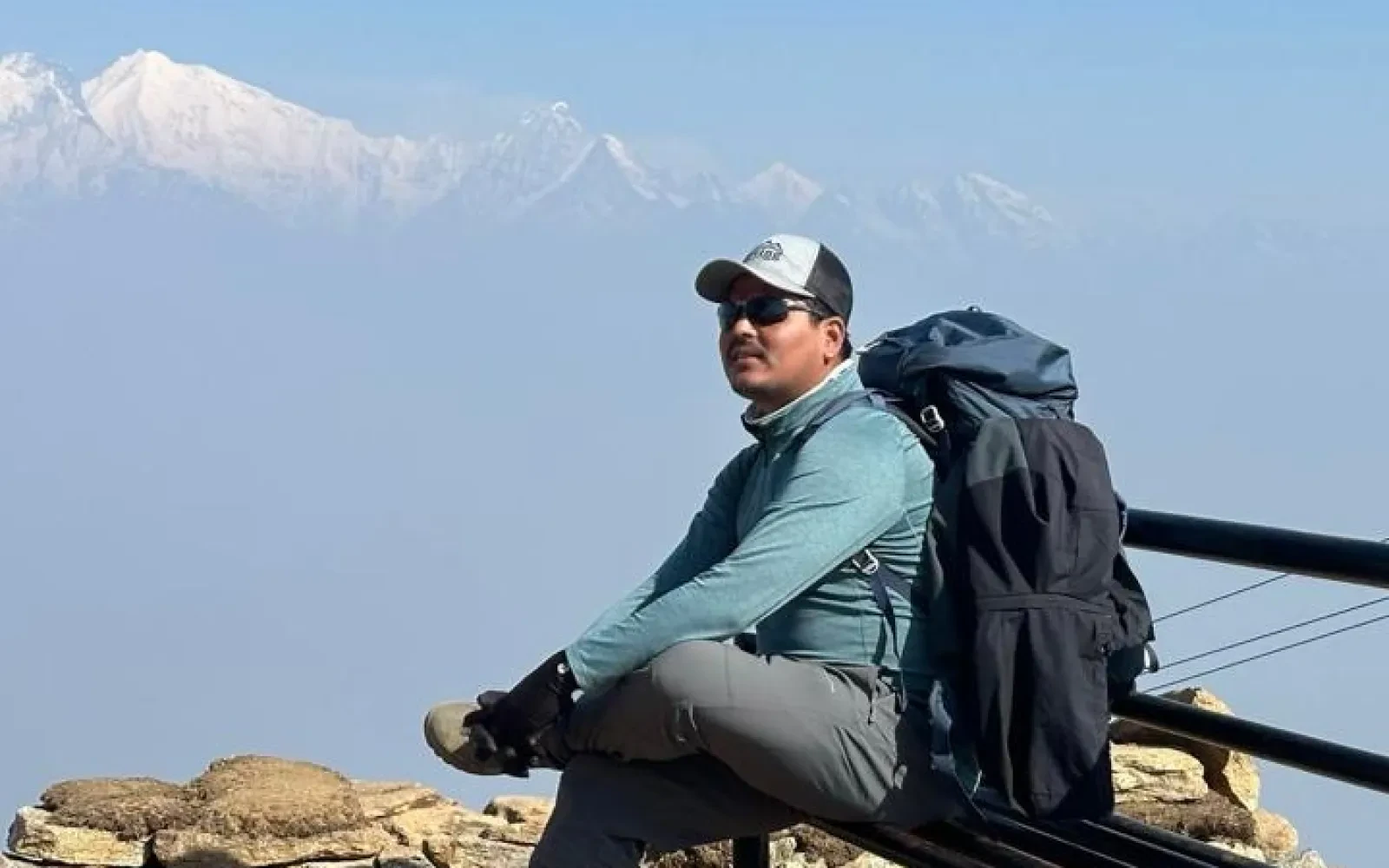
There is a moment—usually somewhere between the stone steps of Bamboo and the damp, narrow jaws of Deurali—when the Annapurna trail stops feeling like a pleasant mountain walk and starts feeling like an initiation. The trees thin out. The moisture-laden air of the lower Modi Khola valley grows crisp, biting, and noticeably light. You take a deep breath, expecting the rich scent of damp earth and moss, but instead, you catch the sterile, cold metallic tang of pure altitude.
You are entering the sanctuary.
Most people who strap on boots in Pokhara speak about reaching Annapurna Base Camp (ABC) at 4,130 meters as the ultimate prize. But ask anyone who has actually walked these stone paths, sat in the frigid dining rooms of the upper teahouses, and listened to the valley breathe at night: the true emotional core of the journey isn't ABC.
It’s Machhapuchhre Base Camp (MBC).
Sitting at 3,700 meters above sea level, MBC isn't just a rest stop or an acclimatization check-point before the final push. It is a cathedral of rock and ice built around a mountain that humans are forbidden to touch.
To understand Machhapuchhre (6,993 m), you have to understand its presence.
From the lakeside cafes in Pokhara, it dominates the northern skyline—a sleek, razor-sharp pyramid that pierces the sky like a spearhead. Locals call it the "Fishtail" because of its double summit, which resembles the tail of a fish when viewed from the south.
But up here at base camp, the famous tail hides. From directly below, the mountain morphs into a sheer, vertical wall of fluted ice, jagged rock, and dramatic avalanche chutes.
700m Alpine Amphitheater)
In a world where almost every peak of significance has been mapped, scaled, and littered with oxygen bottles, Machhapuchhre remains sacred. It is the abode of Lord Shiva in local Hindu tradition, and the Gurung people of the valley have long held it in deep reverence.
In 1957, a British expedition led by Jimmy Roberts made the only serious attempt on the peak. They turned back just 150 vertical feet short of the summit out of respect for a promise made to the King of Nepal. Shortly after, the mountain was closed to climbing permanently.
That prohibition gives MBC a completely different energy than Everest or Annapurna Base Camp. There are no crampons drying outside, no climbing permits being checked, no commercial teams preparing to fix ropes. The mountain stands untouched, pristine, and faintly ominous. You don't come to MBC to conquer anything. You come to sit at its feet and feel remarkably small.
Getting to Machhapuchhre Base Camp isn't about endurance alone; it’s about watching the earth shift beneath your feet over four or five days.
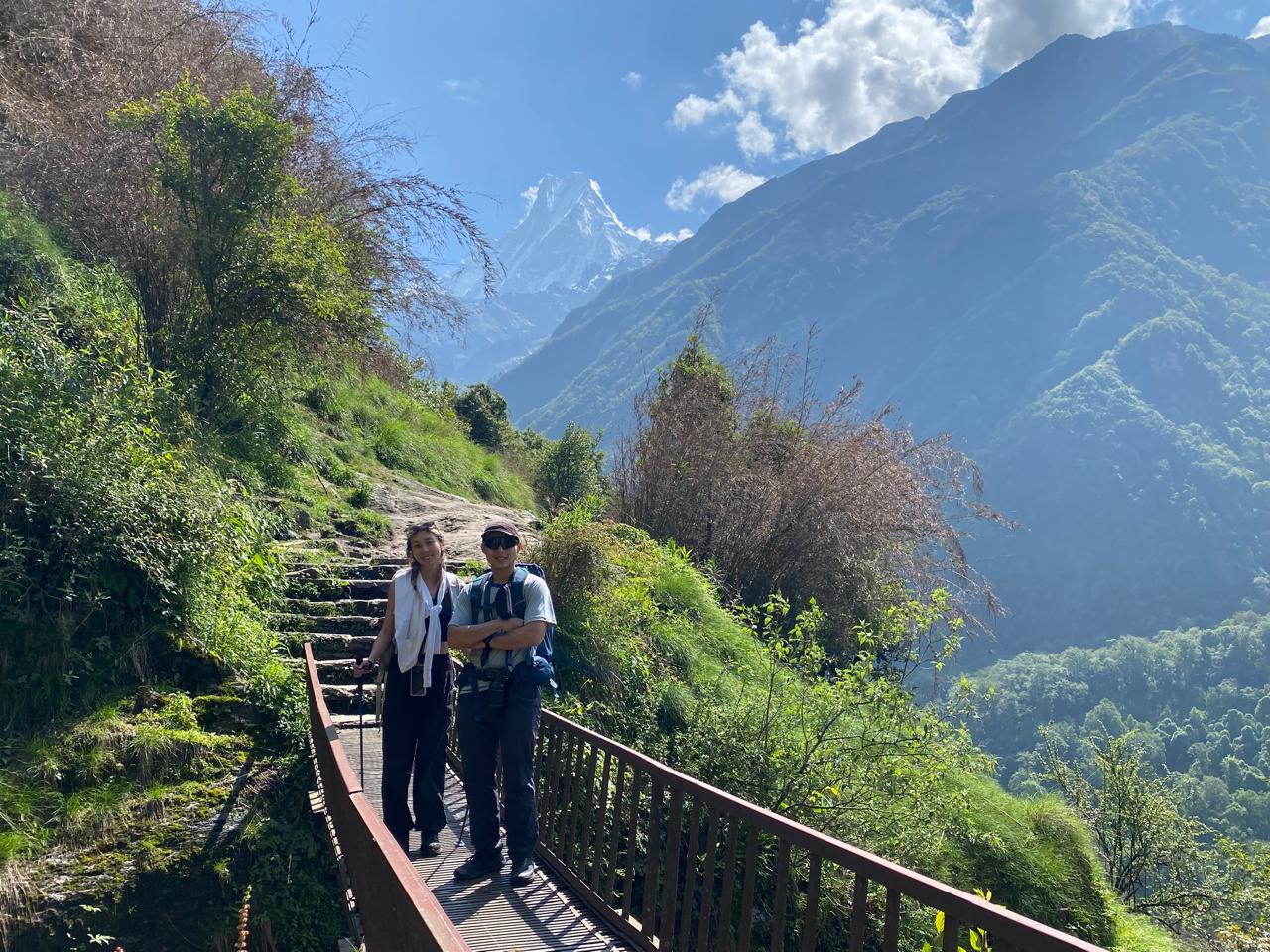
The journey starts softly in the lowlands—terraced fields of millet, warm breeze, banana trees, and the constant rush of the river. But soon comes Chhomrong, a massive village clinging to a hillside. To leave Chhomrong, you must descend thousands of stone steps to cross the river, only to climb thousands more on the other side. Your knees will learn the true meaning of the word relentless.
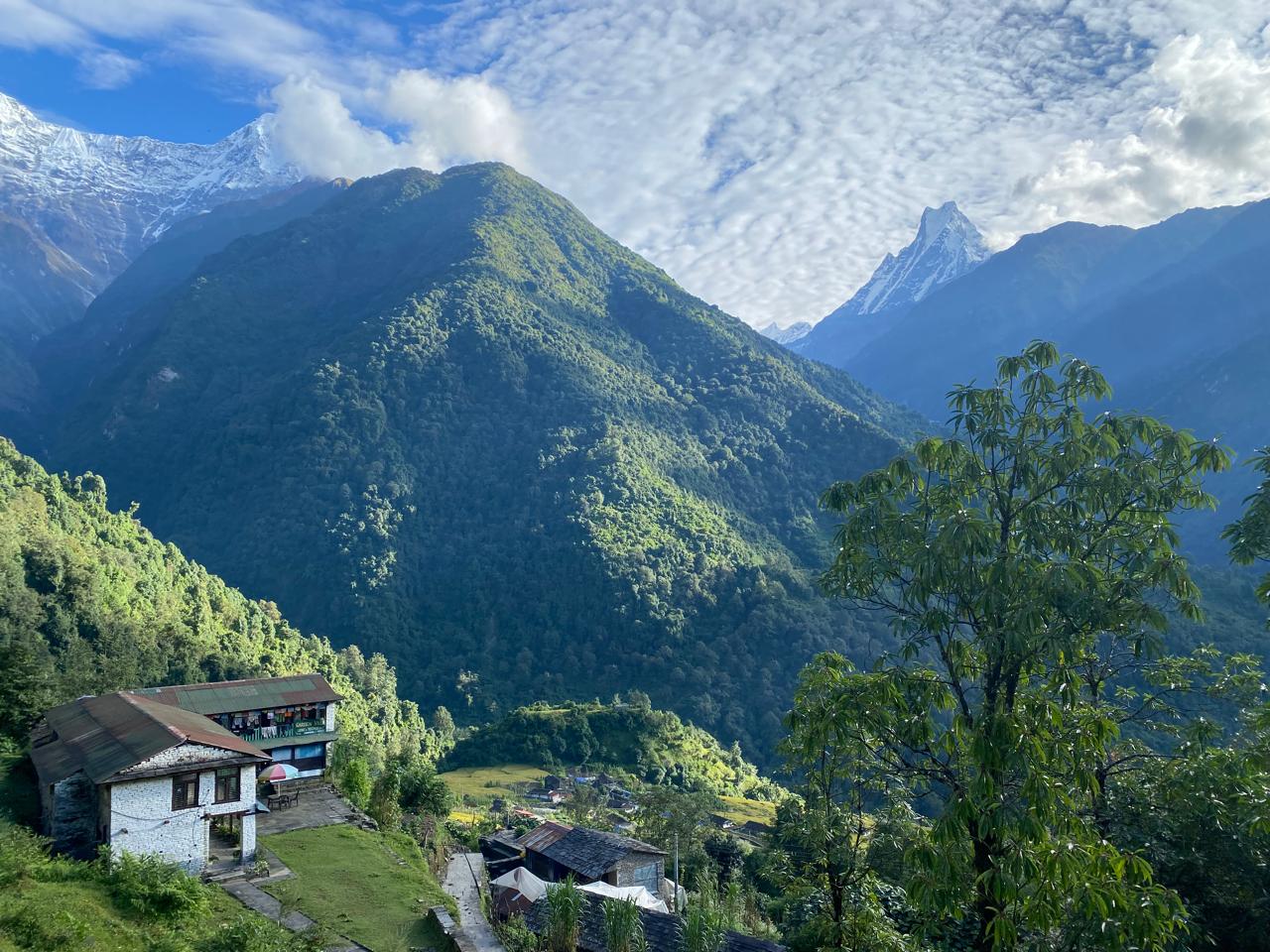
Past Chhomrong, the world narrows. You enter a dense canopy of rhododendron, oak, and bamboo forests. The Modi Khola river roars in the gorge below. The air becomes humid and shadowy, cool even under the sun. As you push past Himalaya (2,920 m) and Deurali (3,200 m), the trees suddenly vanish.
Past Deurali, you break through the tree line into a glacial canyon. The vertical walls of the valley press in close. In winter and early spring, this stretch is notorious for avalanche paths where giant slabs of snow slide off Hiunchuli's flanks. The trail picks its way over boulder fields and frozen streams.
And then, as you turn a bend in the canyon, the world opens up.
The steep walls fall away into a massive, bowl-shaped amphitheater. Ahead sit a handful of blue-roofed teahouses dwarfed by towering walls of stone and ice. You’ve made it to MBC.
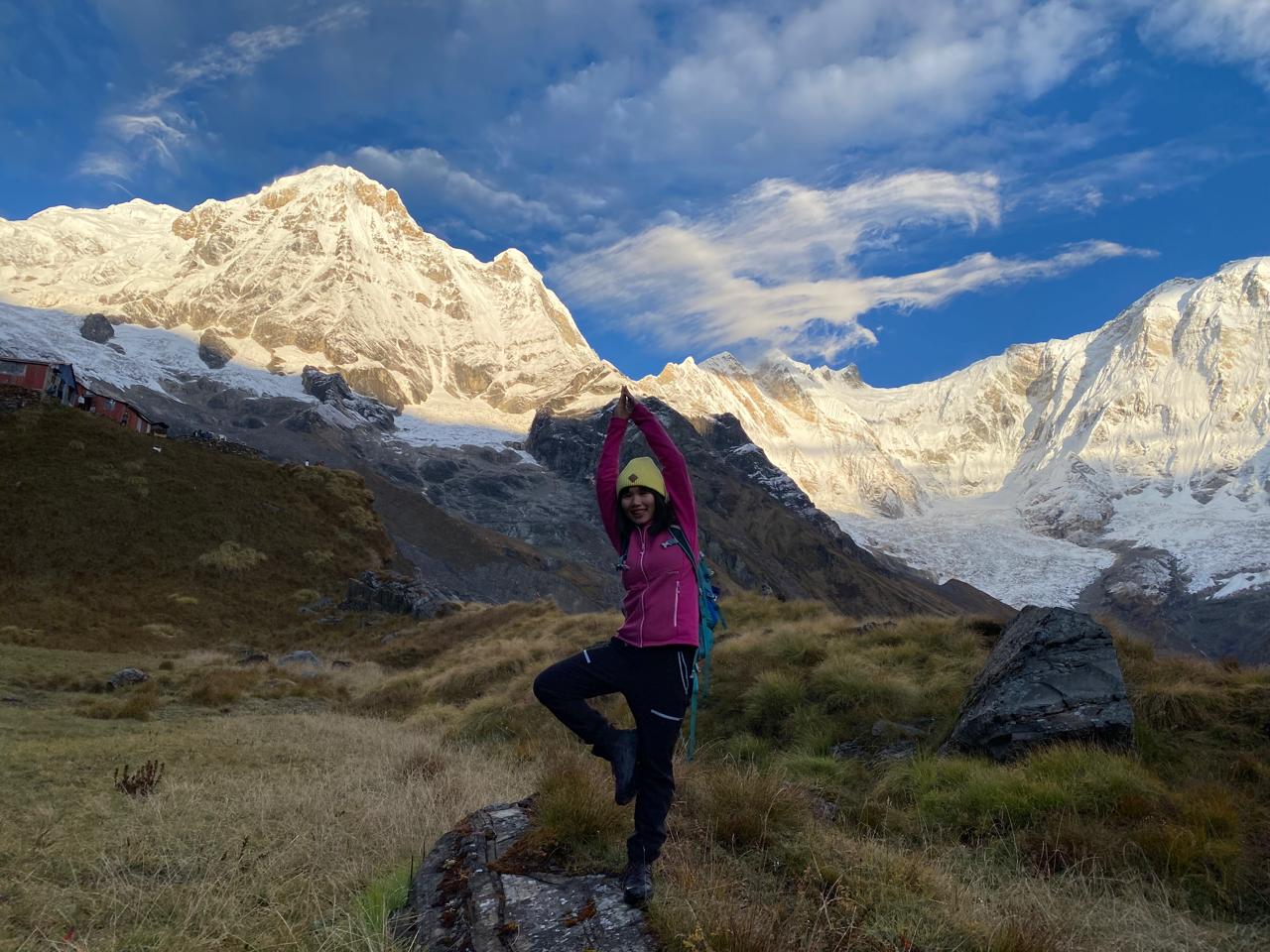
Living at Machhapuchhre Base Camp is an exercise in stripped-down simplicity. Everything is basic, functional, and intensely vivid.
You usually pull into camp between 1:00 PM and 3:00 PM. Your legs are heavy, your lungs are working twice as hard for every breath, and your shirt is damp with sweat. The moment you stop walking, the mountain air catches up with you.
You drop your pack on a bench outside a teahouse, unlace your boots, and order a pot of hot lemon ginger honey tea. As you hold the warm glass between your hands, you look up. Machhapuchhre doesn't look like a distant peak anymore—it feels like a wall towering right over your head.
By 4:00 PM, something magical and eerie happens almost every day. A dense, thick fog creeps up the valley from the lower forests, swallowing the base camp in a blanket of white.
The temperature plummets instantly. What was a t-shirt afternoon becomes a four-layer evening. The mountains vanish behind the mist, and the world shrinks to just you, the teahouse, and the sound of wind whistling around the tin roofs.
Don't expect luxury. Rooms at MBC are unheated, small wooden boxes with twin cots and foam mattresses. The walls are paper-thin. Water in the pipes often freezes overnight. But when you step into the central dining hall, lit by solar lanterns and warmed by a central kerosene or yak-dung stove, it feels like the cozy place on earth.
In the dining room, language barriers disappear. Trekkers from South Korea, France, Nepal, Canada, and Brazil crowd around long wooden tables.
Everyone orders the same thing: Dal Bhat (steamed rice, lentil soup, spiced potatoes, and wilted greens).
There is a local saying on the trail: "Dal Bhat Power, 24 Hour." At 3,700 meters, it isn't just a catchy phrase—it’s a biological necessity. Your body burns calories at a furious rate just staying warm and producing red blood cells. When the lodge owner walks around with a giant pot offering free refills of rice and lentils, nobody turns it down.
If you brave the sub-zero chill and step outside around 9:00 PM after the mist clears, prepare to lose your breath.
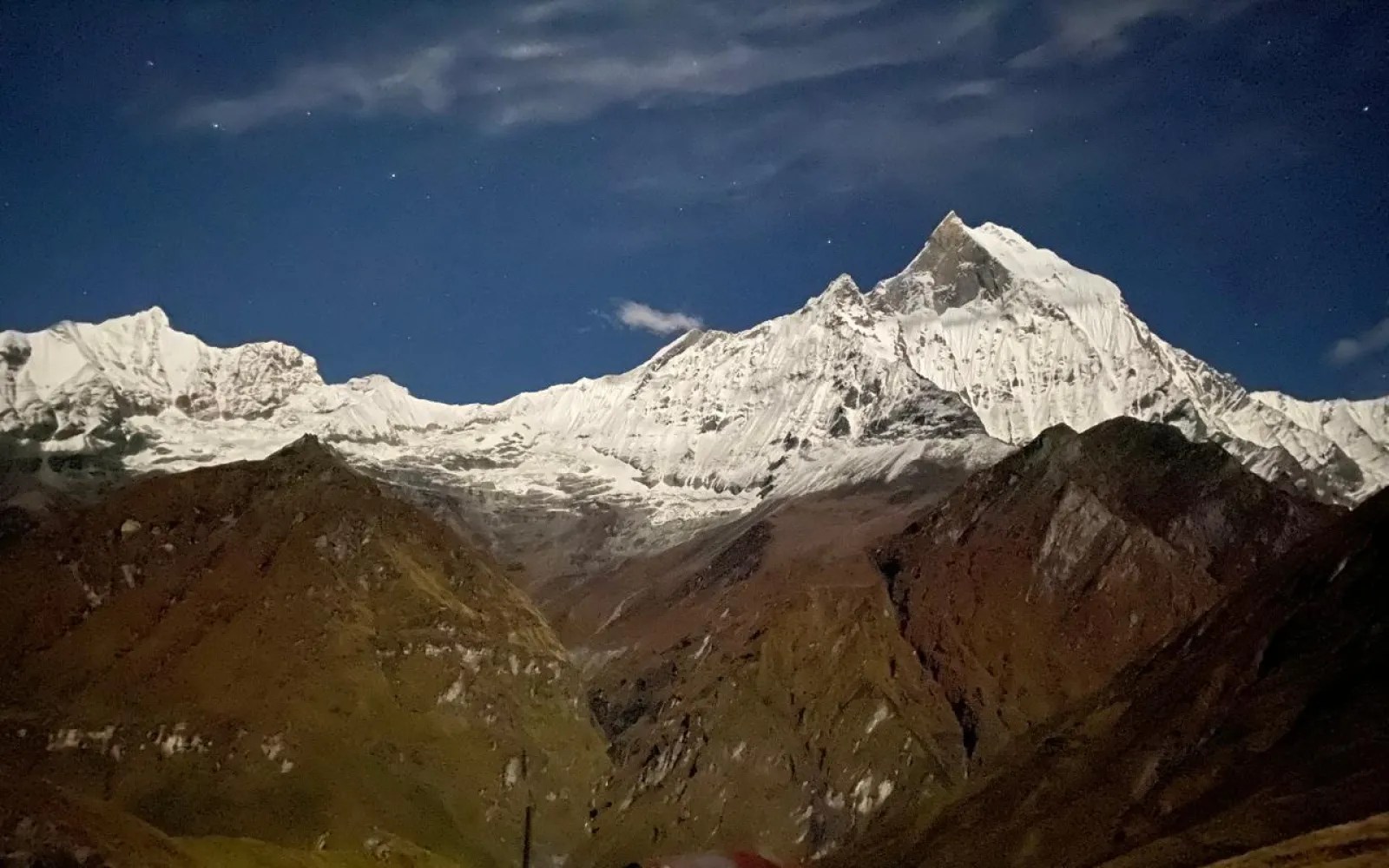
Because there is zero light pollution for tens of miles, the sky above MBC is chaotic with stars. The Milky Way stretches across the sky like a river of silver dust. And looming above you, lit only by starlight and snow-glow, is the massive, silent silhouette of Machhapuchhre. It sits there like a silent guardian, dark against the glittering sky.
People often compare the Annapurna Base Camp trek to the Everest Base Camp (EBC) trek. But sitting at MBC highlights why the two couldn't be more different.
| Feature | Machhapuchhre Base Camp (MBC) | Everest Base Camp (EBC) |
|---|---|---|
| Altitude | 3,700 meters / 12,139 feet | 5,364 meters / 17,598 feet |
| Vibe | Intimate, quiet, reverent | Busy, expedition-focused, high energy |
| Scenery | 360° wall of mountains (The Sanctuary) | Glacial moraine, icefall, framed valleys |
| Summit Status | Unclimbed / Sacred | Heavily climbed / Commercial |
| Trail Environment | Dense jungle to alpine amphitheater | Dry high-altitude valley, stone villages |
Where Everest is about scale, history, and raw altitude, MBC is about intimacy. You aren't just looking at mountains in the distance; you are standing in the middle of them. The peaks—Annapurna South, Hiunchuli, Gangapurna, Annapurna I, and Machhapuchhre—form a ring around you. You are literally inside a sanctuary.
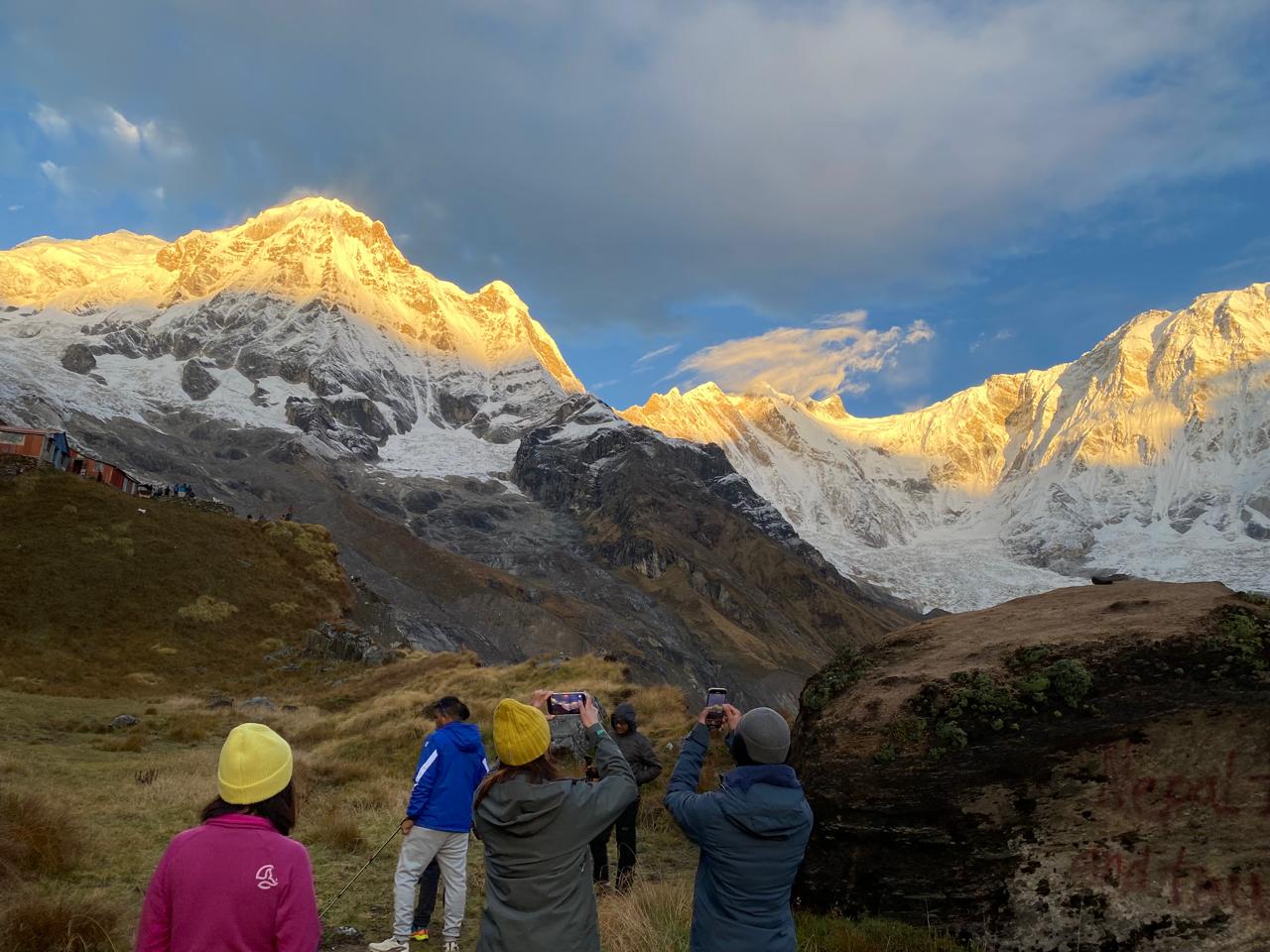
Most trekkers use MBC as a launchpad. They set their alarms for 4:00 AM, throw on every warm layer they own, click on their headlamps, and trek the final 2 to 3 hours up the glacial valley to Annapurna Base Camp (4,130 m) for sunrise.
The pre-dawn walk from MBC to ABC is incredible. Walking under a canopy of stars while the frozen snow crunches under your boots, with the dark outlines of 7,000-meter peaks on either side, feels like walking on another planet. When you reach ABC, you stand before the legendary Annapurna South face and the massive 8,091-meter peak of Annapurna I. It’s breathtaking.
But here is the secret most trekkers discover only after the journey is done:
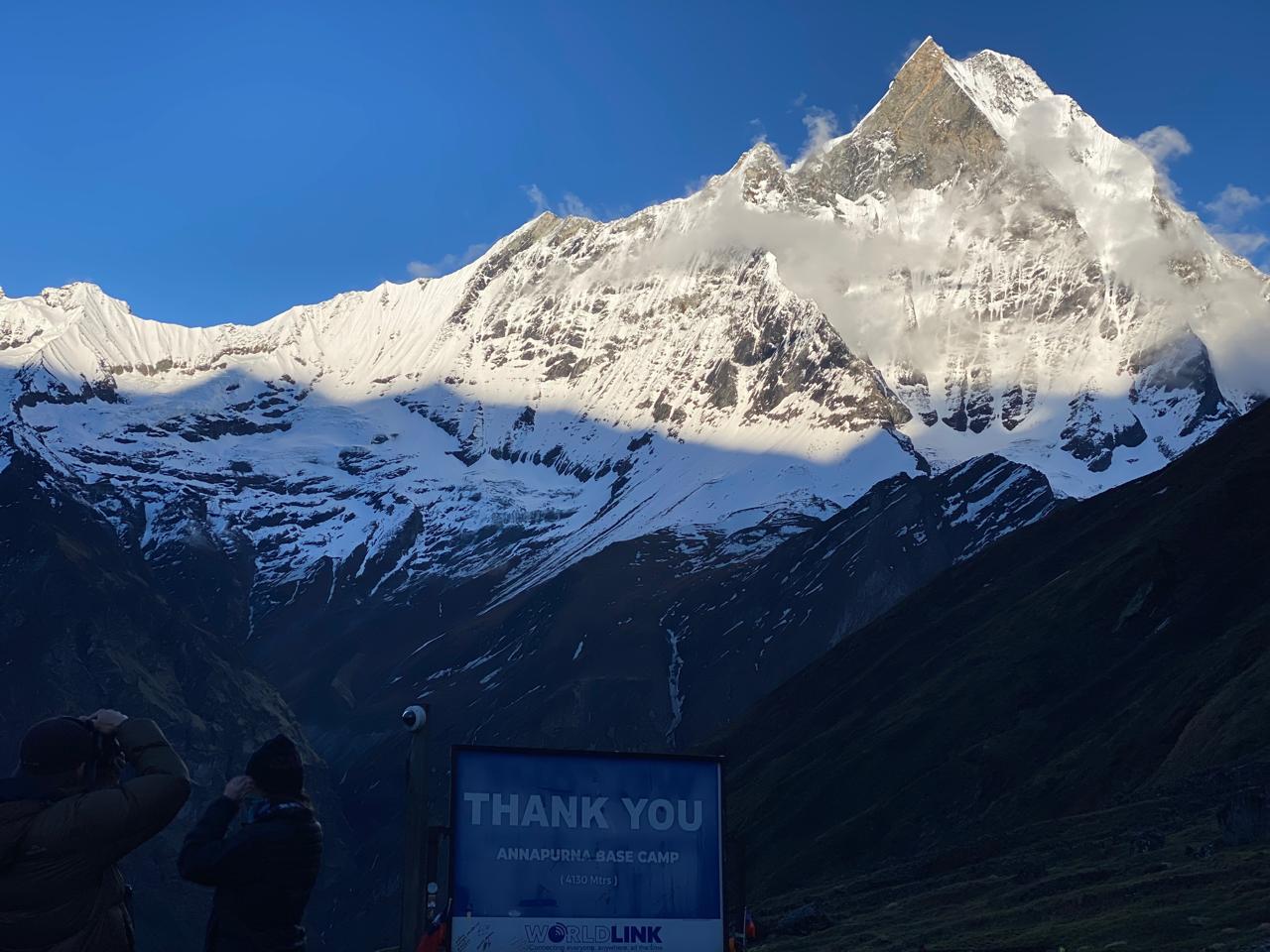
When you stand at ABC, you are looking at a mountain wall. But when you look back down the valley toward Machhapuchhre, you realize that MBC offers the far more dramatic view. From ABC, Machhapuchhre stands isolated, rising like a frozen spine out of the valley floor, bathed in the early morning light.
ABC is the destination on paper, but MBC is the landscape that stays in your dreams.
If you are planning to set foot here, skip the generic packing lists. Here is what actually matters at 3,700 meters:
At 3,700 meters, there is roughly 35% less oxygen per breath than at sea level. Because the climb from Bamboo (2,310 m) to MBC (3,700 m) happens quickly over two days, many people feel the altitude here.
· The Symptoms: A dull ache behind the eyes, lack of appetite, slight nausea, or restless sleep.
· The Fix: Hydrate constantly (3-4 liters of water a day). Walk at a pace that feels absurdly slow. If a guide tells you "Bistari, bistari" (slowly, slowly), listen to them.
· A Solid Down Jacket: Rated to at least -10°C (14°F). Once the sun drops behind the ridges at 3:30 PM, the air freezes fast.
· Sleeping Bag Liner: Teahouses provide thick quilts, but slipping a thermal liner inside makes a world of difference.
· Power Banks: Cold weather kills battery life instantly. Keep your phone, camera batteries, and power banks inside your sleeping bag near your body heat at night.
· Water Purification: Plastic water bottles are banned in the upper Annapurna Sanctuary to protect the ecosystem. Bring a reliable UV purifier or water treatment tablets to refill from local taps.
Beyond the peaks and the physics of high-altitude walking, what makes Machhapuchhre Base Camp linger in your mind long after your boots have dried out is the human warmth.
It’s the Gurung lodge owners who spend their lives at 3,700 meters, carrying heavy loads up steep trails to ensure you have hot tea, warm soup, and a dry place to sleep. It’s the quiet nod of respect exchanged between tired strangers passing on a narrow stone path. It’s the shared silence in the evening when an entire room of people from a dozen different countries stops talking just to watch the last pink light fade off the ice walls.
Machhapuchhre isn't a mountain you conquer. It’s a mountain that lets you sit at its feet for a night, reminds you how magnificent and ancient the earth is, and sends you back down the valley just a little bit quieter than when you arrived.
Choosing between a trek in the Annapurna Region and the Everest Region can be difficult. Roving Nepal Treks is here to help you make the right choice.
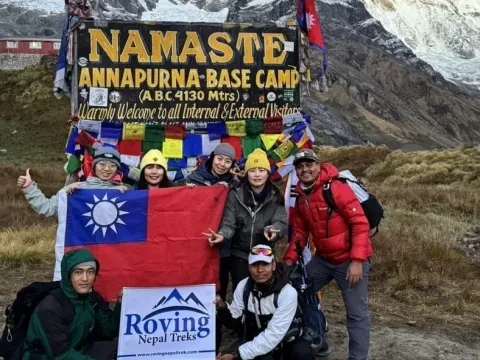
One of the darling trekking destination of the world is the Annapurna Base Camp Trek. Therefore, the charm of this route is very high among travelers from across the globe. The journey that takes trekkers to the foothill of the world's 10th tallest mountain is definitely a prized one. There are lots of questions about the Annapurna Base Camp Trek for Beginners. So, today's blog is all about finding out reasons that make the ABC Trek suitable for all age group from beginners to professional trekkers.
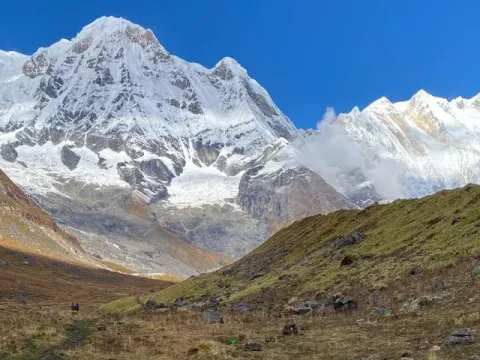
Where do you want to go in Nepal for mountain adventures and cultural encounters? Choose none other than the Annapurna region of Nepal! The place is an abode of the world’s 10th tallest mountain Mt. Annapurna (8091 m) and home of Gurung, Magar, Tibetan, Brahmins, Chhetris, and Dalit communities. Therefore, it is an exciting trekking trail to visit in Nepal. So, the main question remains the effective trekking itinerary. Today’s blog is about the 9 Days Annapurna Base Camp Trek Itinerary in Nepal. Learn about this authentic and scientific trekking itinerary to explore the Annapurna Base Camp (4130 m).
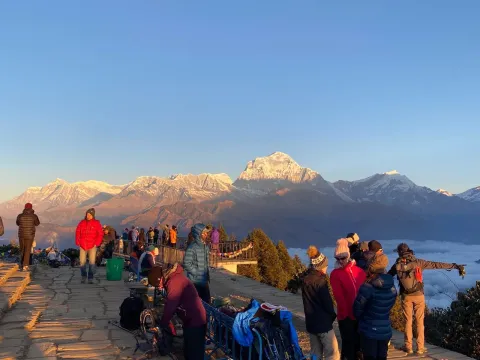
Unlike many high-altitude Himalayan treks, the Annapurna Base Camp Trek reaches an impressive elevation while passing through a variety of landscapes. Trekkers experience terraced farmland, traditional Gurung villages, rhododendron forests, waterfalls, rivers, alpine landscapes, and spectacular mountain viewpoints. With experienced local guides and careful planning, Roving Nepal Trek can help you create a safe and memorable Annapurna adventure.
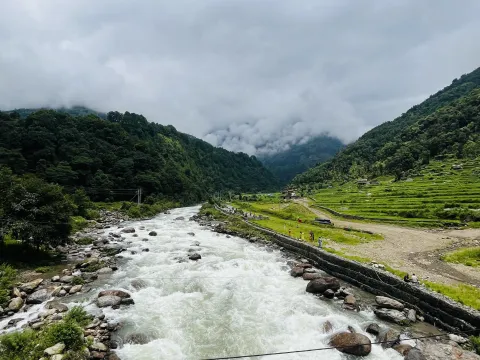
Trekking in Nepal is more than just a mountain vacation—it is a life-changing journey through ancient trade routes, sacred glacial valleys, and the highest mountain peaks on Earth. Whether you are stepping onto Himalayan trails for the first time or looking for your next high-pass challenge, choosing the right trek is the crucial first step.
Imagine waking up, unzipping your tent or looking out a teahouse window, and being greeted by a massive wall of pure, blinding white ice glowing gold under the first rays of the morning sun. No haze. No clouds. Just raw, majestic Himalayan peaks so close you feel like you could reach out and touch them.