Need help with booking? Send us a message.
Mardi Himal Trek is a relatively new and less crowded trekking route in the Annapurna region of Nepal. This off-the-beaten-path trek in Nepal offers stunning mountain views, pristine forests, and an opportunity to experience the local culture. Here is a detailed overview of the Mardi Himal Trek:
Mardi Himal Trek is a relatively new and less crowded trekking route in the Annapurna region of Nepal. This off-the-beaten-path trek in Nepal offers stunning mountain views, pristine forests, and an opportunity to experience the local culture. Here is a detailed overview of the Mardi Himal Trek:
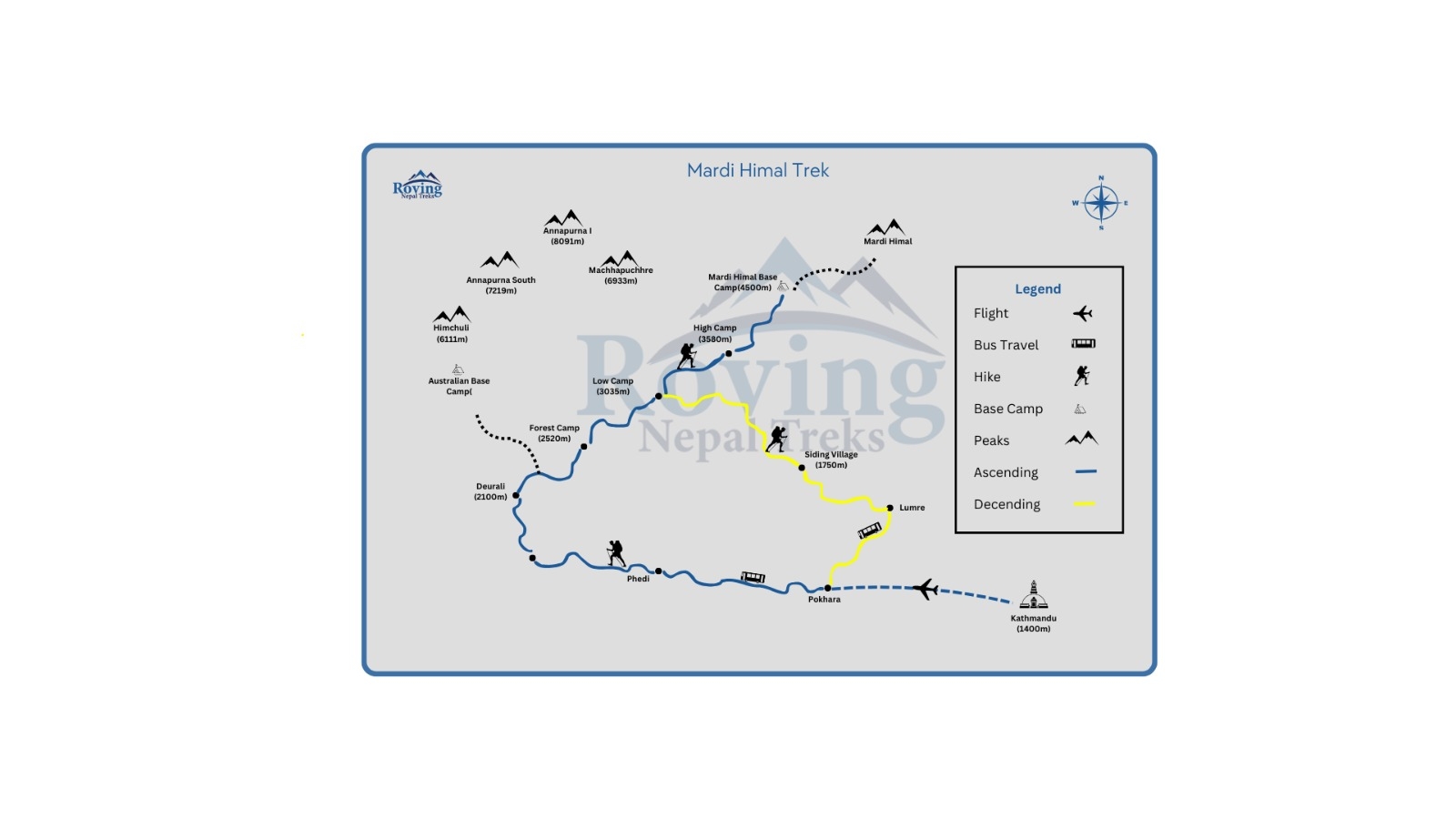
The trek starts from either Pokhara or Kande and follows a less-traveled route through charming villages, lush rhododendron forests, and high alpine landscapes. Here are the key features of the Mardi Himal Trek:
Scenic Drive to Kande (1,770m) or Phedi (1,130m): After an early morning drive from Pokhara, reach Kande or Phedi, the starting point of the trek. The road journey provides breathtaking views of the surrounding hills and valleys.
Trek to Australian Camp (2,050m): Begin the trek with a gradual ascent through rhododendron forests to reach Australian Camp. Enjoy panoramic views of the Annapurna and Dhaulagiri mountain ranges.
Trek to Forest Camp (2,520m): Continue through dense forests filled with oak, maple, and rhododendron trees. The trail offers glimpses of the Machhapuchhre (Fishtail) and Mardi Himal peaks.
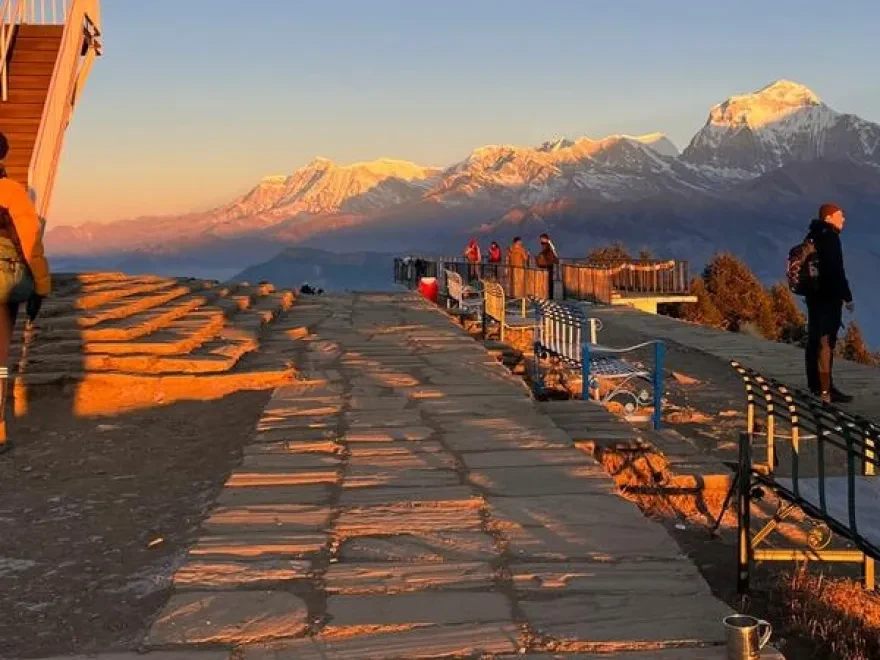
Trek to Low Camp (2,970m): Ascend through the rhododendron forests, with occasional views of Annapurna South and Hiunchuli. Reach Low Camp, a peaceful settlement with stunning sunset views.
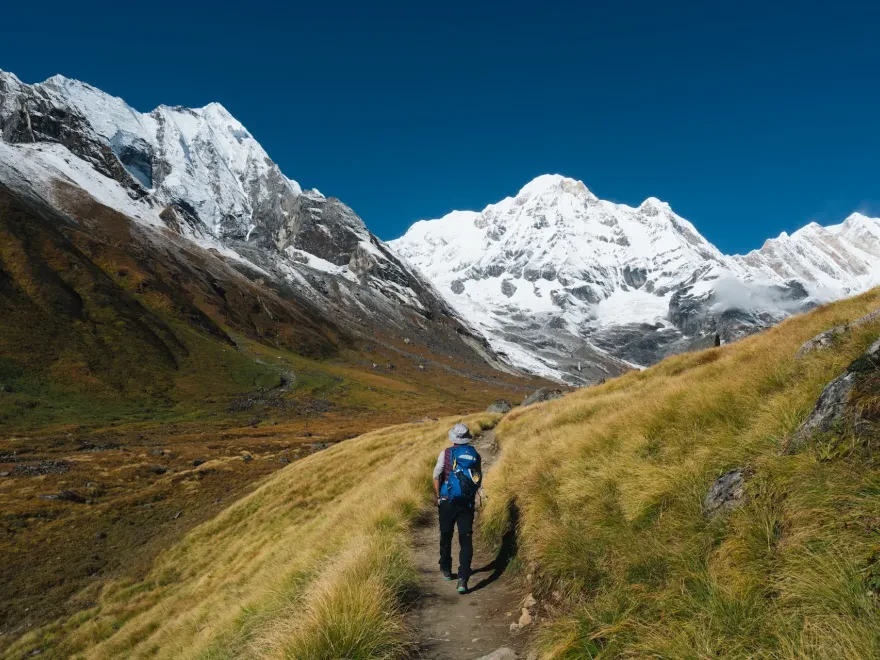
Trek to High Camp (3,580m): Continue ascending through alpine meadows and sparse vegetation. The trail opens up to magnificent views of the Mardi Himal, Machhapuchhre, and Annapurna ranges. Reach High Camp, the highest point of the trek.
Hike to Mardi Himal Base Camp (4,500m): Wake up early and hike to Mardi Himal Base Camp to witness breathtaking sunrise views over the Annapurna Sanctuary. Marvel at the panoramic vistas of Mardi Himal, Annapurna I, Annapurna South, Hiunchuli, and other peaks.
Descend to Siding Village (1,750m): Begin the descent, passing through beautiful forests and traditional villages. Enjoy interactions with the locals and immerse yourself in their rich cultural heritage.
Drive back to Pokhara: From Siding Village, drive back to Pokhara, where you can relax by the lakeside and explore the city's attractions.
If you’ve ever looked at photos of the Annapurna region in Nepal, chances are you’ve seen the iconic fishtail peak of Machapuchare towering over lush green valleys. But while thousands of hikers flock to Annapurna Base Camp or Poon Hill every year, a quieter, equally breathtaking trail sits right beside them.
The Mardi Himal Trek is Nepal’s hidden jewel—a short, rewarding, and dramatically scenic ridge walk that brings you face-to-face with giant snow-capped mountains without requiring weeks of your life or extreme mountaineering experience.
Unlike classic valley routes that weave down along rivers for days before opening up, Mardi Himal is almost entirely a ridge trek. Within a day or two of walking, you break through the dense tree line and find yourself stepping along narrow grassy spines with steep drop-offs on either side. To your left lies the Annapurna Sanctuary valley; to your right, the Modi Khola river valley. The sensation of walking high above the clouds with sweeping 360-degree views is hard to match anywhere else in the Himalayas.
One of the biggest perks of this trek is its length. While Everest Base Camp or the Annapurna Circuit demand two to three weeks, Mardi Himal can easily be completed in 4 to 6 days round-trip from Pokhara. This makes it ideal if you're tight on time, adding trekking onto a broader Nepal itinerary, or looking for a high-reward adventure that won't completely exhaust your vacation days.
Your journey typically begins at Kande or Phedi, a short drive from Pokhara. The first couple of days feel like walking through a fairy tale. You’ll climb gentle stone staircases surrounded by ancient moss-draped oak forests and giant rhododendron trees. If you visit in spring, the entire mountainside explodes in shades of crimson, pink, and white. The peaceful silence in these woods—punctuated only by bird calls and the crunch of your boots—is the ultimate way to decompress.
By the time you reach Forest Camp and push upward toward Low Camp and Badal Danda, the landscape shifts dramatically. The dense trees give way to alpine shrubbery, and suddenly, Machapuchare (Fishtail Mountain) seems so close you could reach out and touch it. Reaching High Camp (3,580m / 11,745 ft) feels like entering a different world. Tea houses here sit directly on the narrow ridge, giving you front-row seats to incredible cloud inversions where the valleys below fill with a sea of white mist while you sit above under bright blue skies.
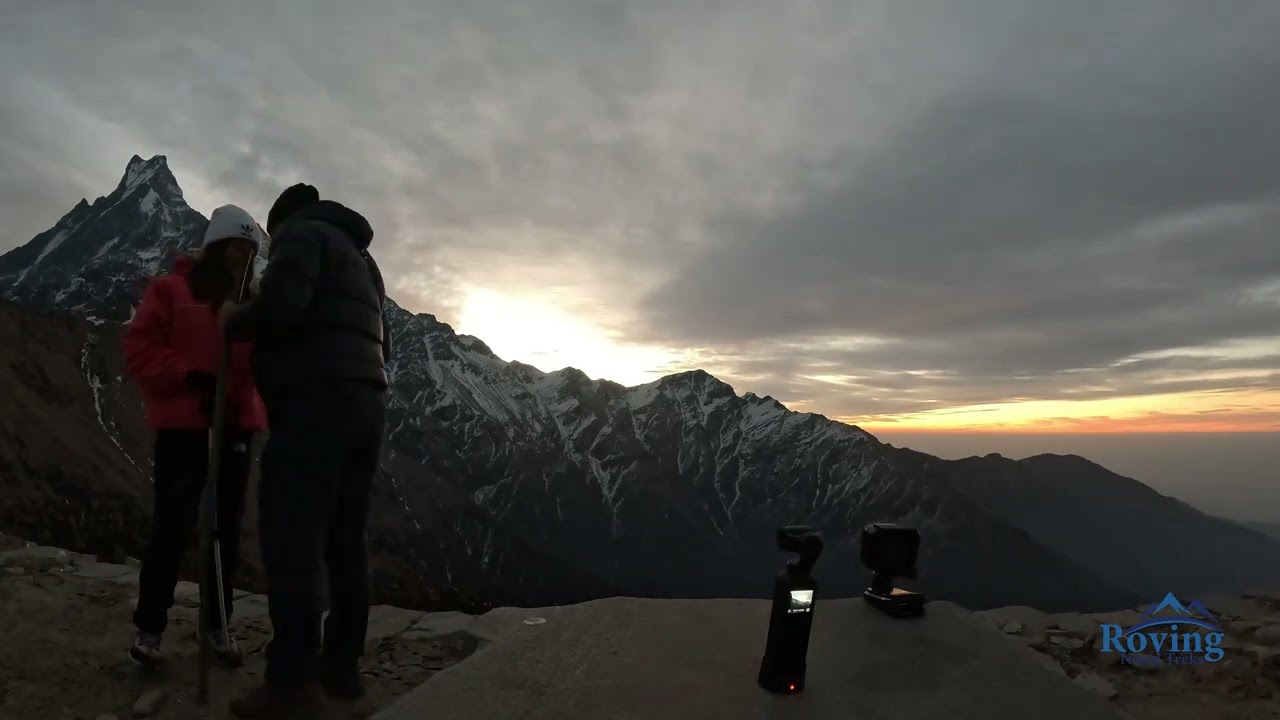
The absolute highlight of the trip starts well before dawn. Headlamps glowing in the crisp, freezing morning air, you’ll start the final push from High Camp up to Mardi Himal Base Camp (4,500m / 14,763 ft). As the first rays of sunlight hit the peaks, the snow transforms from icy blue to fiery gold. Standing at the base camp viewpoint, directly underneath the towering wall of Mardi Himal and the sacred double peaks of Machapuchare, is a moment that stays with you forever.
Mardi Himal is generally rated as moderate. You don't need technical climbing skills, ropes, or crampons during standard trekking seasons. However, don't let the short duration fool you—there are plenty of steep stone steps and continuous uphill climbs. The elevation gain is rapid, so taking a steady pace, staying hydrated, and giving your body time to acclimatize at High Camp are essential to preventing altitude sickness.
Accommodation along Mardi Himal consists of cozy, family-run teahouses. While simple, they offer everything a tired hiker needs: warm meals (from classic dal bhat to piping-hot noodle soups), hot tea, and a warm communal dining hall centered around a wood stove. The local Gurung and Magar communities running these lodges are famous for their warmth and hospitality, adding a rich cultural layer to your mountain adventure.
· Autumn (September to November): Offers crystal-clear skies, stable weather, and comfortable daytime temperatures. It's the most popular season for a reason.
· Spring (March to May): Brings warm days and stunning rhododendron blooms that paint the hillsides in vibrant colors.
If you want a Himalayan adventure that delivers massive views, authentic local hospitality, and quiet trails—all packaged into less than a week—Mardi Himal is hard to beat.
The Mardi Himal Trek offers a peaceful and less-crowded experience, allowing trekkers to immerse themselves in the natural beauty and tranquility of the Himalayas. With awe-inspiring mountain views, diverse landscapes, and cultural encounters, this trek is a hidden gem for those seeking a unique adventure in Nepal.
Arrive in Kathmandu, the capital city of Nepal. Transfer to your hotel and meet with your trekking guide for a briefing about the Mardi Himal trek. Overnight stay in Kathmandu.
After breakfast, take a scenic drive or a short flight from Kathmandu to Pokhara, a picturesque lakeside city. Spend the rest of the day exploring Pokhara and preparing for the trek. Overnight stay in Pokhara.
Drive to Phedi and start the trek. Ascend through terraced fields, rhododendron forests, and charming villages. Reach Deurali and continue the trek to Forest Camp, also known as Kokar. Overnight stay in Forest Camp.
Trek through lush forests, enjoying panoramic views of the Annapurna and Machhapuchhre (Fishtail) ranges. Pass by grazing pastures and reach Low Camp, where you'll be surrounded by serene nature and stunning mountain vistas. Overnight stay in Low Camp.
Continue trekking uphill, passing through beautiful rhododendron and alpine forests. As you gain elevation, the views become more spectacular. Reach High Camp, a tranquil spot offering breathtaking views of Annapurna South, Hiunchuli, and Mardi Himal. Overnight stay in High Camp.
Embark on an early morning hike to Mardi Himal Base Camp, witnessing the sunrise over the magnificent Annapurna and Machhapuchhre peaks. Take in the panoramic views and spend some time at the base camp before returning to High Camp. Overnight stay in High Camp.
Descend from High Camp, retracing your steps through the enchanting forests and charming villages. Pass by Low Camp and continue downhill to reach Siding Village, a traditional Gurung settlement. Overnight stay in Siding Village.
Trek from Siding Village to Lumre, enjoying the serene landscapes and rural life along the way. Reach Lumre and take a scenic drive back to Pokhara. Spend the evening relaxing and exploring the city. Overnight stay in Pokhara.
After breakfast, either drive or take a short flight from Pokhara back to Kathmandu. Upon arrival, check into your hotel and have the rest of the day at leisure. You can explore the vibrant streets of Thamel or visit cultural landmarks in the city. Overnight stay in Kathmandu.
Transfer to the airport for your onward journey or departure from Nepal.
Ideal For: Trekkers looking for a short Himalayan adventure with spectacular mountain views and fewer crowds compared to some classic Annapurna routes.
Your Start Date is the day you land in Nepal, and your End Date is when you fly home.
If the set Mardi Himal Trek group dates don’t suit your schedule, we can offer alternative dates upon request.

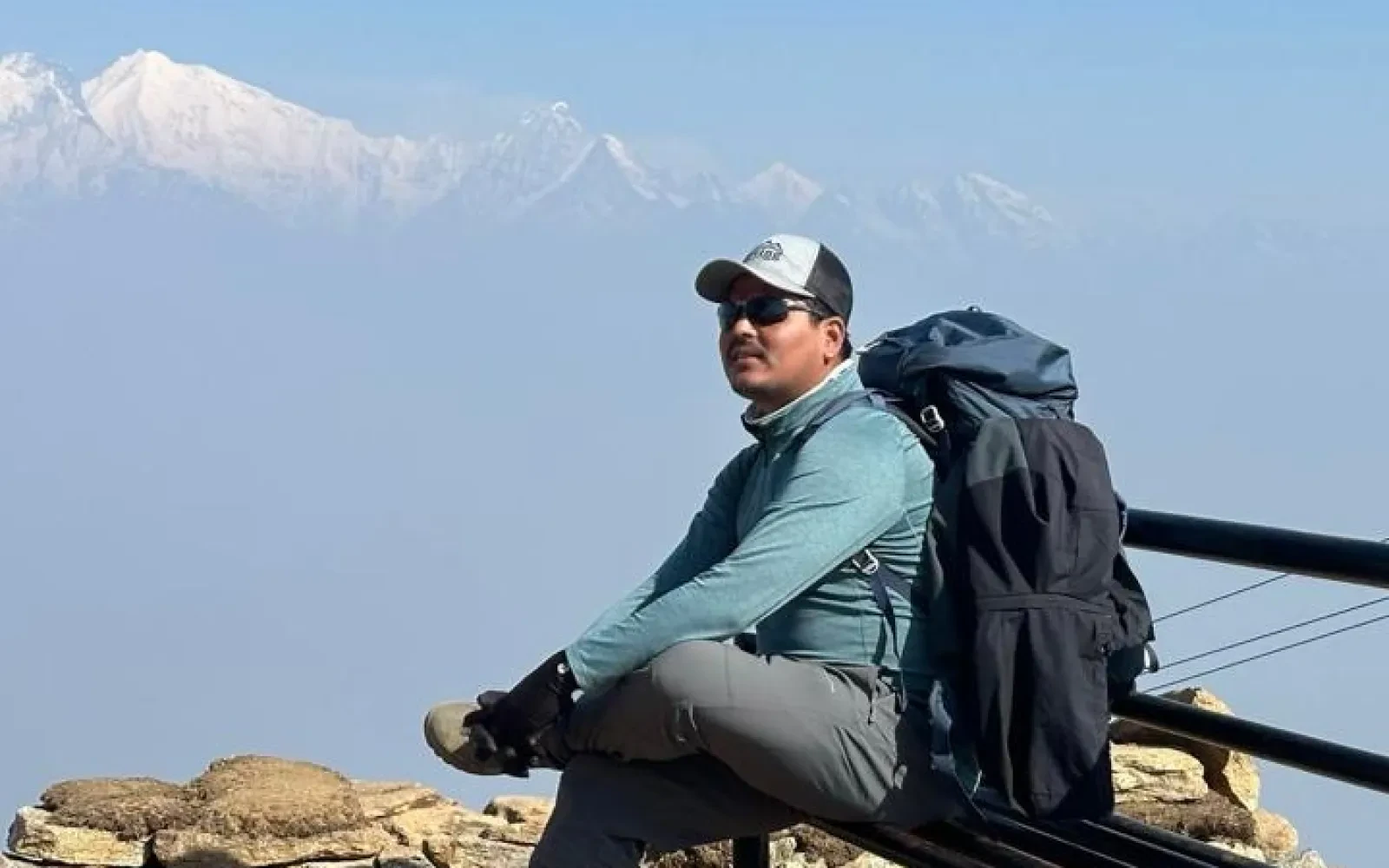
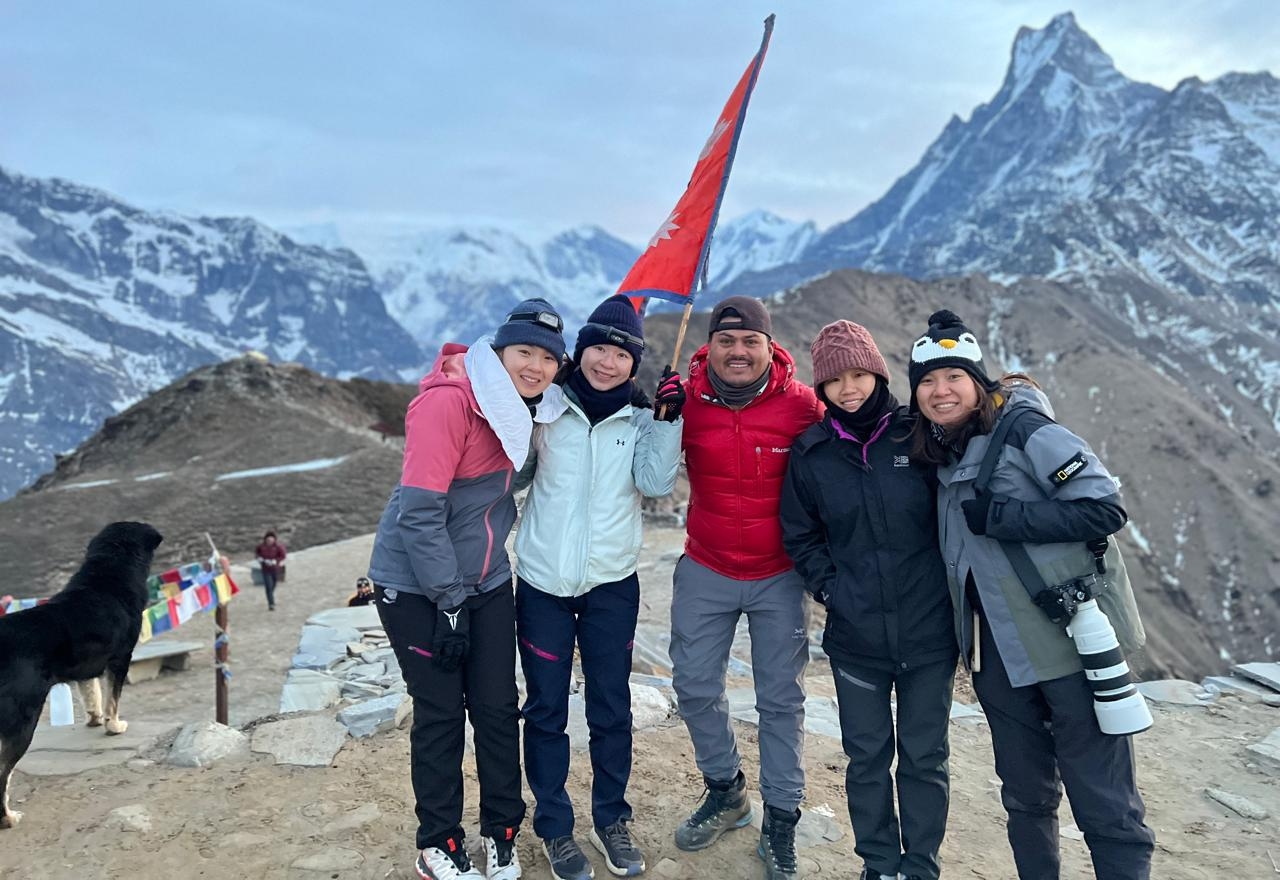
It’s a 5 days trekking trip with Basu and his team to Mardi Himal. During the trek, they took very good care of us. Along the way, it is always with laughters that we talk alot and when we are having difficult time climbing up the mountain, he always cheer us up and wait for us. He made sure we are in good condition and give us information of the hike. Moreover, the teahouses they arranged is very nice. They are always there to help us for meals and drinks, making sure we are are comfortable and have good rest. We are super thankful and grateful to have Basu and his team along the way and without their assist, we couldnt make it to the viewpoint! They provide excellent service to us not only during the hike, but also in arranging our transport before/ after the hike, pick up upon arrival and prompt response whenever we need help or having enquiries. I highly recommend them and once again, thank you for an unforgettable hiking experience in Nepal!
The trek is considered moderate. It does not require technical climbing skills, but the steep ascents, ridge walking, and altitude make it physically demanding. The trek usually takes 4–7 days, depending on the route, pace, and whether you continue to the viewpoint or base camp.
The highest point is Mardi Himal Base Camp at around 4,500 meters, while many trekkers visit the Upper Viewpoint at around 4,200 meters.
Yes. Fit beginners can complete the trek with proper preparation and a comfortable pace.
It is ideal for travelers who want dramatic Himalayan views, a shorter itinerary, and a quieter trekking experience compared to busier routes.
Both offer beautiful Himalayan experiences. Mardi Himal is shorter, quieter, and focused on ridge views, while Annapurna Base Camp offers a longer journey into a mountain sanctuary.
Yes. The trek can be customized according to available time, fitness level, preferred walking distance, and accommodation preferences. Yes, active families can complete the trek with a slower itinerary and proper preparation.
Prepare with regular walking, hiking, cardio exercises, and strength training before the trek. You should be comfortable walking 4–7 hours daily on uphill and downhill mountain trails.
Essential equipment includes:
Accommodation is available in local teahouses and mountain lodges along the route. Teahouses provide basic but comfortable rooms, meals, and common dining areas.
Common meals include:
Yes. Vegetarian meals are widely available throughout the route. Yes. Most teahouses can prepare common dietary options with advance notice.
Yes. Water is available at teahouses. Purification tablets or filters are recommended. Hot showers may be available at some lodges for an additional fee, but facilities are limited at higher elevations. Some teahouses provide Wi-Fi, but connection quality becomes limited at higher elevations.
Spring (March–May) and Autumn (September–November) are the best seasons for stable weather and clear Himalayan views. Yes. Winter offers clear mountain views and fewer crowds, but snow and cold temperatures can make higher sections challenging. Monsoon (June–August) is less recommended due to rain, slippery trails, clouds, and reduced mountain visibility.
Temperatures can drop below freezing at night, especially during winter and early spring. Views depend on weather conditions. Clear mornings usually provide the best visibility.
A guide is recommended for safety, navigation, accommodation arrangements, and local knowledge. Yes. Porters are available to carry luggage and support trekkers.
Guides assist with:
Yes. Emergency helicopter evacuation can be arranged when required and when weather conditions allow. Walk slowly, stay hydrated, dress properly, check weather conditions, and communicate any discomfort early.
Yes. Many trekkers combine it with Annapurna Base Camp, Ghorepani Poon Hill, or Pokhara sightseeing. Yes, if they are physically prepared. A slower itinerary with more rest days is recommended.