Need help with booking? Send us a message.
Roving Nepal Treks offers an unforgettable Everest Base Camp Trek, guiding adventurers through the heart of the Himalayas to iconic destinations like Namche Bazaar, Dingboche, and Everest Base Camp, with breathtaking views, cultural encounters, and expert support for a safe, rewarding high-altitude trekking experience.
Kathmandu - Lukla - Phakding - Namche - Tengboche - Dingboche - Lobuche - EBC - Gorak Shep - Kala Patthar - Pheriche - Namche - Lukla - Kathmandu
Hotel in Kathmandu and Tea House / Lodge during the trek
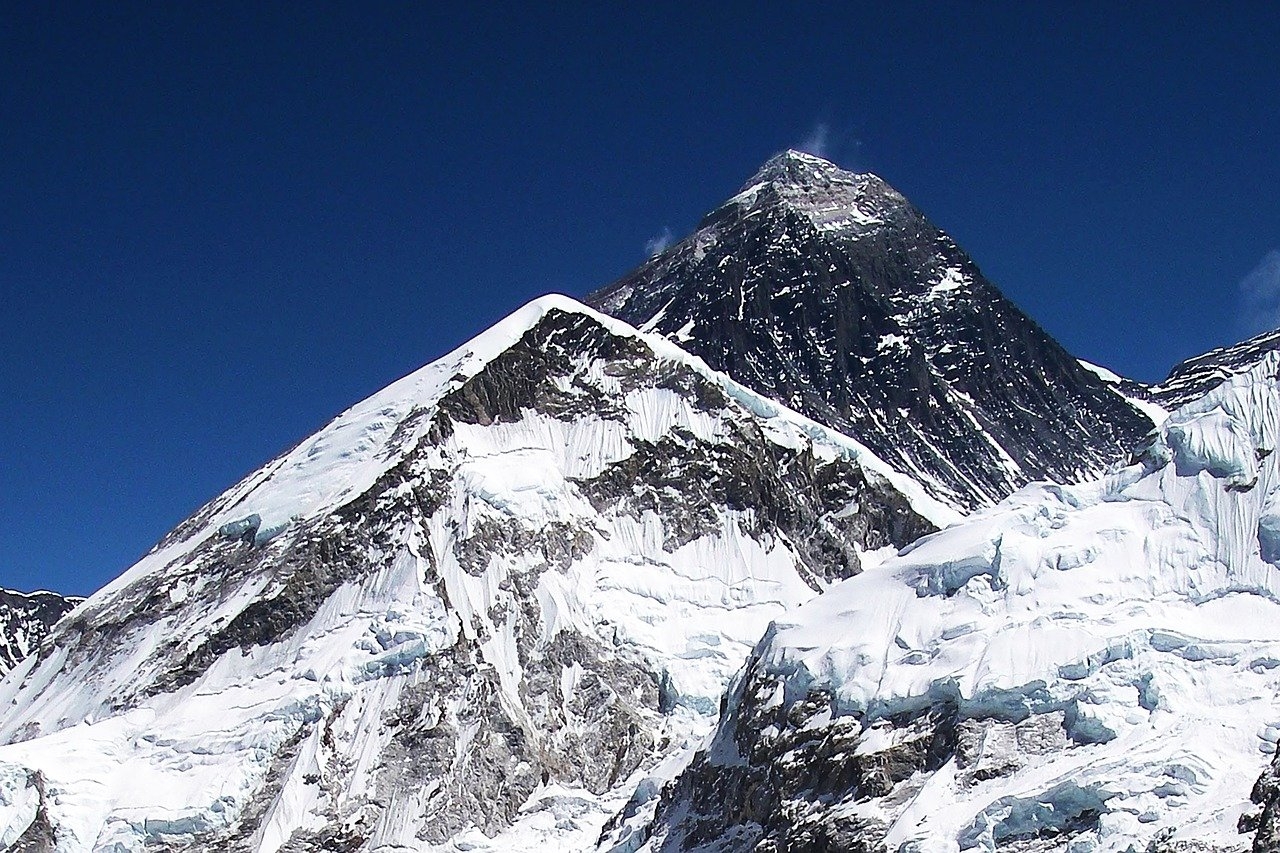
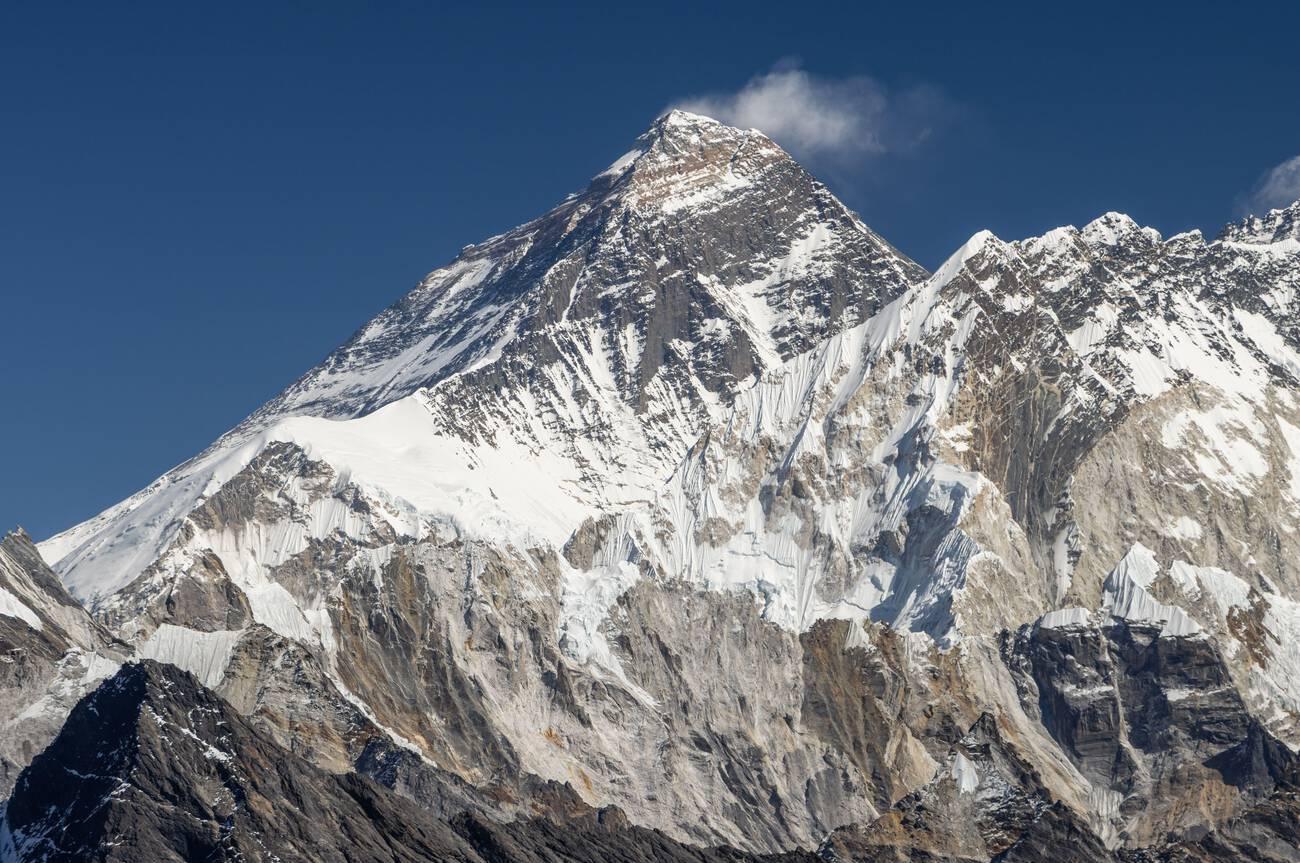
The Everest Base Camp Trek is a renowned and challenging trekking adventure. It takes you to the base camp of Mount Everest, the highest peak in the world. Relish the chance to leave your footprints at the Everest Base Camp (5364 m). This trek offers a unique opportunity to immerse yourself in the awe-inspiring landscapes of the Everest region. Witness majestic Himalayan peaks up close, and experience the rich Sherpa culture.
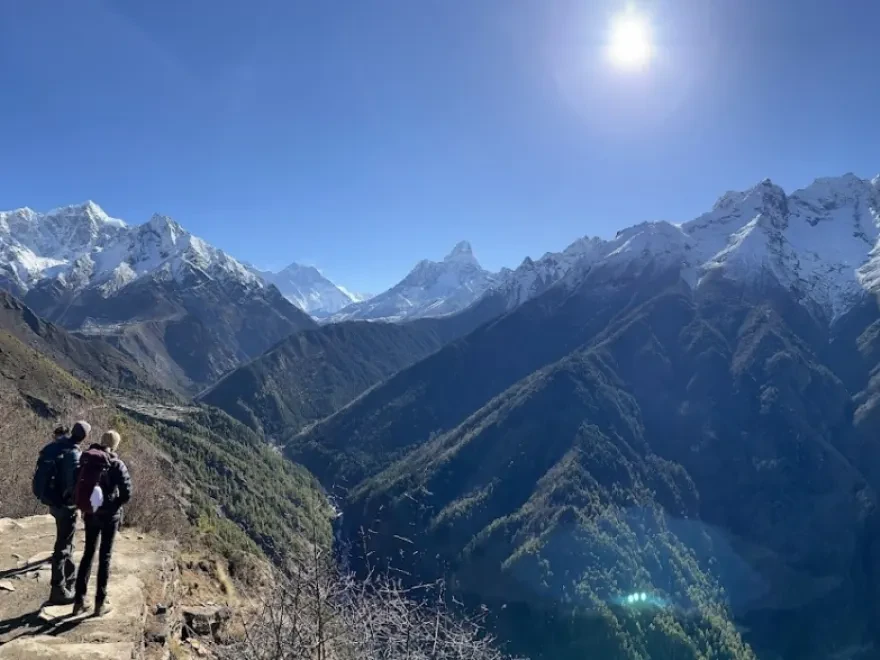
The trek begins with a scenic flight from Kathmandu to Lukla, a small mountain airstrip. From Lukla, you embark on a trek through picturesque Sherpa villages, dense forests, and roaring rivers. The trail gradually ascends, providing stunning views of towering peaks like Ama Dablam, Thamserku, and Everest.
The flight from Kathmandu to Lukla is adventurous. The short runway and the airstrip on top of the hill is truly scary. However, flying to this airport in itself is an adventure. The flight path follows the narrow hilly valleys over the raging Dudhkoshi River and the high mountain passes. Most of the travelers travel to this place for the accumulation of this flight experience as well.
If you are looking for road option instead of Lukla flights for the Everest Trek, then book the Everest Base Camp Trek without Lukla flight package. Trekkers can reach Surke village by jeep via Phaplu from Kathmandu. After walking for about 45 minutes to 1 hour, trekkers can reach Lukla Village. However, normal itinerary has Surke to Phakding section skipping Lukla.
As you trek deeper into the Khumbu region, you'll pass through iconic landmarks like Namche Bazaar, the vibrant trading hub of the Everest region, and Tengboche, home to a famous Buddhist monastery with panoramic mountain views. The trail offers opportunities to acclimatize to the increasing altitude, ensuring a safe and enjoyable journey. As for the acclimatization activity, we will explore the Everest View Hotel and return back to Namche for overnight sleep.
It is necessary to get the proper high altitude destination but low altitude overnight sleep for the high altitude trekking. Therefore, our trekkers explore the high altitude place before spending night. The view of the mountains from the Everest View is majestic. One can relish the best view of mountains like Mt. Everest, Lhotse, Nuptse, Tabuche, Amadablam, Thamserku, Kusum Kangaru, Kwangde, etc.
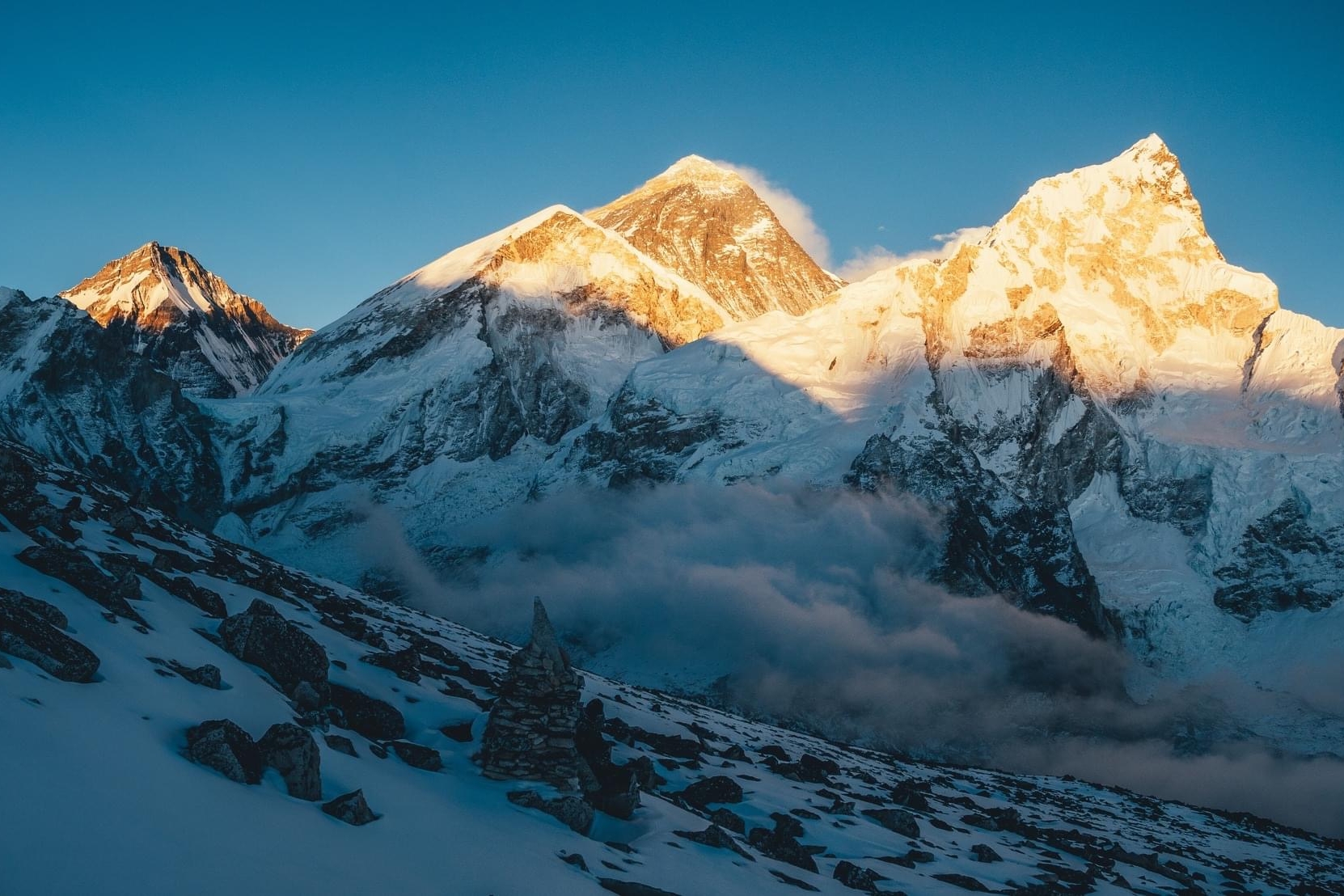
Continuing, you'll cross suspension bridges, traverse high mountain passes, and witness the dramatic glacial landscapes of the Khumbu Icefall. Finally, after days of trekking, you'll reach Everest Base Camp itself. Standing at the foot of the mighty Everest, you'll feel a sense of accomplishment and marvel at the surrounding Himalayan giants. On the way back, you can ascend to Kala Patthar, a renowned viewpoint offering unparalleled panoramic views of Everest, Nuptse, Lhotse, and other breathtaking peaks. The trek concludes with a descent back to Lukla, where you fly to Kathmandu.
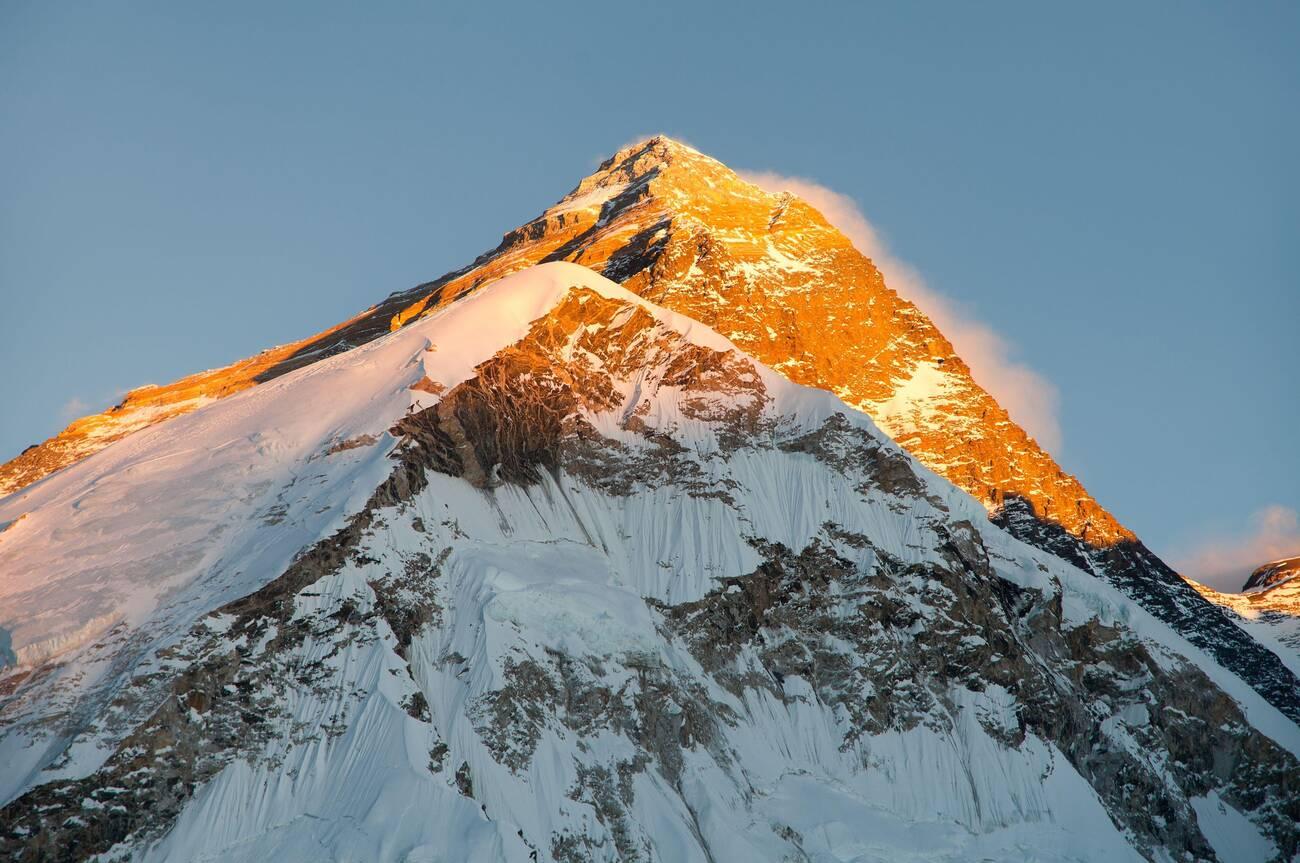
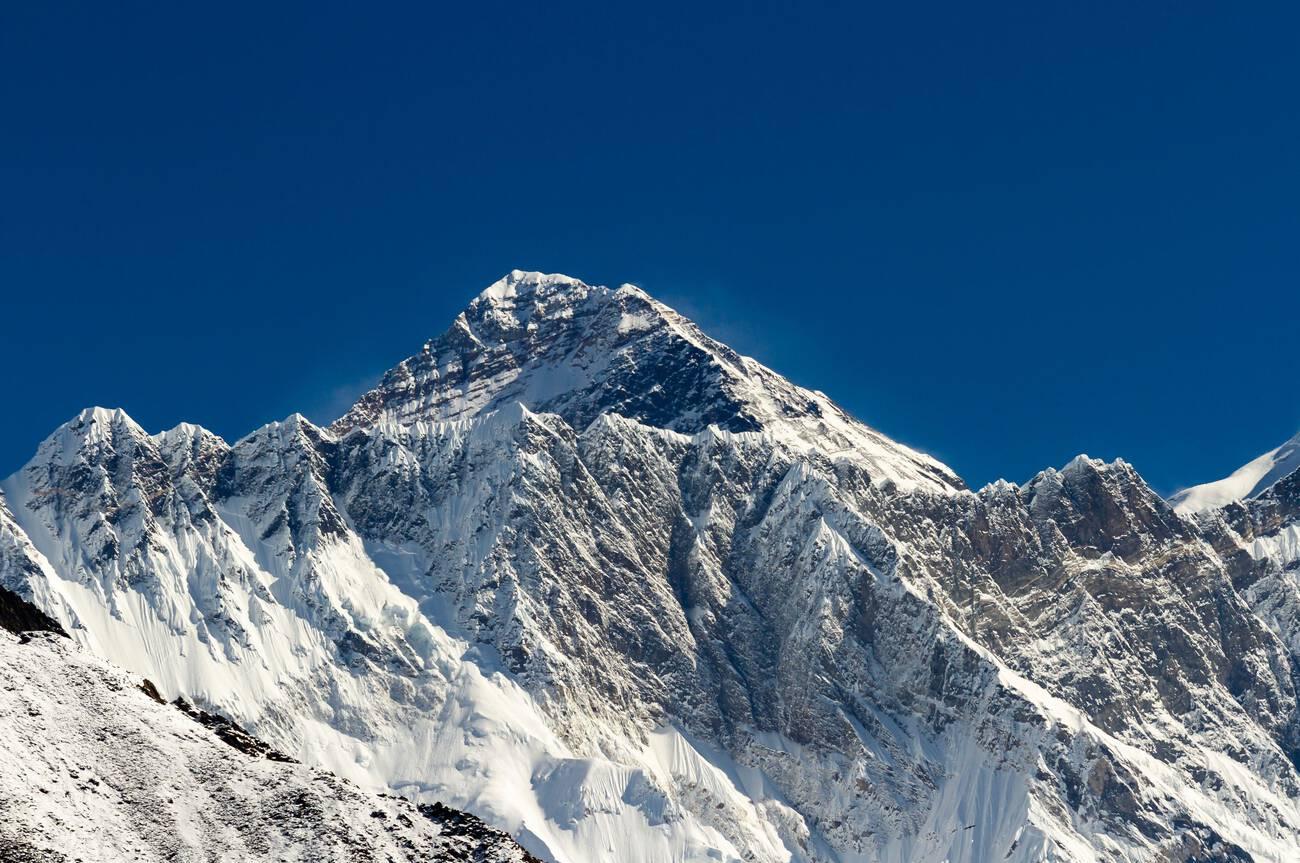
Sunrise experience from the top of Kalapathhar is magnificent. You will be able to view the top of the Mt. Everest ever close from the place. Moreover, the Mt. Pumori on the backdrop and Everest along with the mountains lining up together make the place a Himalayan sanctuary. For most of the trekkers hiking the Kalapathar is arduous task and they avoid it. However, it is highly recommended to do this hike after visiting the Everest Base Camp (5364 m).
Throughout the trek, you'll be accompanied by experienced guides and porters who will ensure your safety and provide valuable insights into the local culture and environment. Teahouse accommodations along the trail offer a comfortable resting place, and you'll have opportunities to savor local cuisine and interact with the friendly Sherpa people. Moreover, our trekking guides and porters are from the locals. They have immense experience in operating trekking in the region. Therefore, trekkers can get the authentic information as well as they can feel safe and secured too.
Besides the main EBC Trek, trekkers can choose to do the Everest Base Camp Trek for Senior Citizens. Note down that the senior citizen EBC trek itinerary is suitable for first time trekkers too. The number of days is high but it ensures safety and better trekking success rate.
The Everest Base Camp Trek is an adventure of a lifetime, combining natural beauty, physical challenge, and cultural immersion. It offers a chance to explore the wonders of the Himalayas, stand in the shadow of Everest, and create lasting memories in one of the world's most awe-inspiring landscapes. Leaving footprints at the foothill of the world's tallest mountain Mt. Everest is not an ordinary achievement. You can share your trip activity to your friends and family with pride.
The Everest Base Camp (EBC) Trek is one of the most iconic trekking adventures in the world. To make your journey safe, enjoyable, and successful, here are some important notes to keep in mind:
Before You Start
Permits:
Best Time to Trek:
Physical Preparation:
Guides and Porters:
Packing Essentials
Clothing:
Footwear:
Gear:
Miscellaneous:
During the Trek
Acclimatization:
Hydration and Nutrition:
Signs of Altitude Sickness:
Pace Yourself:
Stay on Designated Trails:
Cultural Etiquette
Respect Local Customs:
Support the Local Economy:
Environmental Responsibility
Leave No Trace:
Be Energy Conscious:
Key Highlights of the EBC Trek
Must-Visit Spots:
Photography Tips:
Post-Trek Tips
Rest and Recover:
Share Experiences:
Final Advice
The Everest Base Camp Trek is challenging but incredibly rewarding. Proper planning, pacing, and awareness of health and safety make it a once-in-a-lifetime experience. Enjoy the majestic beauty of the Himalayas while respecting the region’s cultural and natural heritage.
Roving Nepal Treks offers a carefully designed Everest Base Camp Trek itinerary that begins in Kathmandu and includes a scenic flight to Lukla before following the classic trail through Phakding, Namche Bazaar, Tengboche, Dingboche, and Lobuche. The journey allows gradual acclimatization with dedicated rest days in Namche and Dingboche, ensuring safety while exploring the heart of the Khumbu region.
Highlights include reaching Everest Base Camp at 5,364 meters, hiking to Kala Patthar for sunrise views, and descending through picturesque Sherpa villages before returning to Kathmandu. Roving Nepal Treks ensures a well-paced 14-day adventure combining natural beauty cultural immersion and high-altitude trekking experience in the Himalayas. It is an ideal itinerary for trekkers seeking iconic Himalayan views safe acclimatization and a rewarding journey to the roof of the world combining adventure cultural discovery and unforgettable mountain landscapes in Nepal region truly.
Upon your arrival at Tribhuvan International Airport in Kathmandu, you will be greeted by our representative and transferred to your hotel. Spend the rest of the day resting and exploring the vibrant capital city.
 Accommodation 3*** Hotel
  Meals Welcome Dinner
  Max. altitude 1,300m / 4,265ft.
 In the morning, take a scenic flight from Kathmandu to Lukla, the gateway to the Everest region. After landing at Tenzing-Hillary Airport, start your trek towards Phakding. The trail descends through rhododendron and pine forests, following the Dudh Koshi River. Overnight stay in Phakding.
Accommodation Tea house / Lodge Meals Breakfast, Lunch and Dinner Max. altitude 2,652m / 8,701ft. Continue your trek along the Dudh Koshi River, crossing suspension bridges and passing through picturesque Sherpa villages. After a few hours of uphill climb, you will reach Namche Bazaar, the main trading hub of the Everest region. Spend the night in Namche Bazaar.
Accommodation Tea house / Lodge Meals Breakfast, Lunch and Dinner Max. altitude 3,440m / 11,286ft. To acclimatize to the altitude, spend an extra day in Namche Bazaar. You can take a short hike to the nearby Everest View Hotel, which offers panoramic views of Mount Everest, Lhotse, Ama Dablam, and other surrounding peaks. Explore the local market and visit the Sherpa Museum to learn about the culture and mountaineering history of the region.
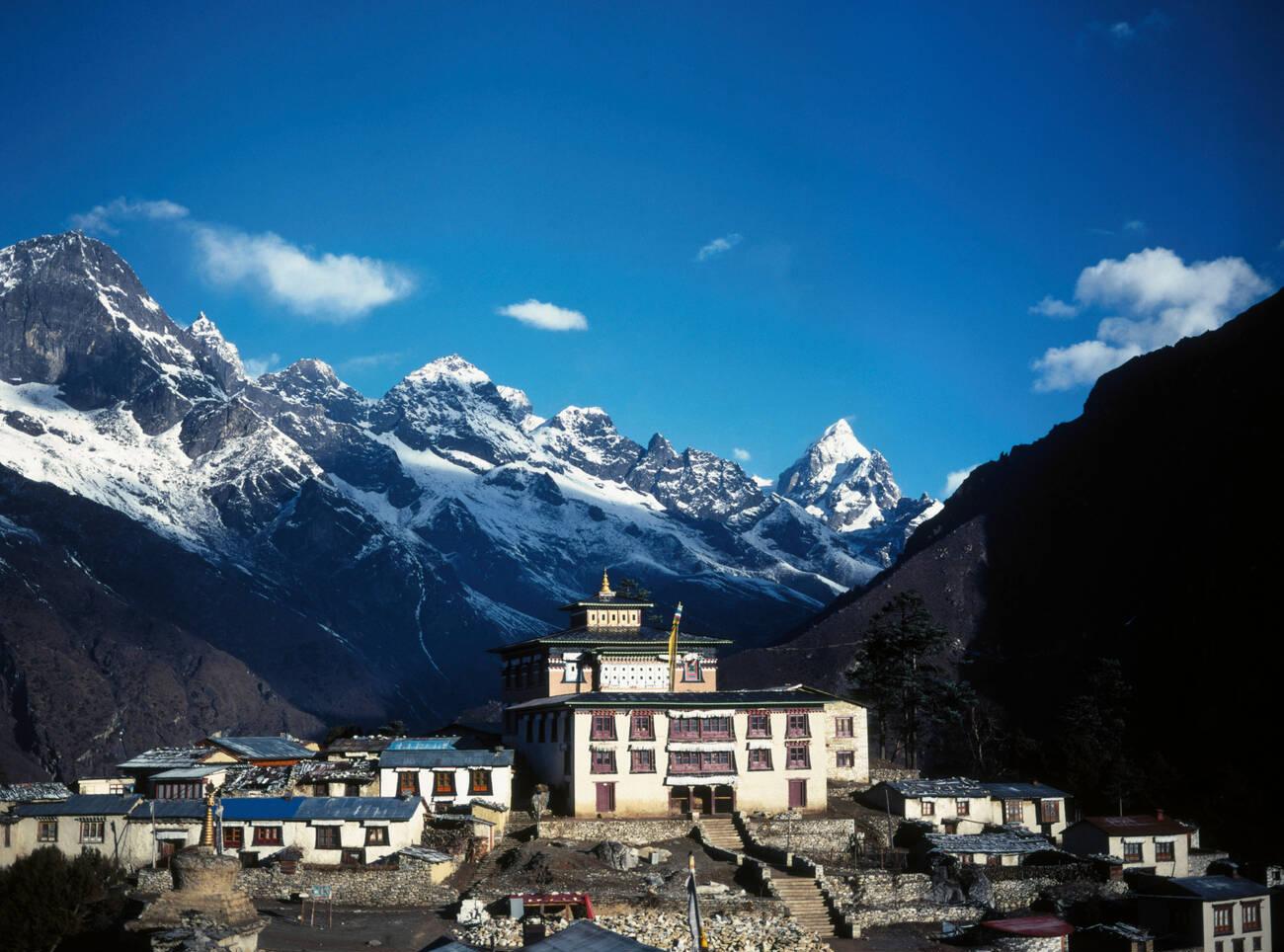
Accommodation Tea house / Lodge Meals Breakfast, Lunch and Dinner Max. altitude 3,440m / 11,286ft. Leaving Namche Bazaar, the trail ascends gradually through rhododendron forests, with occasional glimpses of Everest and other peaks. Pass by the famous Tenzing Norgay Memorial Stupa and reach the serene village of Tengboche, known for its ancient monastery and stunning mountain views. Overnight stay in Tengboche.
Accommodation Tea house / Lodge Meals Breakfast, Lunch and Dinner Max. altitude 3,867m / 12,687ft. Continue your trek, descending through forests and crossing the Imja Khola River. The trail then gradually climbs uphill to Dingboche, a picturesque village located in a valley surrounded by stunning peaks. Overnight stay in Dingboche.
Accommodation Tea house / Lodge Meals Breakfast, Lunch and Dinner Max. altitude 4,410m / 14,469ft. Another day for acclimatization in Dingboche. You can take a hike to Nagarjun Hill or Chukkung Ri to enjoy incredible views of Ama Dablam, Island Peak, and other peaks. Rest and prepare for the challenging days ahead.
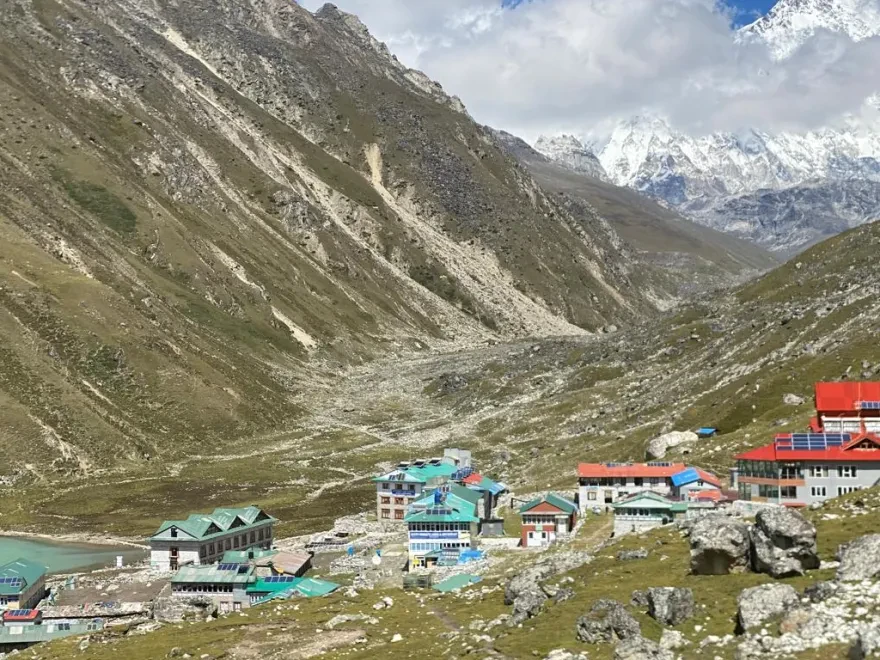
Accommodation Tea house / Lodge Meals Breakfast, Lunch and Dinner Max. altitude 5,500m / 18,045ft. The trail continues uphill, offering magnificent views of the Khumbu Glacier and the towering peaks. Reach Lobuche, a small settlement situated beneath the impressive Lobuche East and West peaks. Overnight stay in Lobuche.
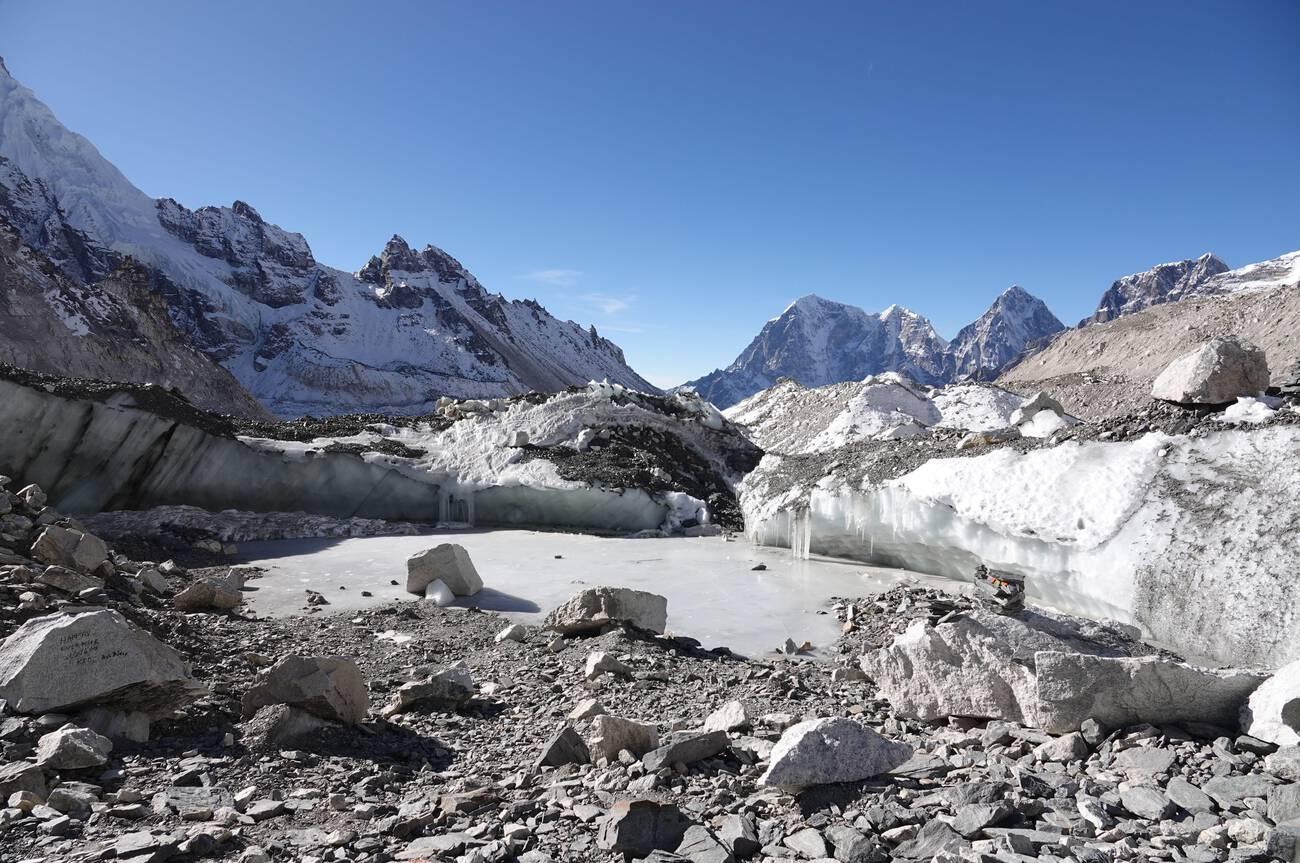
Accommodation Tea house / Lodge Meals Breakfast, Lunch and Dinner Max. altitude 4,940m / 16,207ft. The most anticipated day of the trek! Trek to Everest Base Camp through the rocky and glacial terrain of the Khumbu Glacier. Enjoy the surreal surroundings and take in the breathtaking views of the Khumbu Icefall. After spending some time at Base Camp, trek back to Gorak Shep for the night.
Accommodation Tea house / Lodge Meals Breakfast, Lunch and Dinner Max. altitude 5,364m / 17,598ft. Early in the morning, hike to Kala Patthar, a famous viewpoint offering unparalleled panoramic views of Mount Everest, Nuptse, Pumori, and other Himalayan giants. Descend to Pheriche for an overnight stay.
Accommodation Tea house / Lodge Meals Breakfast, Lunch and Dinner Max. altitude 5,545m / 18,192ft. Continue your descent, retracing the trail back to Namche Bazaar. Enjoy the familiar surroundings and the comforts of the lower altitude. Overnight stay in Namche Bazaar.
Accommodation Tea house / Lodge Meals Breakfast, Lunch and Dinner Max. altitude 3,440m / 11,286ft. Follow the trail back to Lukla, savoring the last moments of the Everest region. Celebrate the successful completion of your trek with your fellow trekkers and guides. Overnight stay in Lukla.
Accommodation Tea house / Lodge Meals Breakfast, Lunch and Dinner Max. altitude 2,810m / 9,219ft. Catch an early morning flight from Lukla to Kathmandu. Upon arrival, transfer to your hotel and have the rest of the day free to relax or explore the city's cultural landmarks, such as Durbar Square or the sacred Buddhist site of Swayambhunath.
Accommodation 3*** Hotel Meals Breakfast, Lunch and Farewell Dinner Max. altitude 1,310m / 4,298ft. It's time to bid farewell to the mystical Himalayas. You will be transferred to the airport for your departure flight, carrying unforgettable memories of the Everest Base Camp Trek.
Accommodation NA Meals Breakfast Max. altitude 1,310m / 4,298ft. 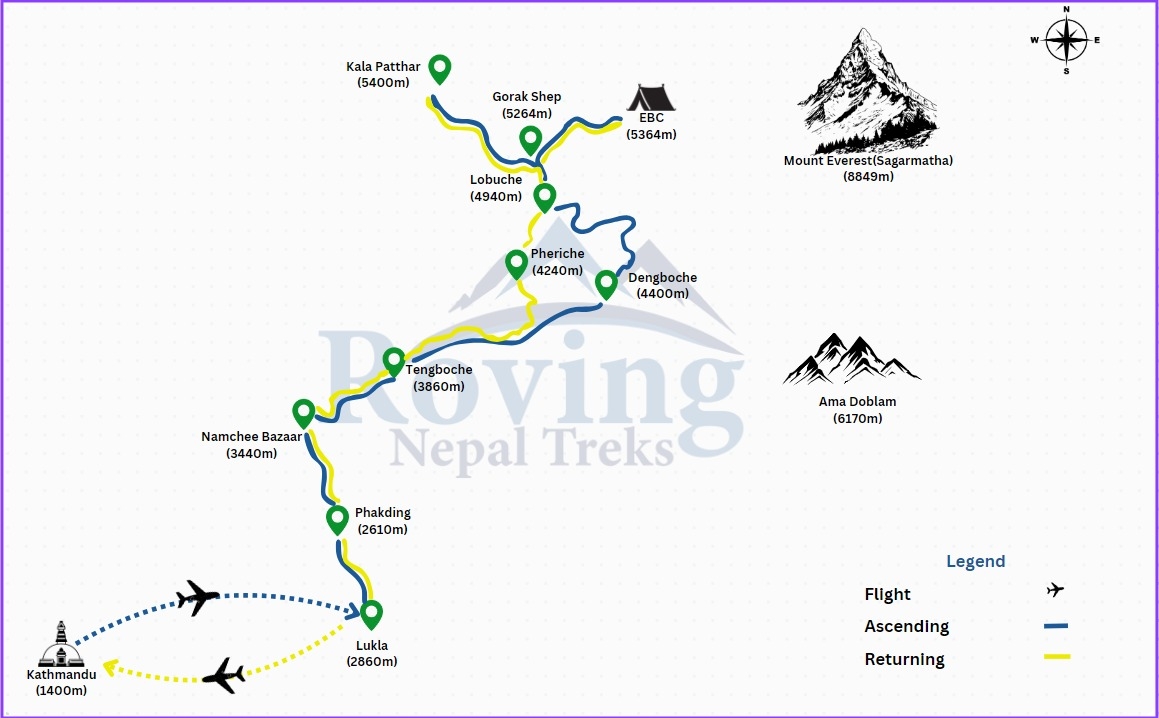
Roving Nepal Treks provides essential pre-trip guidance for the Everest Base Camp Trek to ensure a smooth, safe, and well-prepared journey through the Himalayas. Travelers should understand transport arrangements from Kathmandu to Lukla, basic teahouse-style accommodation with set meals, and flexible trekking schedules that depend on weather and altitude conditions. Proper preparation for money, permits, and insurance is also crucial before starting the adventure.
Need To Know – Everest Base Camp Trek:
Booking your Everest Base Camp trek with Roving Nepal Treks is a straightforward process. A confirmed booking is made after receiving your passport details and a deposit payment. The remaining balance is usually payable upon arrival in Kathmandu before the trek briefing.
All bookings are subject to standard trekking terms, including cancellation policy, itinerary flexibility due to weather, and personal responsibility for travel insurance. The company ensures experienced guides and porter support, but trekkers must follow safety instructions and altitude guidelines.
Key Points:
Transportation includes both domestic flights and ground transfers arranged by Roving Nepal Treks. The most important flight is Kathmandu to Lukla, which is the gateway to the Everest region. Weather conditions can sometimes delay flights, so flexibility is important.
Airport pickups, hotel transfers, and domestic travel arrangements are included as per the itinerary. Flights are scenic but weather-dependent, and backup plans may involve helicopter options or alternative schedules.
Key Points:
The Everest Base Camp trek is a high-altitude adventure passing through diverse landscapes, from green forests to icy glaciers. The trek gradually ascends, allowing acclimatisation at Namche Bazaar and Dingboche.
The weather varies significantly with altitude. Lower regions are mild, while higher areas like Lobuche and Gorak Shep can be extremely cold, especially at night. Proper layering is essential for comfort and safety.
Key Points:
The best time for the Everest Base Camp Trek with Roving Nepal Treks is during the stable weather seasons when visibility and trail conditions are ideal. Spring and autumn are considered the peak trekking periods.
Spring offers blooming rhododendrons and stable weather, while autumn provides crystal-clear mountain views and comfortable temperatures. Winter and monsoon seasons are less recommended due to snow and rain.
Key Points:
A tourist visa is required for entering Nepal and can be obtained on arrival at Tribhuvan International Airport in Kathmandu or in advance from a Nepalese embassy. The process is simple and traveller-friendly.
Visa duration depends on your travel plan, and most trekkers choose 15, 30, or 90 days. Make sure your passport is valid for at least 6 months.
Key Points:
Upon arrival in Kathmandu, a representative from Roving Nepal Treks will meet you at the airport and transfer you to your hotel. This ensures a smooth start to your journey without any stress.
You will also receive a trek briefing, gear check, and introduction to your guide. This is the time to ask questions and finalise preparations.
Key Points:
Last-minute bookings are accepted by Roving Nepal Treks, depending on flight and permit availability. However, early booking is strongly recommended during peak trekking seasons.
If you book close to departure, arrangements are made quickly, including permits, flights, and guide assignment. Flexibility is important in such cases.
Key Points:
Many trekkers choose to extend their journey after completing Everest Base Camp. Roving Nepal Treks offers flexible extension options such as helicopter return, peak climbing, or cultural tours in Kathmandu Valley.
Extensions can be customised based on your time and interest, whether adventure-focused or cultural exploration.
Key Points:
Nepalese currency (NPR) is used throughout the trek. It is best to exchange money in Kathmandu before starting the trek, as ATM access is limited in mountain regions.
Small denominations are useful for tea houses, snacks, and tips. Credit cards are rarely accepted on the trekking route.
Key Points:
Trekkers carry a day backpack during the trek, while the main luggage is carried by porters arranged by Roving Nepal Treks. Extra luggage can be safely stored in your hotel in Kathmandu.
Packing light is strongly recommended to make trekking more comfortable and efficient.
Key Points:
Your Start Date is the day you land in Nepal, and your End Date is when you fly home.
If the set Everest Base Camp Trek group dates don’t suit your schedule, we can offer alternative dates upon request.
Roving Nepal Trek provided an exceptional trekking experience in Nepal. Their professionalism, expertise, and care were outstanding. Breathtaking landscapes, knowledgeable guides, and comfortable accommodations made it truly unforgettable. Highly recommended!
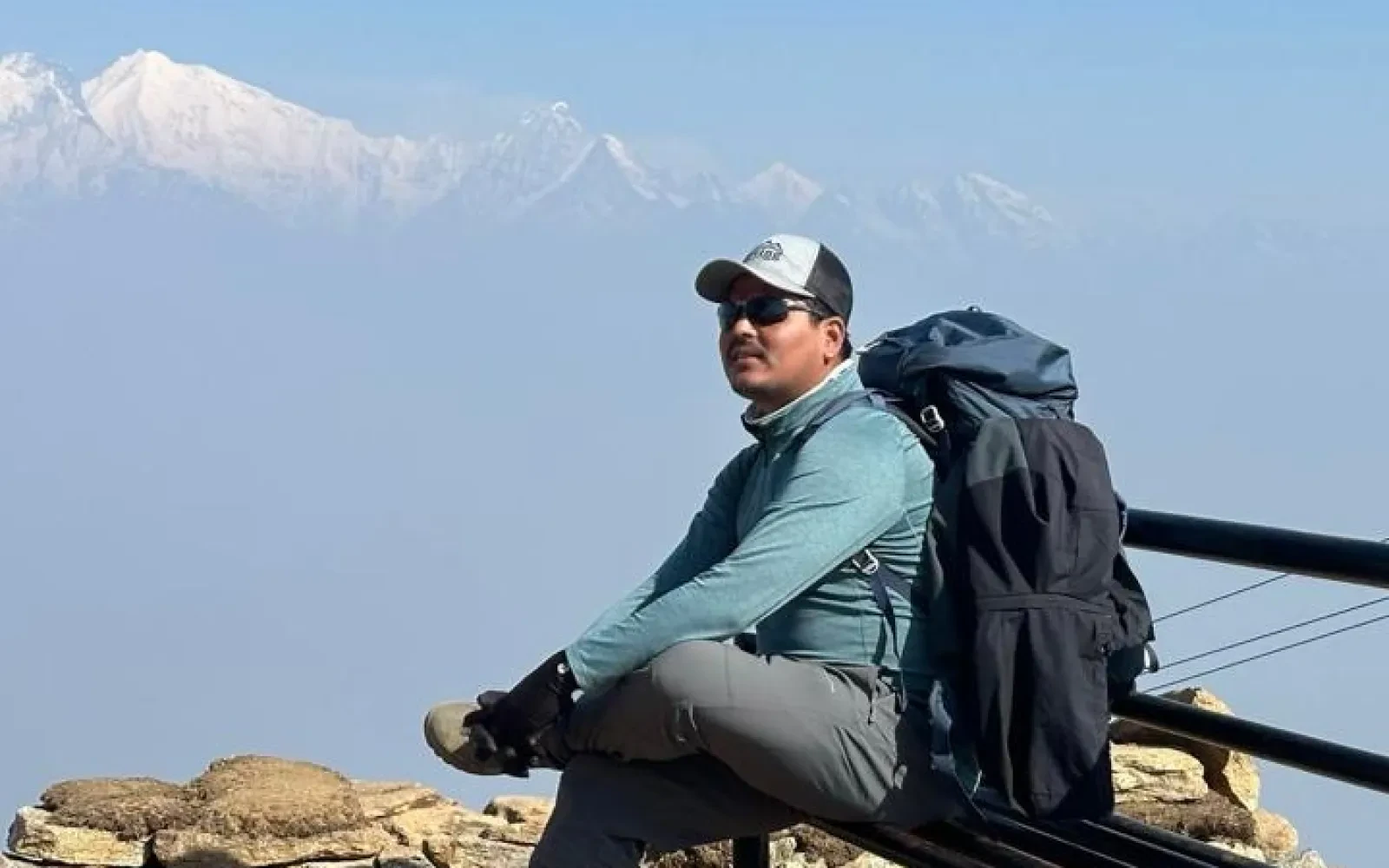
Words couldn’t quite describe how empty yet fulfilled I am after eventually completing the EBC trek. Everything during my journey has made me feel so alive: the four-day endless waiting for the flight to Lukla due to unpleasant weather, the altitude and temperature that literally took my breath away, and the views of the mountains that brought people to tears (not me). Didn’t have chance to bring a decent camera with me, yet all the bits and bobs during this two weeks have been captured in my heart forever. Having Basu alongside is the biggest luck I could get throughout the journey. With his trekking experience and passion, everything became so easy and effortless for me. He is also a very funny guy to get along with and knows the magic of turning a group of strangers into family. I cherish the time with everyone I met in Nepal. What a journey!!!
Wonderful trek to EBC at Nepal with Basu and company Roving Nepal Trek. Me and my friend did a 11-day trek to the Everest Base camp this year. We feel SO GLAD that we found Basu on an online forum and I can’t be more grateful for having him throughout the trek and my stay in Nepal. Basu is definitely an experienced and professional guide. He has also become a very good brother of ours now . When we were planning for the trek, we thought about doing the trek on our own without a guide. (Luckily we dropped that idea haha). Now having finished the trek, I would definitely suggest you to go with a guide if it is your first time trekking in Nepal. With a guide, one thing is that you can then focus on walking and fighting with the cold & height. Trust me, you wouldn’t want to spare energy looking for lodges when you get up to 4900m . The other thing is that a guide can keep you SAFE. Mountains are unpredictable and no one can gurantee a safe journey without proper planning and preparation. Basu took good care of us before, throughout and even after the trek. Excellent communications and quick response. We communicated in English through emails, facebook and whatsapps. He arranged pick-ups from and to the airport, our flight to Lukla, and he also lend me some climbing equipment. We have also stayed at Basu’s home in Kathmandu before and after the trek. His home is in the middle of a valley, next to some rice paddles and farmland. The family is just too lovely and they treated us like part of the family. You will be surprised by Nepalese’s hospitality and generosity. I am going to miss them a lot . On the mountain, everything was just perfect! Basu made sure we felt ok with every day’s trekking schedule. We were well-fed and stayed in double room every night (private toilet for some of the nights). Basu is also very knowledgeable with mountains. I learnt a lot from him about Nepalese culture and people. I have enjoyed his adventurous story on the mountain. He is also a very good camera man too XD YOU WILL REGRET IF YOU MISS BASU AND ROVING NEPAL TREK FOR NEPAL!!
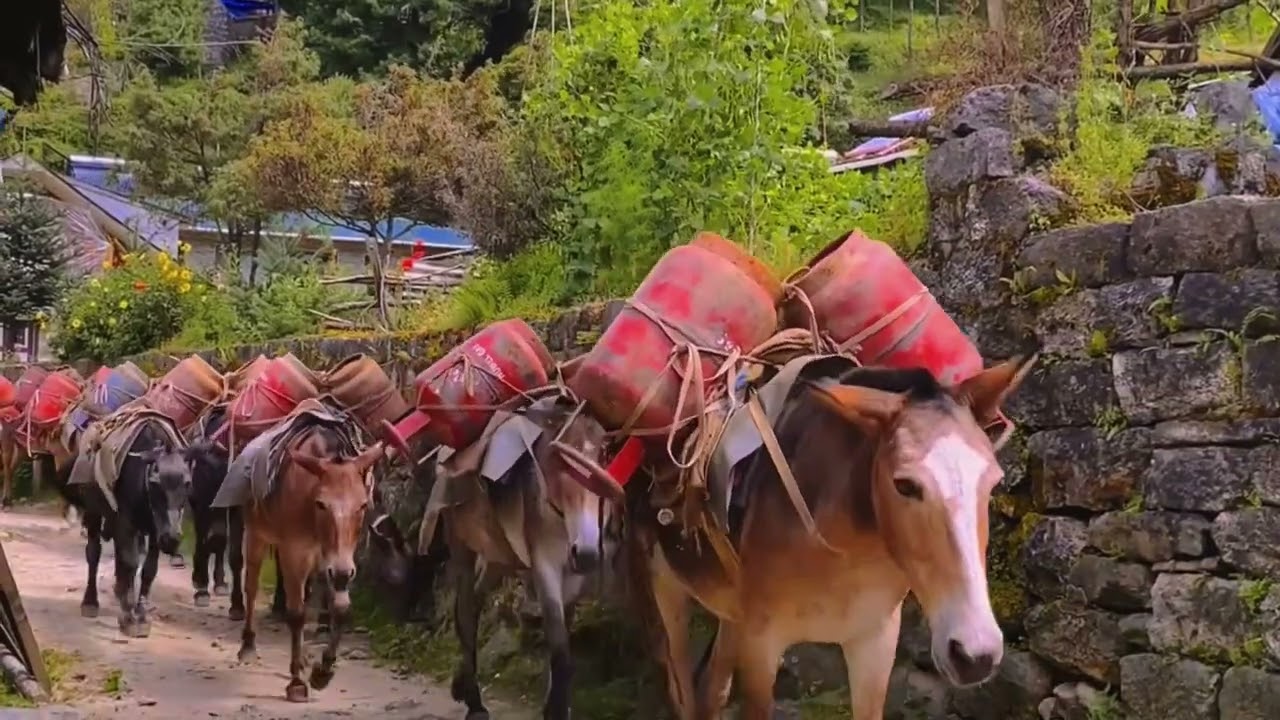
My trip was amazing. The walk is brutal but beautiful. Last two days 2 had headache. Basu, guided me what needed to be done. He is knowledgeable, friendly and kind Guide. Thanks to Basu and his team. Who made my journey happen. (Do not use poor animals for your ride. It’s so unnecessary).
I traveled the Everest Base Camp (EBC) route in March 2023 with Basu, the guide from Roving Nepal Trek. Even six months later, the journey remains unforgettable and worth recommending to fellow travelers on TripAdvisor. 我在2023年3月,跟著Roving Nepal Trek的導遊Basu遊歷EBC路線,半年之後,旅程依然難忘,也值得我在Tripadvicor推介這位導遊的團隊。 【Outstanding Comprehensive Service 基本服務齊全無缺】 When hiring a guide, what we truly appreciate is the ease of having someone organize the itinerary, transportation, manage the essential details, and handle administrative procedures along the way. Basu provided all of this and more. Prior to our departure, he promptly answered our inquiries on WhatsApp, ranging from entry requirements to equipment advice. Basu's fluent English ensured smooth communication, and he efficiently arranged accommodations and transportation for our group throughout the journey, leaving no room for mishaps. 聘請導遊,最簡單直接的當然是貪圖有人為我們遊客安排行程、交通、打點途中特別要注意的事項和行政程序,Basu可以讓我們放心,在出發前他已經在whatsapp解答我們的大小問題,例如入境和裝備,Basu英語流利,溝通沒有障礙,沿途正確地為我們一行人安排住宿和交通,沒有缺漏。 【Adaptability in Itinerary 行程應變妥善】 Basu's adaptability deserves recognition. Initially, our itinerary included a side trip to Gokyo Lake in addition to EBC. Unfortunately, we encountered a snowstorm at the Cho La Pass, a critical point on the route. Basu had been monitoring the weather, coordinating with other guides, and ultimately decided it was unsafe to proceed, avoiding potential danger. 也值得一讚Basu的應變,本來我們的行程除了EBC之外,還加遊Gokyo湖,但不巧途中必經的Cho la隘口適逢暴雪,導遊預早監察天氣,也和其他團隊的導遊保持聯繫,最後確認不宜前往,免於危險。 Here's an amusing anecdote: In the high-altitude haze, I accidentally took a room key from one of the lodges after checking out, only realizing it two hours into our trek. My initial panic quickly turned into despair at the thought of having to hike back. Basu simply reassured me, "It's OK." He suggested that if we met any returning groups, he could ask their guides to return the key. 也分享一件小趣事,不知是否人在高山,腦子迷糊,我,對了就是我,居然在一處旅店check out後拿走了他們的房間鎖匙!還要走了兩小時山路才發現!那時心下直發慌,該不會要我走回去吧?Basu就說了句"It's OK",只要遇上逆走的團隊,拜託他們導遊帶回去就好了。 His ability to handle both major and minor challenges is a testament to his quality as a guide. 大小事都有能力應變,也是導遊的品質。 【Attentive Care for Altitude Sickness 細心處理高山症狀】 During the journey, I struggled with symptoms of altitude sickness, including severe asthma, persistent insomnia-induced fatigue, and occasional stomach discomfort. At times, I doubted whether I could complete the trip. It was essential to report these symptoms to our guide. Basu was quick to assess whether my symptoms were severe or just a regular reaction, offering suitable dietary recommendations. 在旅途中,我愈來優受高山症症狀困擾,最嚴重的除了氣喘,還有連續失眠帶來的疲倦,以及小小腹瀉,曾令我一度懷疑是否能完成行程。這時必須和導遊報備,他知道我的症狀是不是嚴重或只是正常反應,也提出合適的飲食建議。 【Acknowledging the Porters' Hard Work 不要忘記挑夫的辛勞】 In addition to our guide, our team hired two porters who carried our luggage along the way. These young men were not only remarkably strong, effortlessly lugging backpacks weighing over ten kilograms, but they also thoughtfully provided us with fresh fruit at every meal, ensuring top-notch service. 除了導遊之外,團隊還聘請兩位挑夫沿途為我們挑行李,都是俊美的年輕人,除了舉重若輕地背上十多公斤的行李袋,還每餐給我們預備水果,服務周到。 【In Conclusion 最後】 Throughout our journey, Basu, became a formidable Big 2 (a card game) player thanks to our group's collective efforts. If you ever visit Nepal, don't miss the chance to challenge him! 在旅途中,Basu被我們一眾隊友鍛鍊成撲克遊戲鋤大D(大老二)的高手,歡迎到尼泊爾挑戰他! Remember, this review is to highlight the great experience of having Basu as a guide, and I hope fellow travelers find this information valuable when considering their adventure to Everest Base Camp.
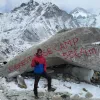
If you are fan of nature and mountains,this is a lifetime and must experience.Amazing trek with amazing company.From airport pick up to airport drop off everything was organized Perfectly! Knowledgeable and experienced guides,delicious food and good accomodation.Would love to return one day and make another tour :)
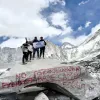
# A Tribute to Binod: Our Esteemed Guide on the Everest Base Camp Trek ## Introduction Embarking on the trek to Everest Base Camp is a dream for many adventurers. This journey is not just a test of physical endurance but also an exploration of breathtaking landscapes, rich cultures, and the indomitable spirit of the Himalayas. Central to this unforgettable experience is the guide who leads us through the rugged terrain, sharing knowledge, wisdom, and a deep respect for the mountains. For our team, that guide was Binod. This tribute aims to encapsulate the essence of his contributions, not only as a guide but as a friend and mentor during our trek. ## A Warm Welcome From the moment we arrived in Kathmandu, Binod and Basu's warm demeanor set the tone for our adventure. He greeted us with a genuine smile that instantly eased any anxiety we felt about the trek ahead. His enthusiasm was contagious, and he took the time to familiarize us with the itinerary, ensuring that each member of the group felt included and informed. Binod’s ability to connect with each trekker on a personal level created a sense of camaraderie that would carry us through even the toughest days on the trail. ## Knowledge and Expertise Binod’s extensive knowledge of the region was evident from the very beginning. He shared fascinating insights into the geography, flora, and fauna of the Himalayas, painting a vivid picture of the landscapes we would encounter. His expertise was not limited to the natural world; he also provided us with a deeper understanding of the Sherpa culture and the history of the Everest region. Each story he told was enriched with passion and authenticity, allowing us to appreciate the cultural significance of the places we visited. ### The Art of Storytelling One of Binod’s remarkable skills was his storytelling ability. As we trekked through the stunning landscapes, he would regale us with tales of previous expeditions, local legends, and personal anecdotes that brought the mountains to life. His narratives were not just entertaining; they were imbued with lessons about perseverance, respect for nature, and the spirit of adventure. These stories transformed our trek into a journey of discovery, making each step more meaningful. ## Safety First Safety is paramount in the high-altitude environment of the Himalayas, and Binod took this responsibility seriously. His thorough understanding of altitude sickness and the signs to watch for was reassuring. He conducted regular check-ins with each member of the group, ensuring we were acclimatizing well and feeling comfortable. Binod’s calm demeanor during challenging moments, such as steep ascents or sudden weather changes, instilled confidence in us. We knew we were in capable hands. ### Navigating Challenges The trek to Everest Base Camp is not without its challenges. There were moments when fatigue set in, and the altitude made the journey more demanding. During these times, Binod’s unwavering support was invaluable. He motivated us to push through our limits, often reminding us of the breathtaking views that awaited us at the next turn. His encouragement was not just verbal; he led by example, tackling the toughest sections of the trail with determination and grace. ## A Friend in the Mountains As the days progressed, Binod became more than just our guide; he became a friend. His approachable nature and sense of humor made the trek enjoyable, even during the most strenuous parts. Whether it was sharing a laugh over a shared meal or engaging in light-hearted banter during breaks, he fostered an environment of friendship among the group. These moments of connection transformed our trek into a shared adventure, creating bonds that would last well beyond our time in the mountains. ### Cultural Exchanges Binod also facilitated interactions with the local Sherpa communities, enriching our experience further. He arranged for us to visit traditional villages, where we were welcomed with open arms. Through Binod, we learned about the customs, traditions, and daily lives of the Sherpas, gaining a deeper appreciation for their resilience and connection to the mountains. These cultural exchanges were highlights of our journey, and Binod played a crucial role in making them happen. ## The Summit Experience Reaching Everest Base Camp was a moment of triumph for each of us. As we stood at the base of the world’s highest peak, the culmination of our efforts felt surreal. Binod was right there with us, celebrating our achievement. He took the time to capture our emotions in photographs, ensuring that we had tangible memories of this remarkable milestone. His pride in our accomplishment was evident, reminding us that this journey was not just about reaching a destination but also about the bonds we formed along the way. ### Reflection and Gratitude As we descended from Base Camp, reflecting on our experiences, gratitude filled our hearts. Binod had not only guided us through the physical challenges of the trek but had also helped us navigate the emotional journey. His insights and encouragement had transformed our perceptions of the mountains, teaching us to respect their power and beauty. The lessons learned during our time with Binod would resonate with us long after we left the Himalayas. ## Conclusion In a world where adventures are often fleeting, the memories created during our trek to Everest Base Camp will last a lifetime. At the heart of those memories is Binod, whose expertise, friendship, and unwavering support made our journey truly extraordinary. He exemplifies what it means to be a guide—not just leading the way but inspiring others to embrace the spirit of exploration. As we return to our daily lives, we carry with us the lessons learned from Binod and the beauty of the Himalayas. His impact on our adventure will forever be cherished, and we look forward to sharing our stories with others, encouraging them to embark on their own journeys with the same spirit of adventure that Binod instilled in us. Thank you, Binod, for being an exceptional guide and a remarkable human being. Your passion for the mountains and dedication to your trekkers have left an indelible mark on our hearts.
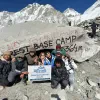
Absolutely amazing Everest Base Camp trek led by the super experienced guide Mr. Basu! The breathtaking Himalayan landscapes were stunning every step of the way, and the itinerary was perfectly planned—balanced hikes, rest stops, and key highlights without feeling rushed. Basu was incredibly caring, always checking on everyone's energy levels and sharing fun stories to keep spirits high. Highly recommend! 😊
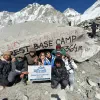
Absolutely amazing Everest Base Camp trek led by super experienced guide Basu! The breathtaking Himalayan landscapes were stunning every step of the way, and the itinerary was perfectly planned—balanced hikes, rest stops, and key highlights without feeling rushed. Basu was incredibly caring, always checking on everyone's energy levels and sharing fun stories to keep spirits high. Highly recommend!😊
I trekked to Everest Base Camp in November with Roving Nepal Trek, and my guide was Jiten. This was my second time trekking with them (I did the Annapurna Base Camp trek with them last year). They handled everything so well. A big thanks to the owner, Basu, for his great help. My flight to Lukla was cancelled on the very first day (which happens a lot). Normally, I’d have had to wait forever at the airport, but thanks to Basu’s quick and reliable arrangement, I was able to take a helicopter straight to Lukla, so I didn’t waste a day waiting for another flight. During the trip, I knew I could always count on them and didn’t have to worry about anything, which allowed me to fully enjoy the trekking and the beautiful mountain views. I highly recommend them to anyone visiting Nepal!
The flight to Lukla is certainly one of the highlights of a trip to Nepal. It is a relatively short flight with views of some of the tallest mountains on Earth, and it makes for some incredible views. For the best views, we recommend you sit on the left side of the plane on your way to Lukla, and the right side of the plane on your way back to Kathmandu.
The flight travels between large mountains, so it tends to be a bit turbulent. But not much more than you would experience on an ordinary commercial flight. Due to the short runway, the planes that fly to Lukla are small, propellor-driven planes that carry less than 20 people.
As a result of the mountain terrain and short runway, flights to Lukla only take place when the weather is good. It is not uncommon for flights to be canceled, especially as you get closer to the monsoon season. We recommend including AT LEAST two extra days in your travel plans for possible weather-related cancellations.
We strive to obtain tickets to Lukla that leave from Kathmandu, however due to the busy nature of this airport and the narrow window within which flights can travel to Lukla, sometimes clients must fly from Ramechhap Airport instead. This airport is a 4-5 hour drive from Kathmandu, but it also provides for a shorter and more reliable flight. As it gets closer to monsoon season, more flights tend to be available from Kathmandu, however the weather also tends to get more unpredictable, leading to more cancelations. If the weather is uncooperative, we have close contacts with numerous helicopter operators and can arrange helicopter transportation to Lukla at a competitive price, even when the planes are unable to fly.
The EBC trek is a moderately challenging trek that requires a decent level of fitness. We have had clients as young as 14 and as old as 80 successfully complete this trek, so as long as you properly prepare for this trek, we are confident in our ability to make your trek successful.
If you already have a running routine or are a regular hiker, your fitness level is likely already high enough for this trek. If you are not a regular runner or hiker, we do recommend that you spend the 1-2 months before your trek gradually increasing your walking distance per day, as well as your general fitness level. There are great resources online if you are looking for a walking routine to get into hiking shape, but generally we recommend starting with at least one walk a week that is at least 3 kilometers in distance, and gradually working your way up from there. Be sure to gradually increase your walking distance, as well as the number of days per week that you walk, in order to prevent injury. On this trek there will be days where you will walk 15 kilometers, so it is important that you train your body so that you can handle these distances. But with some training, even if it's just going for a walk at lunch, this trek is within reach for most people.
The most challenging aspect of this trek is not the distance or the terrain, but instead the altitude. On the EBC trek you will spend four nights sleeping above 4,400 meters, where the air is much thinner. Unfortunately, there is little that one can do to prepare for the altitude, aside from hiking slowly and taking rest days to help with acclimatization. Our itineraries leave plenty of time for acclimatization and rest, so with proper sleep, adequate hydration, and a healthy diet on your trek, we are confident in your ability to succeed. If you are still nervous about the altitude and are looking for other things to help, we have had clients experience success using Diamox to assist with the side effects of altitude. All of our guides carry first aid kits that include Diamox if you want or need it, but we do recommend our clients contact their physician to see if Diamox is right for them.
While not explicitly required, tipping is customary and expected in some instances.
For guides and porters, tips are not included in the price when you book a trek with Roving Nepal Treks. However, it is customary to give tips if you are happy with the service you received. The amount of tip to be given depends on many factors, including the duration of the trek, the difficulty of the trek, and how happy you are with the services provided by the guide and the porter. As a general rule, if a trekker is happy with the service they received, the average tip tends to be approximately $15 per day for guides and $10 per day for porters. The amount a trekker gives for tips is personal to them, but a sizeable portion of the income that guides and porters receive comes from tips. As a result, the tips you give to your guide and porter are greatly appreciated.
Private transportation such as taxis, cars, and vans to airports and starting points of treks are paid for by Roving Nepal Treks. Therefore, tipping is not required and is not expected. But if you are happy with their service and would like to provide your driver with a little extra money, they will certainly be appreciative. If you decide to tip your driver, the amount to tip depends on the length of the drive and how happy you are with the service provided by your driver. For trips to the airport or where there is less than an hour of driving required, around $2 is a good amount. For longer drives, such as to Ramechhap Airport, a tip of $5 is a good amount that will make your driver quite happy.
As for your tea houses and the places that you eat during your trek, tipping is not required nor is it expected, but it is appreciated. Some tea houses and restaurants will have tip jars available if you would like to leave money for the staff. The staff of tea houses and restaurants in the Everest Region certainly appreciate tips, but they don't expect them. If you do decide to tip the staff at a restaurant, as a general rule, rounding up your food order to the nearest 100 rupee amount and leaving that as a tip is a good amount when it comes to food (example: if your food order costs 750 rupees, paying 800 rupees and leaving the extra 50 rupees as a tip). For your tea houses, if you were happy with the staff, food quality, and accommodation, leaving 100 rupees as a tip is fine. These tips aren't required or expected, so leave them only if you are happy with the service you received and want to offer an extra thank you.
Although credit cards are widely accepted in Kathmandu, aside from Namche Bazar, it is unlikely that you will be able to use credit cards during your EBC trek. There are some locations in Dengboche, Tingboche, and even Gorak Shep that have the capability to accept credit cards, however, these payment methods are unreliable and sometimes unavailable due to issues with internet access and sufficient electrical power. Similarly, some mobile payment apps may be available at certain locations in the mountains, but as with credit cards, they cannot be relied upon as a primary means of payment.
For the majority of your EBC trek, payment by cash is the only reliable way to pay. Please ensure that you have sufficient cash on hand before leaving Kathmandu, because aside from Namche Bazar, you will not find ATMs on the EBC trek route. Although money exchangers can be found throughout the EBC trek, the exchange rates offered in these locations are far less favorable to the client than money exchangers in Kathmandu will offer.
It is important that you bring sufficient money with you from Kathmandu to cover any expenses you incur during the EBC trek. Although Roving Nepal Treks provides for accommodation, meals, and certain other expenses, any expenses not mentioned as included for your trek must be paid by the client. The amount of money that a client should bring for the EBC trek depends on the client. Some clients may want to buy souvenirs, snacks, and other things not included in the trekking package.
As a general rule, we recommend that clients bring at least $200 worth of Nepali Rupees per person with them for the EBC trek. Although there are some money exchangers in the mountains and some places may be willing to accept US dollars or other currencies, the exchange rate they will offer is not favorable. It is better to bring more money with you than you might think is necessary, because aside from a few ATMs in Namche Bazar, you will not be able to take out more money once you start your trek. Plus, any extra Nepali Rupees you have at the end of your trek can be easily exchanged in Kathmandu to your home currency, and at relatively good exchange rates.
We have had clients with children who, as a family, have successfully completed the EBC trek on numerous occasions. So it is entirely possible for children to do the EBC trek.
That said, the EBC trek does present certain issues for some children. The EBC trek is moderately challenging for adults, with some days requiring more than 15 kilometers worth of hiking. Some children may not be able to walk such great distances in a single day. But don't let the distances alone discourage you, as this issue can be easily remedied by adding more days to the trek. This will allow for a greater number of stops along the way so that the amount of walking each day will be more manageable. If you wish to trek with children, Roving Nepal Treks would be happy to discuss appropriate modifications to your trekking itinerary based on your situation.
Another potential difficulty for children is that in certain places along the trek, there may be no tea houses, restaurants, or bathrooms for quite a long time. It is not uncommon in the higher reaches of the EBC trek that clients must walk more than two hours before finding the next location with food, water, or bathrooms. If you are hiking with children, be sure to pack sufficient water and snacks for them to enjoy along the way, and make sure they are able to time their bathroom breaks so that they won't be forced to relieve themselves along the trekking trail.
From a physical standpoint, we believe that with appropriate planning and modifications to the itinerary, children are more than capable of doing this trek. However, trekking is an activity that not all people enjoy. Before deciding to trek in Nepal with children, we highly recommend going on day hikes and preferably smaller treks at home to ensure that your children have the motivation and desire necessary for a successful trek to EBC.
No, there are no vaccinations or immunizations that are required in order to enter Nepal or to obtain a trekking permit. That said, some countries do recommend certain vaccines for visitors to Nepal. Please consult the appropriate public health agency from your home country to determine which vaccines, if any, are recommended.
That said, many public health agencies recommend travelers being vaccinated for Hepatitis A and Typhoid. These diseases are more often than not foodborne, and can occur in areas with inadequate sanitation and waste disposal. Some health agencies also recommend vaccination for Japanese Encephalitis, especially for travelers who visit the Terai region in Southern Nepal. It is recommended that you consult your local healthcare provider to discuss which vaccinations are appropriate for you.
The best way to stay safe in Nepal is to practice good hygiene. Drink only treated, sterilized water. Bottled water in Nepal, if properly sealed, is treated and safe to drink. Water purification tablets are also great for purifying water, and provide a cost-effective and environmentally conscious alternative to bottled water while trekking. Water that has been boiled is also safe to drink if it is properly filtered to remove other contaminants. Do not eat raw fruits or vegetables unless they have been washed with purified water, as tap water in Nepal can contain microbes and other contaminants which can be transferred to food. Be careful when eating meat products, especially in the high mountains, as sometimes meat can spoil due to improper refrigeration.
Yes, the EBC trek listed on our website can be customized.
The itinerary listed is one that we have found from over 30 years of experience works very well for our clients. That said, if you want to customize your trip by visiting additional locations, spending more time in a particular location, staying in a different location than the one listed in the itinerary, or in any other way, we are happy to discuss customization possibilities with you. Please note, customizations to the itinerary listed on the website will likely change the price of your trek, but we would be happy to outline any cost changes with you in detail.
We encourage our clients to peruse our website to familiarize themselves with the other treks we offer in the Everest Region. Many of the changes requested by our clients, such as visiting Gokyo Lake or hiking the challenging Kongma La Pass, are included in other treks that we already offer for our clients. Reading about these other treks can also be a valuable resource for our clients by helping them to familiarize themselves with the different hiking opportunities available.
Yes, we offer discounts for larger groups.
Our packages are priced not only based on the length, difficulty, and logistics of the trek, but also based on the number of clients. Two clients can share the services of one porter and one guide can easily handle a group of five trekkers by themselves. The money saved by using shared porters and guides is passed on to our clients. Groups larger than five persons can often receive even bigger discounts due to the logistics of large treks being easier to manage than a greater number of solo or small group treks.
If you have questions about the discounts applicable for groups of a particular size and how additional or fewer trekkers might affect said discount, please contact us to discuss.
Yes, you can rent or buy trekking equipment and supplies in Nepal. In Thamel there are hundreds of shops specializing in trekking equipment that offer a wide range of supplies at a variety of price points.
There are some shops that specialize in high quality trekking gear consisting of the exact same products that you can buy at expensive trekking supply companies in your home country. The prices at those stores are quite similar to stores in your home country, so don't expect to find a great deal on authentic, high quality trekking gear in Nepal. There are a far greater number of shops that sell cheaper versions of the same gear, at widely varying levels of quality. At these stores, it is important that you bring your negotiation skills, as the store clerks are likely to quote you a higher price than they would be willing to accept! Either way, pretty much everything you need for your trek can be purchased in Nepal.
Certain gear, such as hiking boots and woolen items, we recommend buying in your own country, as these are very important for a successful trek and the quality of these items in Nepal can vary greatly. If you do decide to buy trekking gear in Nepal, make sure that you have at least one full day in Kathmandu before starting your trek, so that you have enough time to peruse the stores and find the gear you need.
Please note that Roving Nepal Trek may have certain items, such as down jackets, sleeping bags, and crampons available for use, sometimes free of charge.
The quality of food and options available depend on the location. In the lower altitudes and more populated villages, such as Namche Bazar, the quality of food and the types of food available are comparable to Kathmandu. However, as you continue your trek to more remote areas at higher elevations, the food quality and variety do begin to suffer.
Tea houses and restaurants throughout your trek will have trekking staples such as chow mein, potatoes, fried rice, momos, different types of pasta, and of course dal bhat. Some restaurants, even at higher elevations and in more remote areas will have meat items on their menu for purchase. However, we do not recommend our clients to eat meat above Namche Bazar, as there have been many issues in the past regarding food quality in villages farther up the mountain.
If there are particular food or snack items that you desire, we would advise bringing them from Kathmandu, as many items are not available in the mountains and those that are typically cost far more than they would in Kathmandu.
Although the EBC trek is available all year, because of the ever-changing weather in the mountains, there are some times that will make for a much better trekking experience than others.
The typical trekking season in the Everest Region is from March to May, and then again from September to November. While these are still the most popular seasons to trek, we have noticed a shift in the weather in the Everest Region over the past few years. Mid-late May, as well as early-mid September, were once among the best times to do the EBC trek, as the weather tended to be warmer while the skies remained clear and free of rain. However, recently the summer monsoon seems to be arriving earlier and lasting longer in previous years, which results in more cloudy days, more rainy days, and more flight cancellations than in years past. Meanwhile, mid-late February and early-mid December, once unpopular times to trek due to the cold, have become a bit warmer and more favorable. As such, we would recommend a bit of caution when booking dates close to the monsoon season, while also advising clients to keep an open mind about trekking in February and December.
As for trekking in off-season, winter season, though cold, provides the best views of the mountains you can get. It almost never rains from December until February and the skies remain clear all day. In addition, there are far fewer trekkers on the trail during this season, so trekking in winter makes for a more peaceful and natural experience. As long as you aren't afraid of the cold and pack appropriate cold weather gear, trekking to EBC in winter can be an amazing experience.
Trekking during the monsoon season is certainly possible for those that cannot trek at other times during the year, but it does bring some difficulties. During the monsoon season it will rain frequently, which can make the trails muddy and slippery. And there are more clouds in the Everest Region during the monsoon season, so the beautiful, panoramic views of the Himalayas may be harder to see. But even during the peak of monsoon season there will be times where the weather is clear and blue skies can be seen. And although it is wet, the weather tends to be warmer than in any other season. Plus there are far fewer trekkers on the trail. If you do decide to trek during the monsoon season, please make sure to have more than two extra days in your itinerary, as the flights to Lukla become very unpredictable at this time.
Insurance is a requirement for all treks booked with Roving Nepal Treks. Any insurance policy purchased must contain helicopter evacuation for medical reasons. Please look over your policy to ensure that it covers hiking activities in Nepal, that it covers altitudes up to at least 5,500 meters, and that it provides for helicopter evacuation.
Before coming to Nepal, we request that you send a copy of the certificate of insurance and the policy provisions for the insurance policy that you purchase, so that we can review to ensure that you are adequately covered while in the mountains. If you have any issues finding an appropriate insurance company, please contact us via email and we can provide a list of insurers based on your country of origin.
All of our guides speak English and Nepali. If you would like a guide who speaks another language, such as Mandarin, Spanish, or Russian, we can ordinarily arrange the appropriate guide for you. However, this may take some time, so requests for guides who speak languages other than English should be submitted at least 15 days before the start of your trip. Otherwise we cannot guarantee that we will be able to find a guide in time.
Please note that specialized guides who speak languages other than Nepali and English typically charge higher rates than most guides. As a result, the cost of your trek may increase if such a guide is used. If you would like to use a specialized language guide and wish to know the additional cost, please email us and we would be happy to provide you with an estimate.
While helping clients to successfully complete their trek is an important goal for us, our number one priority is the health and safety of our clients. As such, we use only experienced guides who have first aid training and expertise in identifying signs of altitude sickness. All of our guides carry a first aid kit containing a variety of medications, ointments, bandages and dressings for wounds, and pulse oximeters. Our guides are trained to ask questions and are constantly examining clients for signs of altitude sickness that might not be apparent to most, such as; puffy and swollen eyes, face and hands, changes in gait and walking pace, and loss of appetite.
All of our guides carry cellphones with sim cards on the most reliable cellular network in Nepal. Our guides also have access to Air Link for reliable internet access while in the Everest Region. Similarly, our guides have experience with helicopter evacuation and have good working relationships with many helicopter companies. Our guides are in regular contact with our office in Kathmandu throughout the trek, giving real-time updates about the condition of our clients so that we can be proactive.
If you have any additional questions about what Roving Nepal Treks does to help ensure the safety of its clients, please to email us and we would be happy to discuss further.
You are not required by law to have a guide for the Everest Base Camp trek. In fact, we have arranged treks for clients who wanted to trek alone without the services of a guide. But we would highly recommend using a guide.
Guides are very important in the mountains because they have specialized training and substantial expertise that helps keep clients safe. Our guides are very experienced, with first aid training and expertise in identifying signs of altitude sickness. These guides also carry a first aid kit containing a pulse oximeter, as well as medications, bandages, and other supplies to deal with unforeseen injuries or illnesses in the mountains. Additionally, these guides can identify signs of altitude sickness that clients might not notice themselves, such as swollen eyes, face and hands, changes in gait and walking pace, and loss of appetite. Should a client become sick, guides are an invaluable resource for ensuring a prompt, effective rescue, as our guides have substantial experience and connections within the helicopter rescue community. By using an experienced guide, you can trek confidently knowing that someone is there to make sure that you will reach your destination safely.
Aside from client safety, using a guide also helps make for a smoother trekking experience. Although the trails leading to EBC are for the most part well-marked, there are certain stretches, particularly from Dingboche to Dughla and from Gorak Shep to EBC, where there might not be a clear trail to follow. As you approach EBC there is lots of ice, large boulders, and the occasional crevasse that must be navigated safely. Our guides know the safest route and can identify potential dangers. By allowing a guide to handle the navigation, you can focus on the incredible views. Our guides also have great working relationships with the many tea houses along the trek, and will make sure that you stay in a good tea house at a fair price. They will help you order food, communicate with tea house staff, fill your water bottle, and they can even procure things you need from local shops.
Finally, by using a guide, you are helping to contribute to Nepal's economy and making a real difference in the lives of your guide and their family. Unfortunately, many Nepalese people live in poverty, and without a lot of good job opportunities, many are forced to leave Nepal in search of work. Being a mountain guide is a job that pays quite well by Nepali standards, allowing these guides to remain in Nepal and earn enough money to support a family. After trekking to EBC you will take home incredible memories that will last a lifetime. Using a guide is a great way to give something back.
You are not required by law to have a porter for the Everest Base Camp trek. In fact, we have arranged many treks for clients who wanted to trek without the services of a porter. But we would highly recommend using a porter.
The EBC trek is a long journey that requires a lot of gear to complete safely and comfortably. It is not uncommon for our trekkers to bring more than 10 kg of gear with them into the mountains, which doesn't include the weight of the 2 liters of water they should carry with them at all times. If a trekker wants to bring a digital camera or laptop, the weight increases even more. Carrying this much gear on one's back during an 8 hour hike is hard enough at sea level, but on the EBC trek you will be trekking at altitudes of up to 5,500 meters on Kala Patthar. Using an experienced porter to carry most of your belongings makes the trek less physically taxing, which in turn greatly reduces the risk of altitude sickness.
In addition, porters are a valuable resource in case of unforeseen emergencies. If you talk to most guides who were porters in their younger years, they will recount times where they (or one of their porter friends) were forced to carry a sick client down the mountain on their back, in the middle of the night or in cloudy weather, because helicopters were unable to fly to their location. These situations are rare, but they happen every year in the Everest Region. In addition, in case illness strikes when a client is nowhere near a tea house and without cellular service, having a porter and a guide allows the porter to go off in search of help while the guide tends to the client's illness.
Porters make the trek safer and provide a valuable resource in case of emergency. But safety aside, porters also make the trek more enjoyable. By using a porter, clients can trek with only day packs containing water, an extra layer or two, gloves, sunscreen, and their camera. This makes the trek easier and more enjoyable, and you will start and end the day with far more energy than if you carried all the gear yourself.
By allowing Roving Nepal Treks to arrange a porter for you, you will save money versus retaining a porter yourself upon arrival in Lukla. Sometimes clients don't believe they will want porter services before they depart Kathmandu, but upon reaching Lukla and seeing the mountainous terrain and breathing the thin mountain air, they have second thoughts. Trying to obtain a porter yourself in the mountains can be quite difficult, because even if there are porters available at that time, those porters typically charge far more money than if arranged prior to your departure from Kathmandu. If you think there is even a chance that you might require a porter, it is cheaper and less of a headache to allow us to arrange the porter for you.
Finally, by using a porter, you are helping to contribute to Nepal's economy and making a real difference in the lives of your porter and their family. Unfortunately, many Nepalese people live in poverty, and without a lot of good job opportunities, many are forced to leave Nepal in search of work. And those that are unable to speak English or other foreign languages are often shut out of Nepal's tourism industry, closing the door to one of the few opportunities to make a good salary. Being a porter is a job that does not require English proficiency which also pays pretty well by Nepali standards, allowing these porters to remain in Nepal and earn enough money to support a family. Using a porter is a great way to give back to Nepal and help those in need of stabile, gainful employment.
For most visitors, the visa process in Nepal is quite easy. Visa on arrival is available at Tribhuvan International Airport for people from nearly every country on Earth. For a list of the countries excluded from the visa on arrival program, please visit - https://www.immigration.gov.np/en/page/visa-on-arrival
Tourist visas obtained under the visa-on-arrival program are available in three durations: 15 days, 30 days, and 90 days. The costs of these visas are $30, $50, and $125, respectively. We recommend bringing crisp, new dollar bills to ensure there is no issue with immigration staff rejecting your money. Please check the visa on arrival page before coming to Nepal, as the costs of a visa are subject to change.
Visas can be extended, if necessary, by visiting the Nepal Immigration Office. Please note that foreigners are only permitted to stay in Nepal for a total of 150 days per calendar year.
Yes, we generally require a deposit in order to book a trek with Roving Nepal Treks.
The amount that we require as a deposit is 20% of the total cost of your trek. This amount goes to paying for flight tickets, ground transportation, accommodation in Kathmandu, all necessary permits, and other upfront costs to arrange your trek. If for some reason you are unable to come to Nepal and complete your trek on the agreed upon start date, we can provide a full refund of your deposit if your cancellation is received no less than 15 days from the start date of your trek. If you experience delays and would like to move your trek to a later date, we will do our best to accommodate this change at no additional cost.
Currently, the only available means of payment for your deposit is through bank transfer. The banking information for the account all deposits should be sent to is as follows:
Bank Name: Sanima Bank
Account Number: 038010010001270
Swift Code: SNMANPKA
Recipient Name: Roving Nepal Trek Pvt. Ltd.
Address of Bank: Nayabazar, Kathmandu
Roving Nepal Treks requires that a deposit of 20% of the total cost of the trek be paid in order to book a trek. This deposit must be paid by bank transfer. The banking information needed in order to make this bank transfer can be found below:
Bank Name: Sanima Bank
Account Number: 038010010001270
Swift Code: SNMANPKA
Recipient Name: Roving Nepal Trek Pvt. Ltd.
Address of Bank: Nayabazar, Kathmandu
After your deposit has been paid, the remainder of the cost of your trek can be paid once you arrive in Nepal. Although you can pay the entire amount for your trek by bank transfer, we do not recommend this as the fees associated with a bank transfer are higher. We recommend that clients pay the remaining balance for their trek by cash, either in US Dollars or Nepali Rupees. If necessary, payments can be made via credit card, but please note that due to bank charges, any payments made by credit card will incur an extra 4% banking fee.
| No of people | Price per person |
|---|---|
| 1 - 3 | $1,600 |
| 4 - 7 | $1,499 |
| 7 - 10 | $1,450 |