Need help with booking? Send us a message.
Kathmandu - Machha Khola - Namrung - Shyala - Samagaon - Manaslu Base Camp - Shyala - Machha Khola - Kathmandu
Tea House during Trek and 3 * or similar Hotel in City
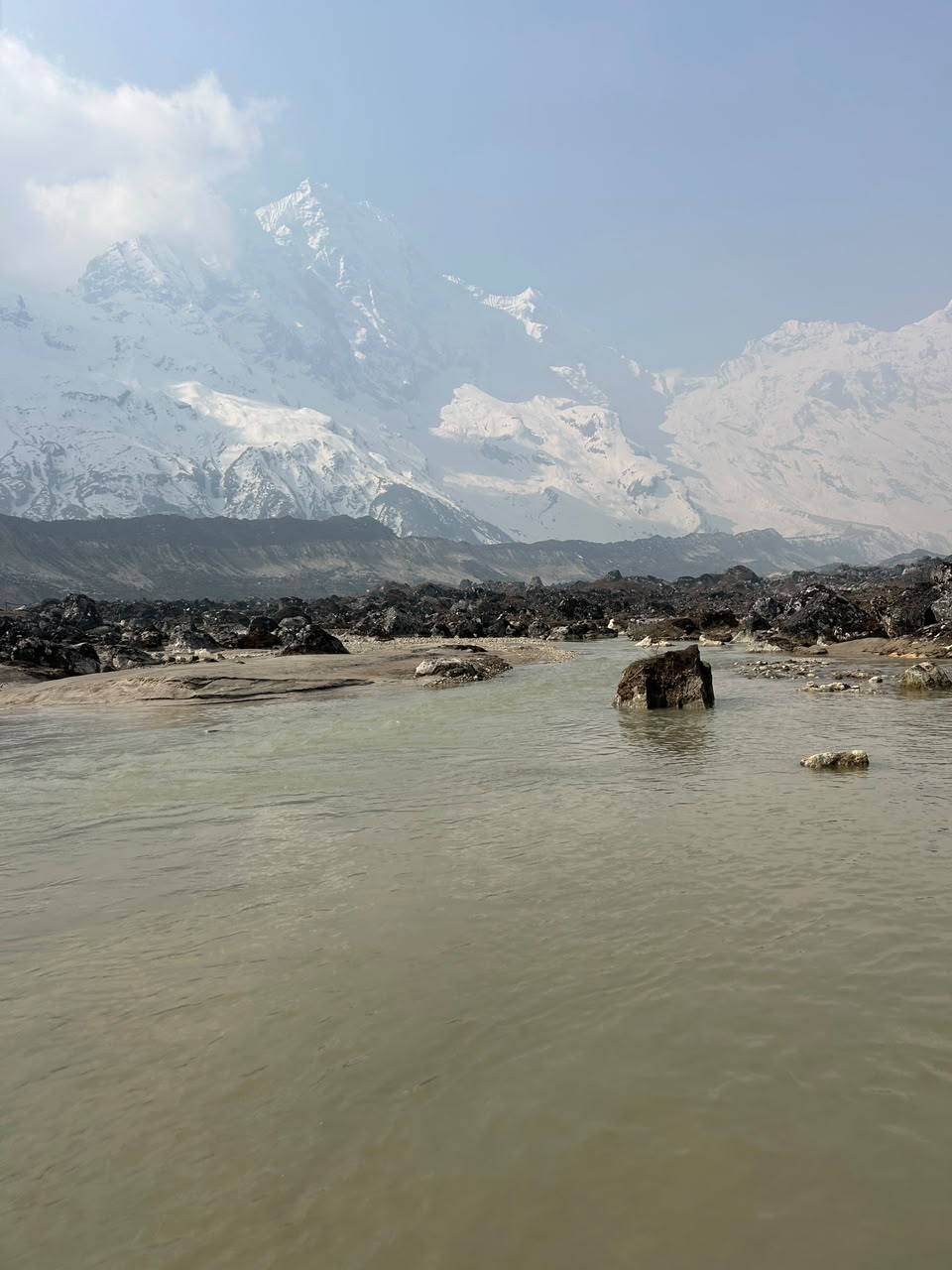
· Direct Base Camp Access: Stand at 4,800 meters on the rugged moraine of Manaslu Base Camp, surrounded by active international expedition tents and towering walls of blue glacial ice.
· No High Passes: Experience the thrill of true high-altitude mountaineering culture without the physical strain and logistical risk of crossing the Larkya La Pass.
· Retraced Scenic Trail: Enjoy a relaxing, low-stress return journey down the valley, letting you catch views and details you might have missed on the way up.
· Tibetan Culture of Samagaon: Spend multiple days exploring the largest Nubri Buddhist cultural settlement in the region, complete with ancient monasteries and local stone architecture.
· Financial Advantage: Save money on administrative fees by completely avoiding the need for the Annapurna region permits.
Standing at the base of an 8,000-meter peak is a dream shared by trekkers all over the world. But often, the most iconic base camp routes come with a massive catch: the logistical nightmare and physical stress of crossing extreme, high-altitude mountain passes. If you want to experience the raw alpine majesty, massive hanging glaciers, and vibrant mountaineering culture of Mount Manaslu (8,163m) up close, but you do NOT want to cross the grueling, high-risk Larkya La Pass, Roving Nepal Trek has created the perfect solution: the Dedicated Manaslu Base Camp Trek.
This innovative, out-and-back itinerary follows the classic, beautiful valley trail up to the major cultural hub of Samagaon. From there, you will make the ultimate, challenging day-hike ascent directly to the active expedition base camp at 4,800 meters. But instead of pushing forward into the freezing wastes of the high pass, you will simply turn around and retrace your steps back down the exact same scenic trail. This creates a shorter, safer, and far more manageable mountain journey that cuts out the vertical extremes while retaining 100% of the spectacular high-altitude reward.
The crossing of a high mountain pass like Larkya La (5,106m) is undoubtedly an impressive feat, but it introduces a major layer of risk and unpredictability to an expedition. High passes are notorious for sudden, violent blizzards, sub-zero wind chills, and loose, dangerous scree slopes. Furthermore, crossing a pass forces you to spend multiple consecutive days sleeping above 4,000 meters, which dramatically increases the probability of developing Acute Mountain Sickness (AMS).
By intentionally choosing a same-trail return itinerary, you effectively eliminate these hazards. Your maximum sleeping elevation never exceeds the 3,530 meters of Samagaon, allowing your body to recover comfortably each night in a warm, established lodge. If bad weather rolls in, our team can easily adjust the schedule or safely descend the valley floor without being trapped by an unpassable mountain wall. This makes the dedicated Base Camp trek an exceptionally smart option for family groups, older hikers, or anyone with limited holiday time who wants a highly predictable, lower-risk Himalayan adventure.
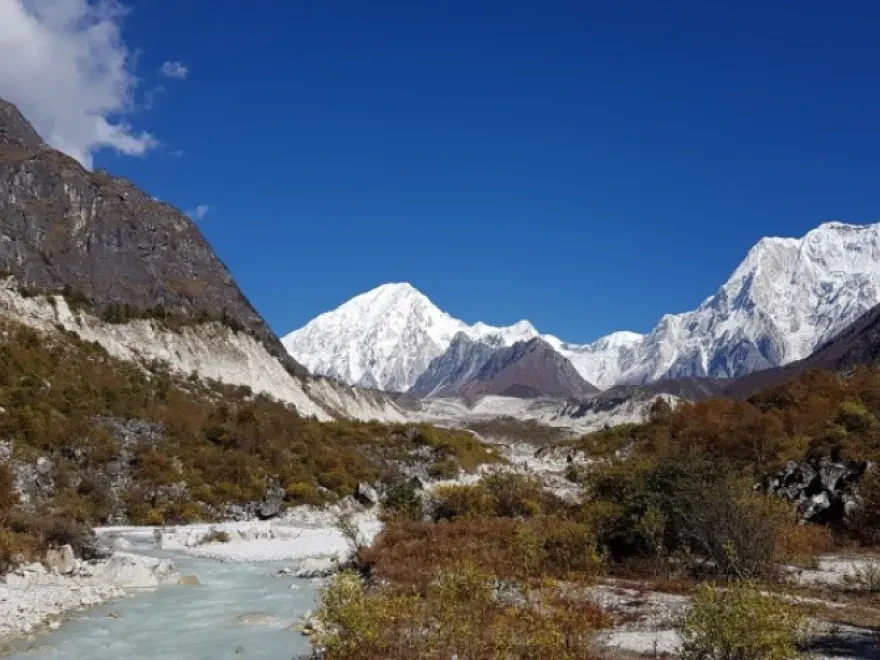
Do not mistake the absence of a high pass for a lack of adventure. The climb from Samagaon to Manaslu Base Camp is a thrilling, demanding alpine milestone. As you leave the village stone houses behind, you will ascend steep, dramatic moraine ridges that cut directly through the rugged mountain landscape. The trail takes you past the spectacular Birendra Tal, a brilliant turquoise glacial lake fed by the grinding ice fields far above.
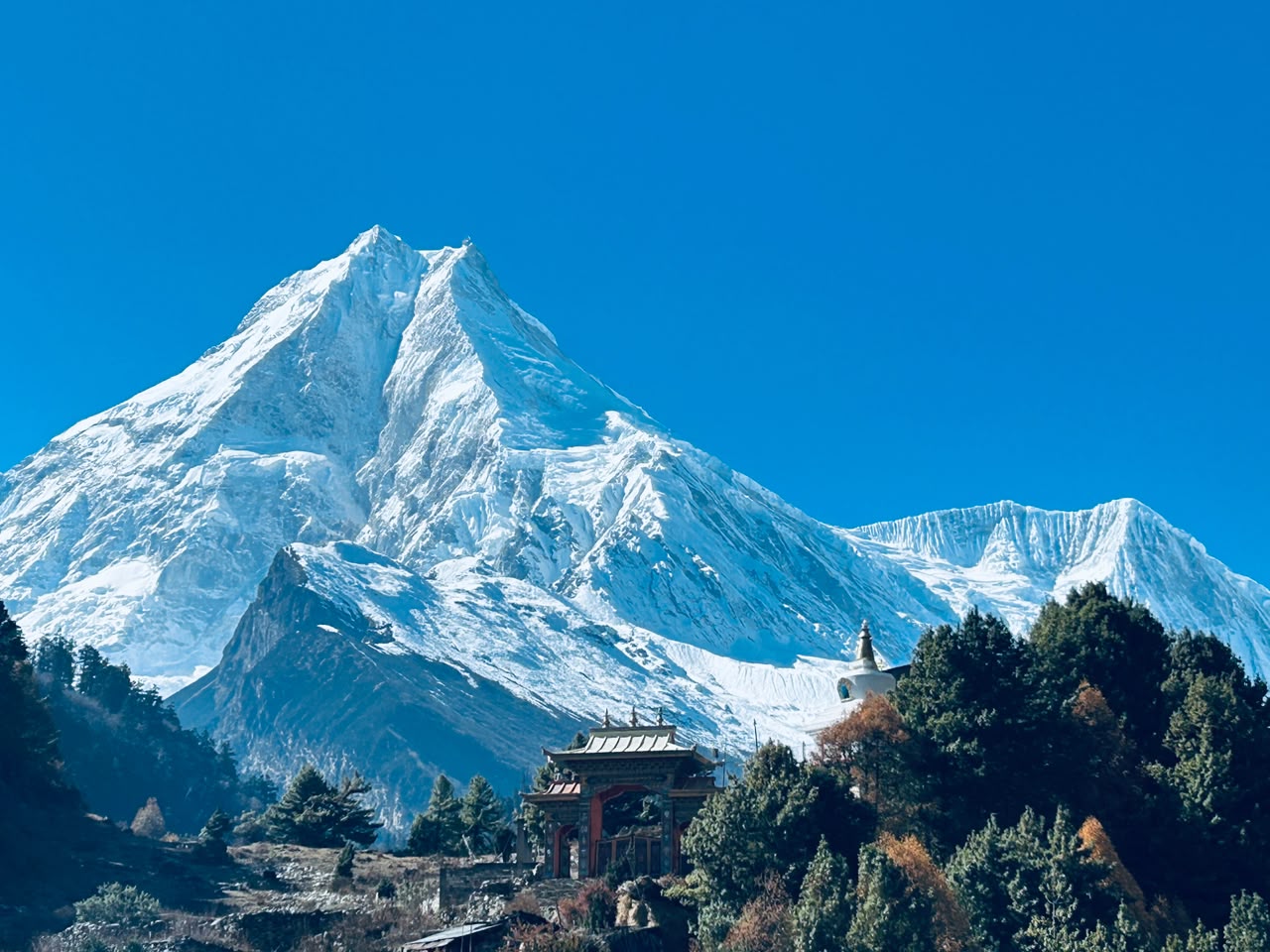
Arriving at the base camp at 4,800 meters places you directly in the heart of true mountaineering history. During the peak spring and autumn climbing seasons, this rocky moraine transforms into a vibrant, high-altitude tent city. You will walk alongside international expedition teams, see rows of bright yellow tents pitched on the ice, and watch elite climbers preparing their gear for summit attempts on the "Mountain of the Spirit". Standing here, looking up at the colossal, vertical walls of rock and ice that form Manaslu’s summit, provides a profound sense of scale that words simply cannot describe.
One of the most underappreciated benefits of an out-and-back trekking trail is the unique perspective it provides. When you are hiking up a valley, your energy is naturally focused on the physical challenge, the elevation gain, and reaching the destination. You spend a lot of time looking at the trail ahead, pushing through the steep sections, and focusing on your breathing.
On the way back down, however, the physical pressure vanishes. The walking is predominantly downhill, the air grows thicker and richer with every mile, and your body feels sudden bursts of new energy. This allows you to truly relax and absorb the rich cultural and natural environment around you. You will catch stunning mountain vistas that were previously behind you, spend more time interacting with the friendly Nubri villagers, take long photography breaks by the rushing waterfalls, and enjoy the deep, peaceful forests with a completely clear, stress-free mind. It turns the final days of your trip into a beautiful, celebratory victory lap.
Please Note: This itinerary is specifically tailored for trekkers who want an out-and-back experience. By eliminating the Larkya La Pass, we cut out several days of grueling, exposed high-altitude hiking, making the journey far more predictable and manageable. If you have a shorter holiday window or struggle with extreme high-altitude anxiety, this pass-free Base Camp return trek is your perfect choice.
Touchdown in Nepal! As soon as you exit the airport terminal, a friendly face from Roving Nepal Trek will be waiting to scoop you up and drive you to your hotel. Once you have settled into your room, feel free to head out and explore Thamel’s bustling markets, grab a cold drink, or pick up any last-minute trekking gear. In the evening, we will sit down together for a relaxed pre-trip briefing to go over the map while we finalize your restricted area paperwork.
We will get an early start today for a classic Himalayan road trip. Hopping into our private 4WD vehicle, we will cruise out of the city along the winding Prithvi Highway. The paved road eventually gives way to a bumpy dirt track after Arughat, tracking right along the edge of the river canyon. It is a long, 8-to-10-hour drive, but the changing scenery of rural villages, terraced farms, and waterfalls will keep you highly entertained until we pull into the riverside village of Machha Khola.
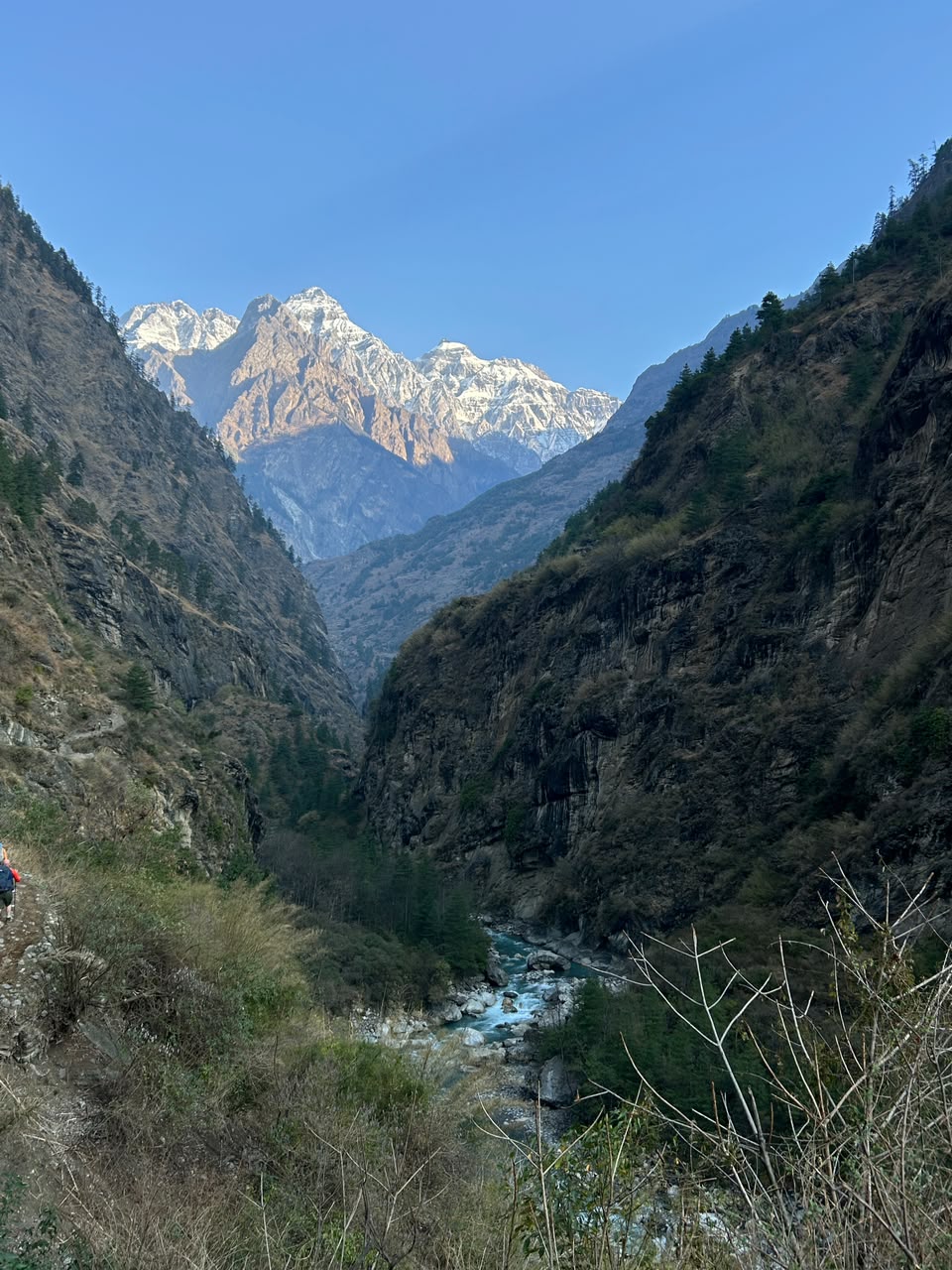
Today, we finally hit the trail! We will follow a winding path that hugs the roaring Budhi Gandaki River. Along the way, we will pass through Tatopani, where you can see natural hot springs steaming right out of the stone cliffs. We will cross several high, bouncy suspension bridges and share the trail with local donkey trains carrying supplies up-valley. By the afternoon, we will arrive at the clean, beautiful, stone-paved village of Jagat to register our permits
We will start the morning by passing the official conservation checkpoint and trekking along the riverbanks. The trail leads us through the lovely village of Philim, where the valley narrows significantly into dramatic, sheer rock cliffs. We will cross a few more spectacular suspension bridges high above the churning water and hike through cool bamboo forests before settling in for a quiet, peaceful night in the tiny settlement of Deng.
You will feel the air getting crisper today as we climb steadily higher. The trail winds through beautiful forests of rhododendron and pine, and you will start seeing beautifully carved mani stones and prayer wheels along the path. The cultural landscape shifts entirely into traditional Tibetan Buddhist territory. After a solid 6-hour walk, we will pull into the high village of Namrung, famous for its brilliant local stone architecture.
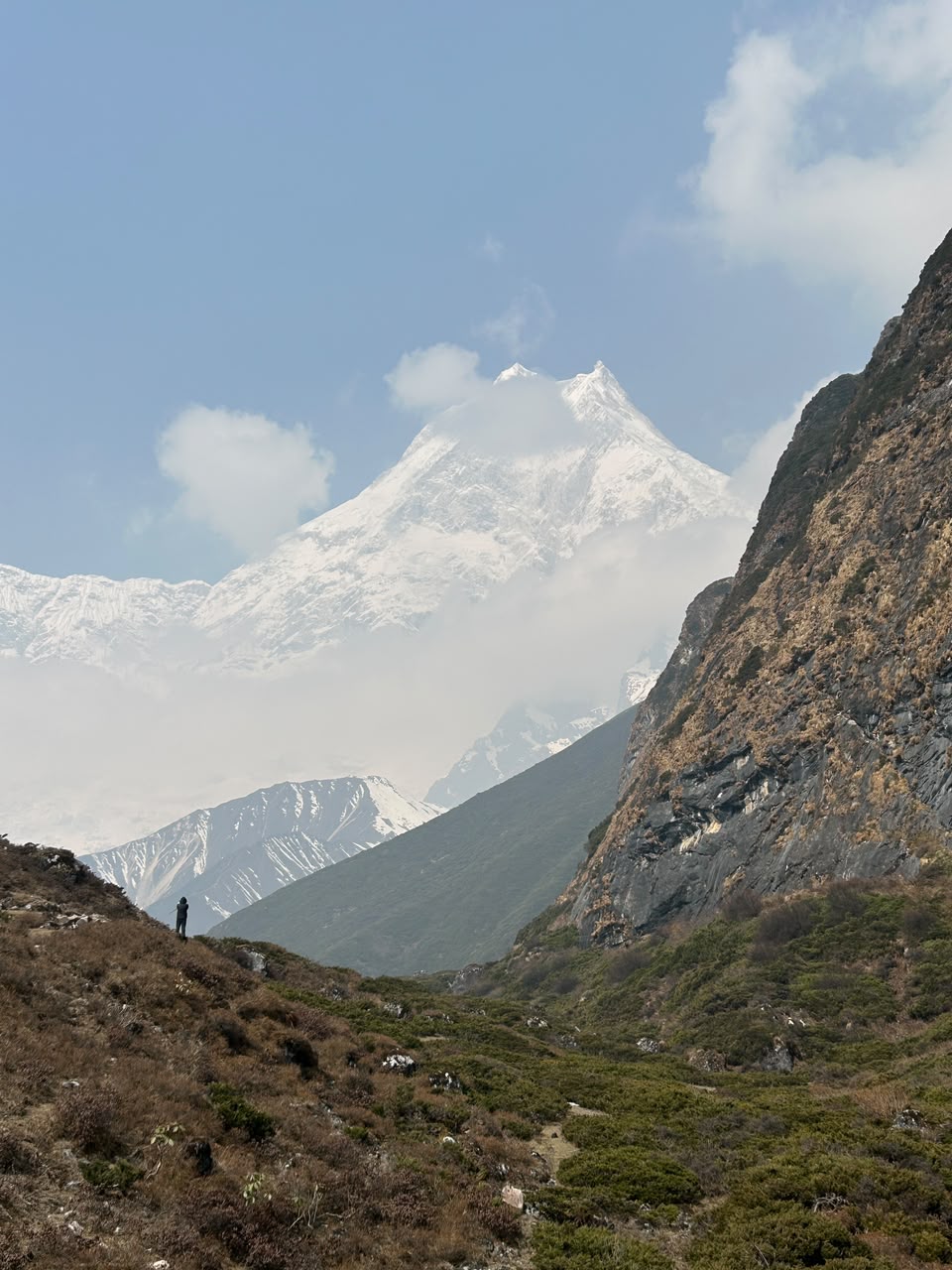
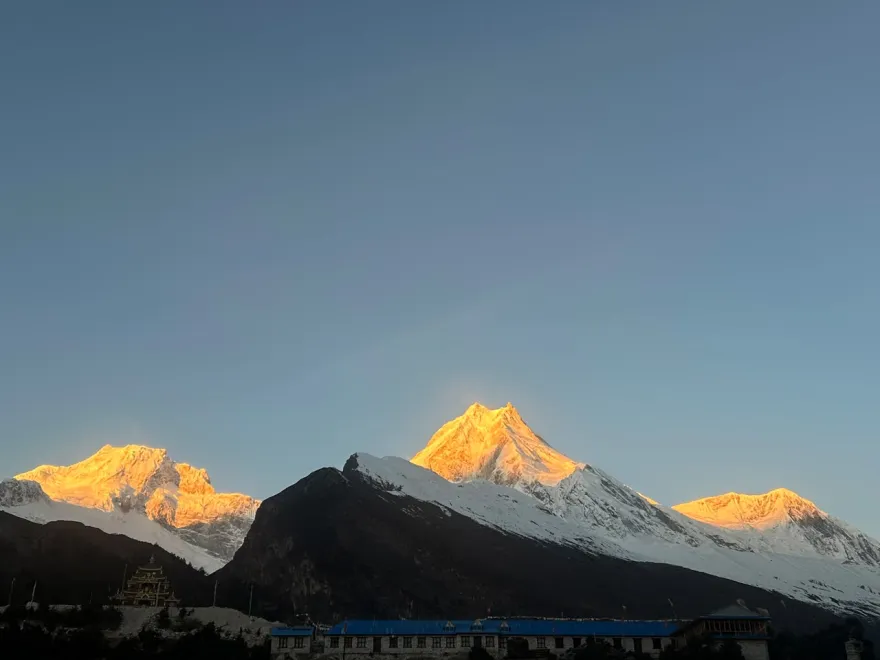
Today’s hike is absolutely stunning. We will pass through local barley fields and high alpine pastures where yaks graze peacefully. As we approach the village of Lho, look up—Mount Manaslu’s massive, double-peaked summit will be towering directly ahead of you, filling the entire horizon. We will arrive early enough to hike up to the local Ribung Monastery, which sits on a hill overlooking the village and offers the absolute best sunset photography spots.
We will keep it short and sweet today with a gentle 3-to-4-hour walk to ensure your body acclimates perfectly to the rising altitude. We will trek through the high alpine village of Shyala, completely surrounded by a massive amphitheater of ice-walled giants. By lunchtime, we will arrive in Samagaon, the cultural capital of the Nubri people. Take the afternoon completely off to rest your legs and hydrate before tomorrow’s big climb.
This is what you came for! We will fill our daypacks with water and snacks and head out early. The trail leaves the village behind and marches straight up the steep, rugged moraine ridges. It is a tough, steep climb that will test your lungs, but standing at Manaslu Base Camp (4,800m) surrounded by expedition tents and massive hanging glaciers is an incredible rush. After soaking in the epic views, we will safely head back down the trail to our cozy lodge in Samagaon.
Instead of packing up for the freezing high pass, today we turn around and start our journey back down the valley. You will be amazed at how light and energetic your legs feel as we descend into the thicker air. We will retrace our steps through Lho and Shyala, catching gorgeous valley views that were completely behind us on the way up, and wrap up our easy walking day back in Namrung.
We will continue our steady, comfortable descent down the valley corridor. We will leave the high alpine zone behind and dive back into the warm, lush bamboo and rhododendron forests. The trail is mostly downhill, meaning we can maintain a fun, relaxed pace with plenty of long lunch and photography breaks. By late afternoon, we will arrive back at the familiar stone village of Jagat.
Our last real day on the trail! We will follow the winding paths along the Budhi Gandaki River, crossing our final suspension bridges and passing the streaming hot springs of Tatopani one last time. It is a joyful, relaxed walk where we can celebrate the successful Base Camp trek with our fantastic team of local porters. We will check back into our lodge at Machha Khola for a final celebratory dinner in the mountains.
Our private 4WD vehicle will be waiting for us first thing in the morning. We will bounce along the dirt tracks back to Arughat and join the smooth highway leading straight back into the capital city. After checking back into your Kathmandu hotel, enjoying a long, hot shower, and resting up, we will meet up one last time for a wonderful farewell dinner to toast your incredible Himalayan journey!
We will take you to the airport for the final departure. We will bid farewell with promise to meet again for another spectacular adventure in Nepal.
· Safety First: Turning back down the valley from Samagaon drastically reduces your exposure time to extreme high altitudes, making this an excellent choice for moderate hikers.
· Restricted Permits: Even without crossing the pass, this route requires a Restricted Area Permit (RAP) and an MCAP conservation permit, ACAP, and Tsum Nubri Rural Municipality entry permit.
· Guide Requirement: Since 2026, you are allowed to trek alone as a solo trekker but you must hire a licensed trekking guide.
Your Start Date is the day you land in Nepal, and your End Date is when you fly home.
If the set Manaslu Base Camp Trek group dates don’t suit your schedule, we can offer alternative dates upon request.
Choosing the pass-free return trek is a brilliant strategy if your primary goal is to stand beneath the sheer faces of Mount Manaslu without taking on the extreme physical strain and unpredictable logistics of the Larkya La Pass (5,106m). By turning back at Samagaon, you eliminate the hardest, most weather-dependent portions of the circuit. This makes the trek incredibly appealing for hikers who have shorter travel windows, lower high-altitude experience, or those who simply prefer an out-and-back trail experience.
No, independent or solo trekking is completely prohibited by Nepali law in the entire Manaslu region. Because the trail runs close to the border of Tibet, it is strictly monitored as a restricted zone. Trekkers are legally required to organize their journey through a government-registered agency like Roving Nepal Trek, hike with a minimum group size of two people, and travel with a certified, licensed mountain guide at all times.
It shifts the focus from a grueling endurance test into a deeply immersive, relaxed cultural exploration. Instead of constantly worrying about the physical threat of the high pass, you can take your time exploring the villages. On the way down, you aren't fighting for breath, which means you can have meaningful interactions with the local Nubri people, take extensive photography detours, and truly enjoy the natural beauty of the changing ecosystems.
The hike from Samagaon (3,530m) to Manaslu Base Camp (4,800m) is the most physically challenging day of the entire trek. It involves a steep, unrelenting elevation gain of nearly 1,300 meters along narrow, rocky moraine ridges and loose scree paths. The air thinness makes the exertion feel twice as hard. You don't need technical climbing equipment, but excellent cardiovascular endurance, strong legs, and broken-in hiking boots with reliable ankle support are absolutely mandatory.
On the day you ascend to Base Camp, you will leave your main duffel bag at the tea house in Samagaon and hike with a lightweight daypack. You must pack a high-quality windproof and waterproof shell jacket, a warm down jacket (as temperatures at Base Camp are freezing even at midday), robust trekking poles to stabilize your knees on the steep descent, polarized sunglasses to guard against high-altitude glare, and at least 2 to 3 liters of water.
While the teahouses along this main route provide basic wooden beds, thin mattresses, and a simple blanket, we highly recommend bringing your own 3-season sleeping bag rated down to at least -10°C (14°F). Mountain nights get incredibly cold as you approach Samagaon, and the insulation in teahouse walls is minimal. Having your own clean, reliable sleeping bag ensures you stay completely warm and get quality rest before the big climb.
Because this route sticks entirely to the primary valley corridor, you will stay in established mountain tea houses. These tea houses generally offer twin-sharing bedrooms with wooden beds, mattresses, and blankets. While lower villages like Namrung and Lho have surprisingly comfortable lodges with options for attached bathrooms and hot running water, the facilities in Samagaon are slightly more rustic. We recommend bringing a 3-season sleeping bag to guarantee comfort.
The tea houses along this popular stretch of the valley feature diverse menus designed to cater to international travelers. While the traditional Dal Bhat remains the ultimate energy meal for trekkers, you can easily order fried noodles, macaroni, pizza, garlic soup, porridge, pancakes, and eggs. Safe drinking water is widely available via boiled water purchases or filtration systems at every single lodge.
Yes, but it comes at a small extra cost. Most teahouses down the valley are connected to local micro-hydro power grids or solar arrays. You can charge your phones, cameras, and power banks in the communal dining rooms for a few hundred Nepalese Rupees. Wi-Fi networks (like Everest Link or local air links) are available in major stops like Namrung, Lho, and Samagaon, though the connection speed can be highly unpredictable depending on the weather.
The absolute best windows to hit the trail are during the Autumn (mid-September to late November) and Spring (March to May) seasons. Autumn provides crystal-clear mornings, minimal rainfall, and spectacular, unobstructed views of the mountain walls. Spring brings warmer daytime temperatures and valleys filled with blooming wildflowers. During the winter, Base Camp is often completely buried in deep snow and abandoned by expeditions, while summer monsoons bring heavy rains and mud.
While your morning hike out of Samagaon might start under pleasant, cool conditions, the temperature drops rapidly as you ascend. At Base Camp (4,800m), even during sunny autumn afternoons, temperatures often hover right around freezing or just a few degrees above (0°C to 5°C / 32°F to 41°F). If the mountain winds pick up or clouds roll in, the wind-chill factor will cause temperatures to feel significantly below freezing instantly.
The lower sections of the Budhi Gandaki river gorge are prone to minor landslides and rockfalls, particularly during the tail end of the summer monsoon season (late August to early September). Because this itinerary returns via the exact same valley floor, our guides remain in constant communication with local networks to check trail stability. If a section becomes temporarily blocked, the out-and-back nature gives us total flexibility to wait it out comfortably in an established village.
Our itinerary is built around safe, steady elevation gains. We slowly move you up the valley over six days before you attempt the push to 4,800 meters. We also schedule a crucial preparation day in Samagaon, which includes a lighter preparatory walk to Birendra Tal. Our guides monitor your health using pulse oximeters every single evening, ensuring your body is adjusting safely before we clear you for the final climb to Base Camp.
Because this itinerary is an out-and-back trail that avoids the isolated high pass, managing health emergencies is significantly easier. If you exhibit symptoms of acute mountain sickness (AMS) or sustain an injury, our guide will immediately assist you down the well-maintained trail to lower elevations where the air is thicker. For critical emergencies, Roving Nepal Trek maintains 24/7 logistical support to arrange helicopter rescue evacuations back to Kathmandu hospitals.
Tipping is a deeply appreciated tradition in the Nepalese Himalayas and reflects the quality of service provided. While it is completely voluntary, a standard guideline is to pool together around USD 150 to USD 200 per trekker to be divided among your guiding and porter crew at the end of the trip. It is best to present this tip in local Nepalese Rupees during your final evening celebration in Machha Khola or Besisahar.
You can easily lock in your adventure by contacting our team via our website portal. We require a scan of your passport and a standard booking deposit to secure your guide and accommodations. Because the government strictly controls the issuance of restricted zone permits, we advise finalizing bookings at least 4 to 6 weeks before your arrival in Nepal, ensuring all paperwork is perfectly processed by the time you land.
Roving Nepal Trek offers a highly flexible booking policy. If you need to cancel or postpone your trip due to unforeseen flight changes or medical issues, your initial deposit remains valid for up to two years and can be transferred to any other trekking route we operate. However, because government restricted area permits are non-refundable once officially issued by the immigration department, those specific permit fees cannot be refunded once processed.
| No of people | Price per person |
|---|---|
| 1 - 1 | $1,550 |
| 2 - 4 | $1,399 |
| 5 - 9 | $1,250 |
| 9 - 20 | $1,150 |
| No of people | Price per person |
|---|---|
| 1 - 1 | $2,100 |
| 2 - 4 | $1,700 |
| 5 - 10 | $1,649 |
| No of people | Price per person |
|---|---|
| 1 - 1 | $1,150 |
| 2 - 4 | $1,000 |
| 4 - 8 | $970 |
| 8 - 15 | $950 |