Need help with booking? Send us a message.
12 Days Manaslu Circuit Trek in Nepal is probably the most scenic detour route under Nepal Trekking. Even if it is a detour, trekkers will find it pleasing. The major reason behind its popularity is its diversity. The trail holds great diversity in terms of vegetation, landscape, culture, and natural resources. Explore an abode of Mt. Manaslu (8163 m) the eighth tallest mountain in the world. Roving Nepal Trek has trekking crew members who belong to the area. Therefore, the information and the services will be top-notch and authentic. Leave your footmarks at the top of the longest mountain pass of Nepal the Larke La Pass. Create the momentous tale of a trekking journey fitting to be told proudly with friends and family.
The total trail length is 177 kilometers. Therefore, it may seem tiring but a perfect planning and good trek management team can ensure hassle-free Manaslu Trek. To reach the trailhead of the trekking route, trekkers need to take either a local bus or a private jeep. The route is relatively longer yet so captivating.
Trekking solo on this trail is now allowed. The trail used to be the off-the-beaten-path. There are numerous places where solo trekkers might get lost. Therefore, the Nepal Government listed the trail as a restricted trekking zone. Now, you can do the solo trek but you must hire a trekking guide. Earlier, to do the Manaslu Circuit Trekking, a group of at least two trekkers were needed. Special restricted area permit is issued to a solo trekker now. A registered trekking company is needed to apply for the special RAP permit. If are looking for fellow trekker, contact the travel planners of Roving Nepal Trek. We are sure to find a fellow trekker of your liking. For safety too, please avoid traveling solo in the mountains of Nepal.
The journey of 12 Days Manaslu Circuit Trek reaches as high as 5106 m from sea level. Normally, the altitude sickness occurs from 3000 m. Therefore, the trail has a high risk of altitude sickness. Roving Nepal Trek itinerary is very scientific. It has acclimatization day too. To do hassle-free trekking in the high altitudes, proper acclimatization is highly necessary. Gradual ascent is the top priority. Travel insurance is mandatory for the trekkers as well as trekking crew members. The insurance of staff is done by the agency itself whereas the trekkers must get the insurance. The insurance must cover the emergency helicopter rescue as well as medical expenses.
In most of the commercial trekking routes of Nepal, there are availability of teahouses and lodges. Therefore, there is no need for the camping kitchen crew. You can find a variety of menu items ranging from local delicacies to foreign cuisines. As for the drinking water, you can get bottled mineral water. However, the bottled drinking water is expensive in comparison to the city areas. If you prefer to drink the spring water, get the water purifying tablet. Similarly, accommodation is basic (Spartan) to luxury in some places. As the altitude rises the level of amenities in teahouses/lodges decreases. Expect the basic lodging facilities.
The ideal seasons for trekking in Nepal are spring and autumn season. During this time of the year, the weather is nice and clear. The mountain vistas and sceneries look spectacular. Moreover, the highly recommended season to do this trekking is the spring season. The trail is full of diverse vegetation. Therefore, during the spring season, you can relish the blooming flowers and green vegetation. The climate is cool and warmer as well. You don't have to avoid winter season entirely. Allow us to plan for winter Manaslu Circuit Trek. The ideal package for winter trekking is the Manaslu Circuit Short Trek. During this journey, you can return back from Manaslu Base Camp if Larke La Pass is closed due to heavy snowfall.
Unlike other trekking routes in Nepal, the Manaslu region requires various permits. Special Immigration permit, MCAP (Manaslu Conservation Area Project) ACAP (Annapurna Conservation Area Project), and Chhumnubri Rural Municipality entry permit are required for the trek. All these permits are included in our 12 Days Manaslu Circuit Trek package.
Travelers will have to travel to Machha Khola from Kathmandu either on a local bus or a private jeep. In most cases, Roving Nepal Trek trekkers use the private jeep. The road is black for most of the part but 30-40 kilometers of the road is off-road. Kathmandu to Aarughat via Dhadingbeshi road condition is top notch with asphalt all the way. About 27 kilometers from Aarughat to Machha Khola is full dirt road along the banks of Budi Gandaki River. From Tilje, trekkers will get a jeep ride on sharing basis to Besisahar.
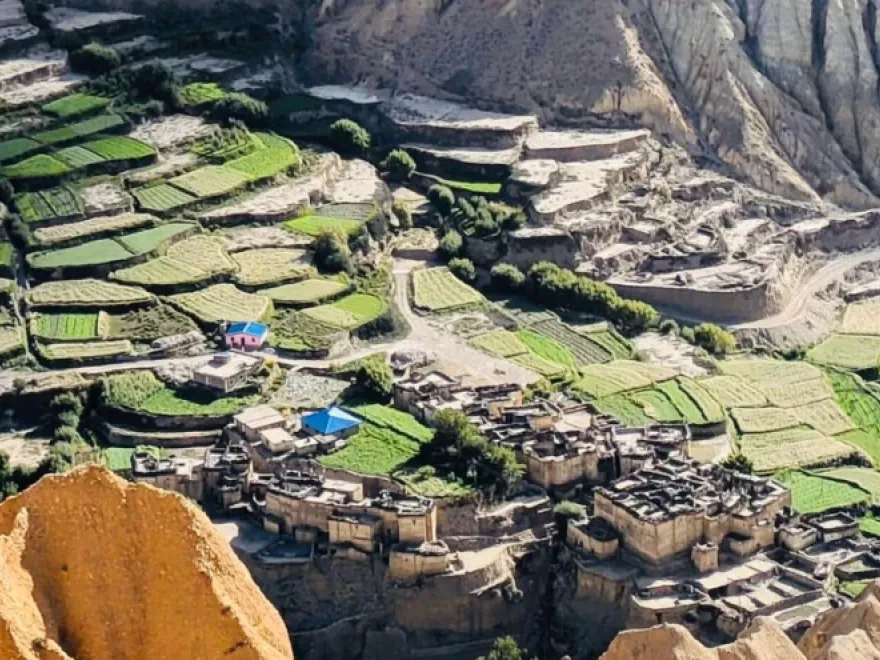
The village of Samagaon is the least densely populated village on this trail. The majority of people living in this village are either Gurung or Tibetan-origin Nepalese. Farming is their major occupation. There are monasteries and local villages where trekkers explore during acclimatization activity. Please read Samagaon Acclimatization Guide blog in our site to know more about different aspects of handling altitude in the Manaslu Circuit Trek route.
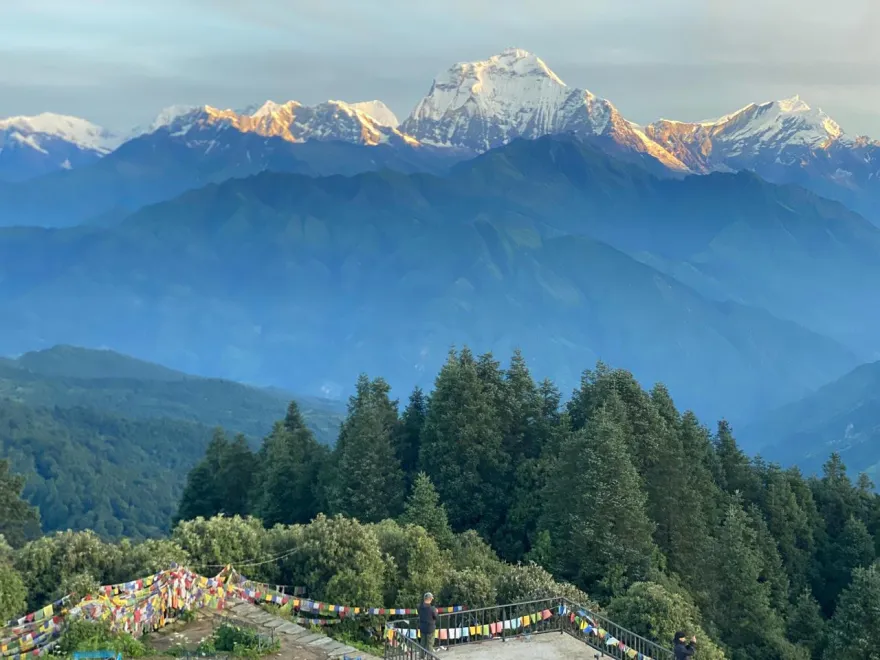
On the 9th day of our trekking, trekkers pass the longest high-altitude mountain pass in Nepal. Larke La Pass (5106 m) is a scenic and adventurous place on the 12 Days Manaslu Circuit Trek trail. Mountains seen from the top of the pass are Dhaulagiri, Annapurna, Manaslu, Ganesh, etc. Across the pass, trekkers reach the Annapurna region. If trekkers wish to continue doing the Annapurna Circuit Trek, they can extend from Dharapani too. Otherwise, trekkers return back to Kathmandu on a jeep via Lamjung Besisahar.
The best trekking moments mean an amalgamation of authentic information, impeccable services, quality hospitality, and hassle-free trek management. The Roving Nepal Trek hires locals only. These locals are highly trained and licensed by the Nepal Government. Therefore, authentic information is a guarantee. Moreover, the agency aims to promote sustainable trekking in Nepal. For this to happen we are honest regarding the kind of services we provide. All the activities and services are rendered to exceed the expectations of our valued clients.
Book the 12 Days Manaslu Circuit Trek in Nepal with us. For more information, you can contact our travelplanners 24/7.
Special Restricted Area Permit Required: The Manaslu region requires a Restricted Area Permit (RAP) in addition to the Manaslu Conservation Area Permit (MCAP), Chumnubri Rural Municipality entry permit and Annapurna Conservation Area Permit (ACAP).
Guide is Mandatory: Independent trekking is not permitted. All foreign trekkers must travel with a licensed trekking guide through a registered trekking agency.
Solo Trekker is now allowed: The Restricted Area Permit generally requires a minimum of two trekkers booking together through a registered agency until 2026. Now, it is possible for a solo trekker too. You must have a licensed trekking guide in either cases.
High Altitude Trek: The trek reaches 5,106 meters, where oxygen levels are approximately 50–55% of sea level, increasing the risk of altitude sickness.
Travel Insurance is Essential: Your insurance should specifically cover trekking above 5,000 meters, helicopter evacuation, emergency medical treatment, and trip interruption.
Weather Conditions Can Change Rapidly: Snowfall, strong winds, or heavy rain may require itinerary adjustments, particularly near Larke Pass.
Physical Fitness is Important: Due to long trekking days and high elevation, regular endurance training for 6–8 weeks before the trek is strongly recommended.
Pack for Cold Conditions: Temperatures near Larke Pass often fall below -10°C, especially during spring mornings and autumn nights.
Respect Local Culture: Many villages follow Tibetan Buddhist traditions. Always walk clockwise around stupas and mani walls, dress respectfully, and ask permission before taking photographs.
Flexible Itinerary: Weather, trail conditions, and the health of trekkers may require changes to the planned itinerary to ensure everyone's safety.
Our airport representative will receive you at the airport and transfer you to the hotel. All the requirements for the trekking will be covered and trek briefing is done on this day. You will know your trekking guide and itinerary in detail on this day.
 Accommodation ***hotel
  Meals your self
  Max. altitude 1,300m / 4,265ft.
 The journey begins with an early morning drive from Kathmandu to Soti Khola, taking approximately 8-9 hours. The road trip offers views of rural landscapes, terraced fields, and small villages. Arrive in Machha Khola, a small village on the riverbank, for an overnight stay.
Accommodation tea house Meals As per menu Max. altitude 900m / 2,953ft. Continue trekking along the Budhi Gandaki, passing through Dobhan and Tatopani. Explore the hot springs at Tatopani for a relaxing break. Trek further to Jagat, a picturesque village with stone houses and a beautiful setting.
Accommodation tea house Meals as per menu Max. altitude 1,410m / 4,626ft. The trail takes you through Philim, a large Gurung village with fields of barley and potatoes. Trek through forests and cross the Deng River. Arrive at Deng, a traditional village, for an overnight stay.
Accommodation tea house Meals as per menu Max. altitude 1,804m / 5,919ft. Ascend through beautiful forests and terraced fields. Pass through the villages of Bihi and Ghap, with views of the Siringi Himal. Reach Namrung, a Tibetan-influenced village, for the night.
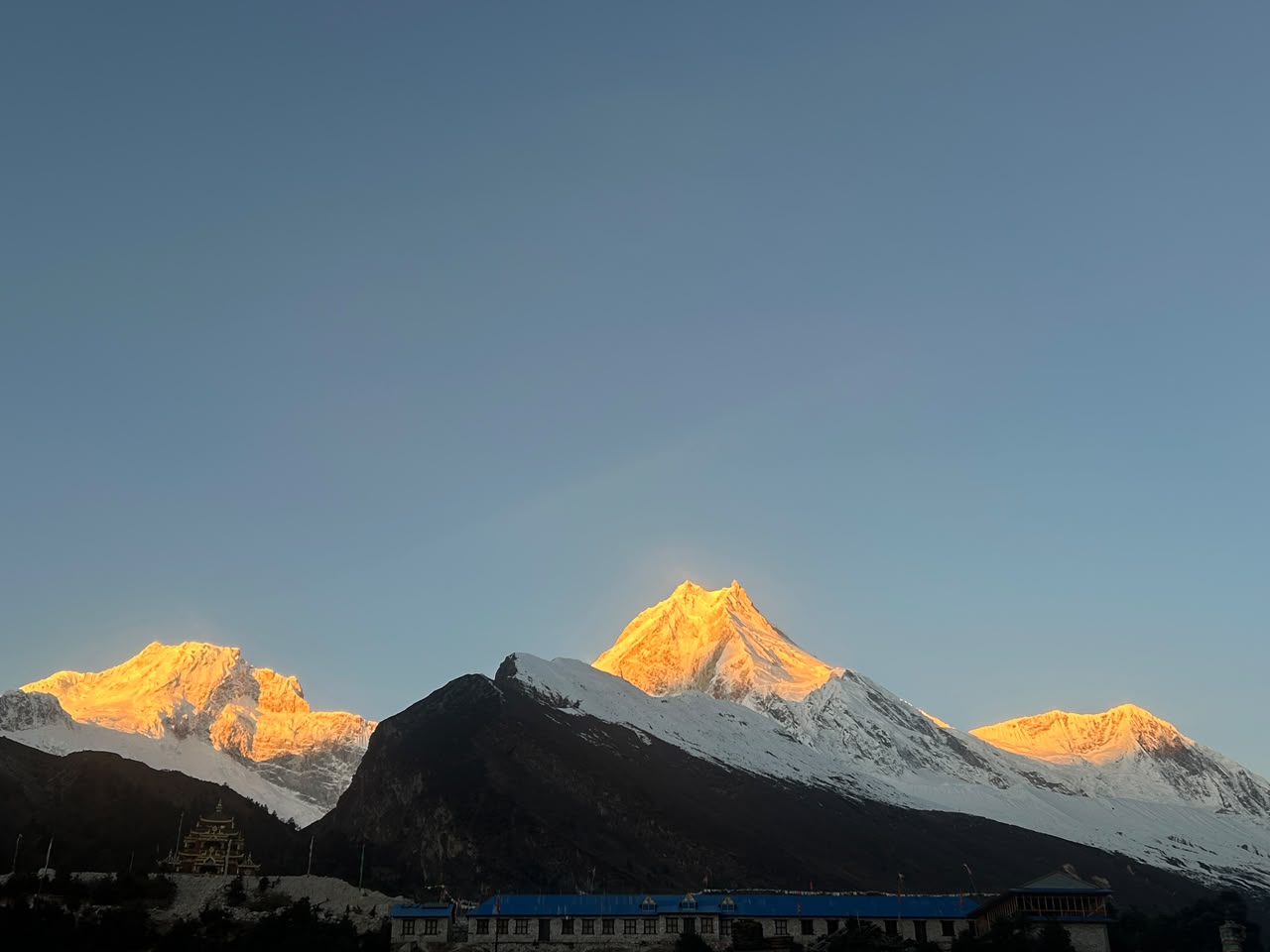
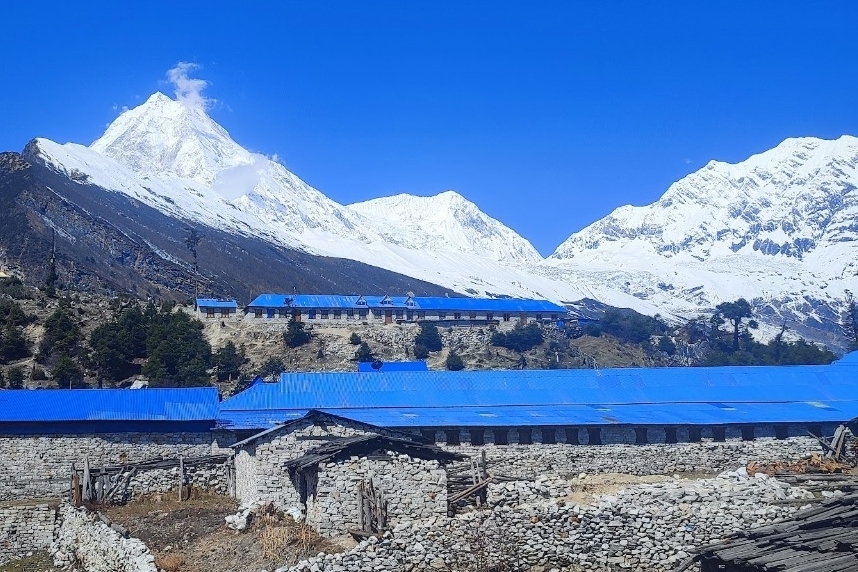
Accommodation teahouse Meals as per menu Max. altitude 2,630m / 8,629ft. Trek through alpine landscapes, enjoying panoramic views of the mountains. Pass the villages of Lihi and Sho with their traditional stone houses. Arrive in Samagaon, a picturesque village at the base of Manaslu, and spend the night.
Accommodation tea house Meals asper menu Max. altitude 3,530m / 11,581ft. Continue towards the Tibetan border, crossing the Budhi Gandaki River. Reach Samdo, a Tibetan refugee village, for an overnight stay. This day provides a chance to acclimatize and explore the surrounding areas.
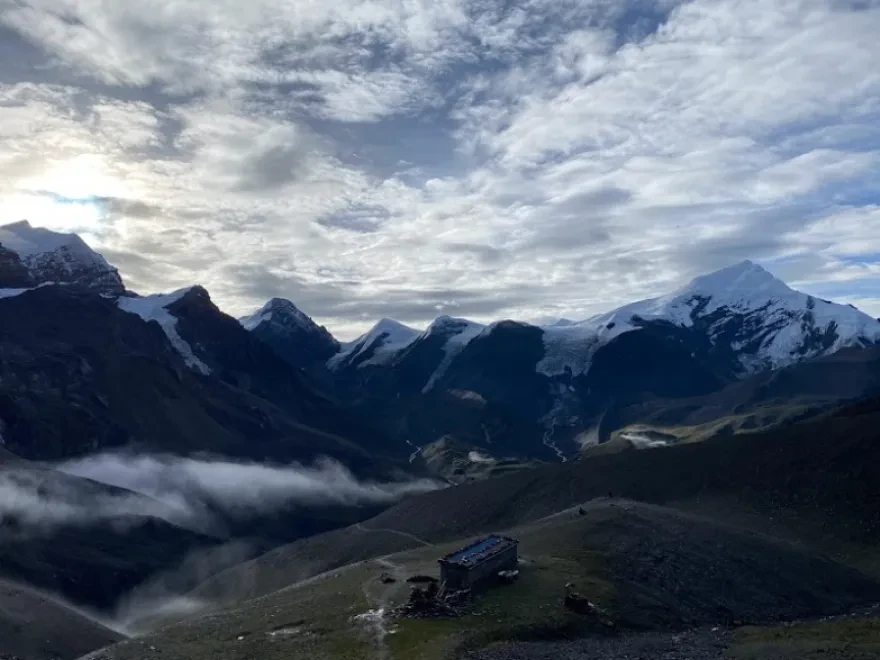
Accommodation tea house Meals as per menu Max. altitude 3,860m / 12,664ft. Ascend through rocky terrain and moraines towards Dharamsala. Dharamsala serves as a base for the challenging Larkya La Pass crossing. Prepare for the high-altitude experience and rest for the night.
Accommodation tea house Meals as per menu Max. altitude 4,460m / 14,633ft. Start early to conquer the Larkya La Pass, surrounded by stunning Himalayan vistas. Experience the breathtaking views of Himlung Himal, Annapurna II, and Manaslu. Descend to Bimthang, a broad and beautiful valley, for an overnight stay.
Accommodation tea house Meals as per menu Max. altitude 3,720m / 12,205ft. Descend through rhododendron forests and pastures. Pass through the villages of Hampuk and Karche. Arrive at Tilije, a Gurung village with a mix of traditional and modern houses, for the night.
Accommodation teahouse Meals as per menu Max. altitude 2,300m / 7,546ft. Descend through villages and terraced fields alongside the Marsyangdi River. Cross the river and reach Tal, a quaint village, for an overnight stay.
Accommodation teahouse Meals as per menu Max. altitude 1,700m / 5,577ft. Trek to Syange, passing through pine forests and picturesque landscapes. Drive back to Kathmandu (approximately 8-9 hours) and enjoy a farewell dinner.
Accommodation teahouse Meals as per menu Max. altitude 1,080m / 3,543ft. Trek Duration: The Manaslu Circuit Trek is typically completed in 12 days, although some itineraries may extend to 13–16 days depending on acclimatization and transportation.
Maximum Altitude: The highest point is Larke Pass (5,106 m / 16,752 ft), one of Nepal's most spectacular Himalayan mountain passes.
Trek Difficulty: This is considered a moderately difficult to challenging trek due to its high altitude, longer walking days, and remote terrain.
Daily Walking Time: Expect to trek 6–8 hours per day, with the Larke Pass crossing taking approximately 8–10 hours.
Total Trekking Distance: The complete circuit covers approximately 165–180 km (102–112 miles) depending on the itinerary.
Restricted Area Trek: The Manaslu region is a government-designated restricted trekking area, requiring special permits and a licensed guide.
Best Trekking Seasons: The ideal months are March to May and September to November, offering stable weather and excellent mountain visibility.
Rich Cultural Experience: The trail passes through traditional Gurung, Nubri, and Tibetan-influenced villages, where ancient Buddhist culture remains deeply rooted.
Remote Adventure: Compared to the Annapurna and Everest regions, the Manaslu Circuit receives significantly fewer trekkers, offering a quieter and more authentic Himalayan experience.
Accommodation: Basic but comfortable teahouses are available throughout the route, with facilities becoming simpler at higher elevations.
Electricity & Internet: Electricity is available in many villages, while Wi-Fi and mobile network coverage become increasingly limited in remote areas.
Drinking Water: Safe drinking water is available through boiled water, filtered water, or purification systems. Carrying reusable bottles is encouraged.
No ATMs on the Trail: After leaving Kathmandu, there are no reliable ATMs along the trekking route. Carry enough Nepalese Rupees for personal expenses.
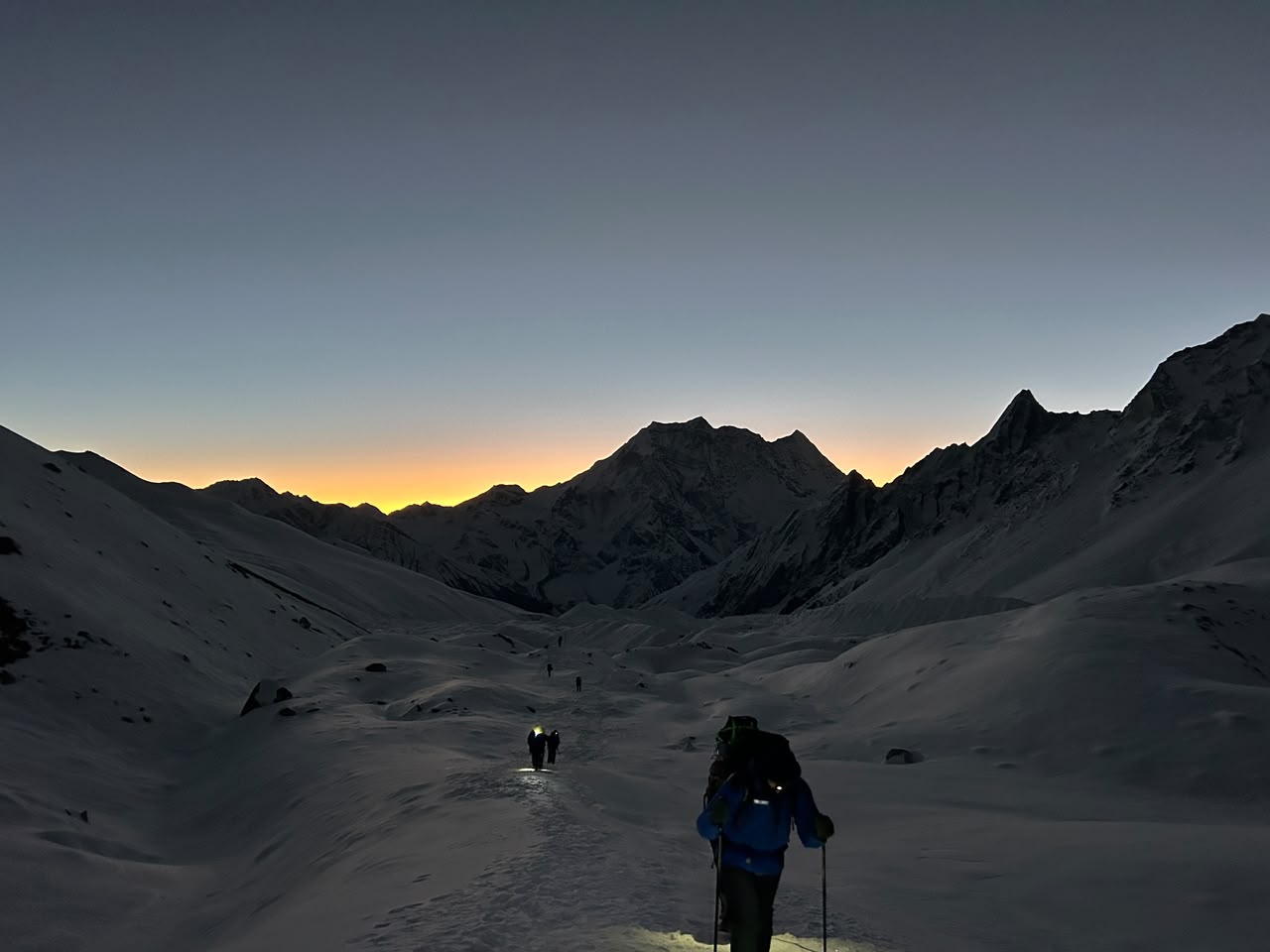
Larke Pass Crossing: Crossing Larke Pass begins before sunrise to avoid afternoon winds and changing mountain weather.
Wildlife & Nature: The Manaslu Conservation Area is home to Himalayan wildlife including blue sheep, Himalayan tahr, musk deer, Himalayan monal, and the elusive snow leopard.
Your Start Date is the day you land in Nepal, and your End Date is when you fly home.
If the set 12 days Manaslu Circuit Trek group dates don’t suit your schedule, we can offer alternative dates upon request.
1. The Layering System (Clothing)
Avoid cotton completely; it holds sweat and freezes. Stick to merino wool or synthetic fabrics.
2. Footwear & Extremities
Your extremities are the first to freeze and the easiest to blister. Do not skimp on quality here.
3. Trekking Gear & Sleep System
| Gear | Specification | Purpose |
|---|---|---|
| Bags | 80–100L Duffel + 25–30L Daypack | The duffel goes to your porter. The daypack stays with you for water, layers, and valuables. Include a waterproof rain cover. |
| Sleeping Bag | 4-season rated to $-10^\circ\text{C}$ or $-15^\circ\text{C}$ | Teahouses provide blankets, but they are absolutely not warm enough at high altitude ($3,800\text{ m}+$); a personal down bag is a must. |
| Sleeping Bag Liner | Silk or fleece | Adds extra warmth and keeps your rented or owned sleeping bag clean. |
| Trekking Poles | Collapsible, sturdy | Non-negotiable for saving your knees on the grueling descent from Larkya La Pass. |
| Headlamp | 200+ lumens | Crucial for the 3:00 AM alpine start on pass day and poorly lit teahouse bathrooms. Bring spare batteries/charger. |
4. Health, Hygiene & Water Security
The Manaslu region is remote, and medical help is far away. Pack a robust personal kit.
5. Documents, Electronics & Cash
I would like to rate Roving Nepal 5/5. The whole experience was awesome, Basu himself went with us. He was hilarious and made our trip more comfortable. He never left us behind. Plus before collaborating with RNT, I searched for other trekking agencies. I found from local sources and from my own experience that they are undoubtedly the cheapest agency for enthusiastic trekkers such as myself in Nepal.
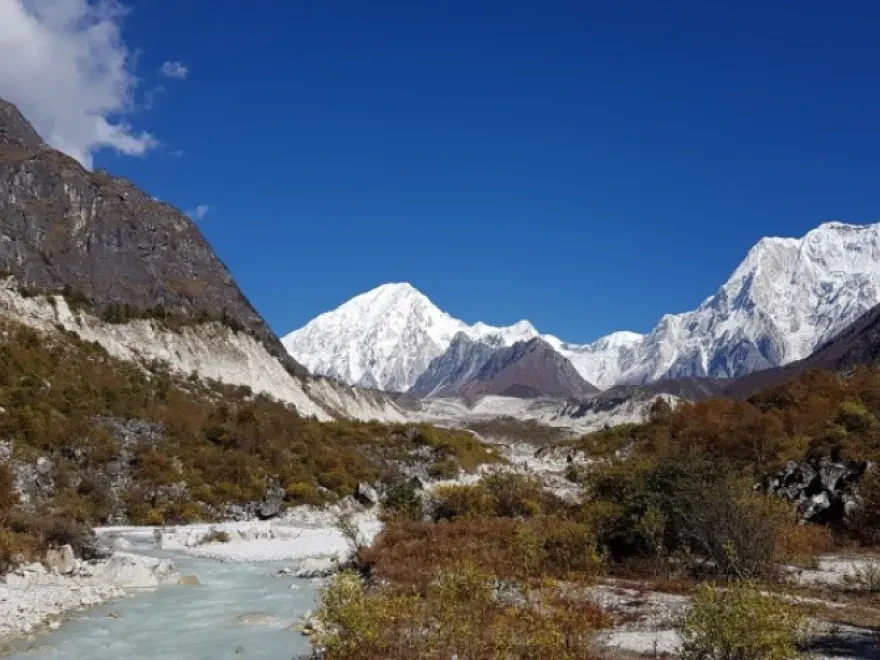
The 12 Days Manaslu Circuit Trek is one of Nepal's most rewarding off-the-beaten-path adventures. Unlike the busier Everest and Annapurna trekking regions, the Manaslu Circuit offers a quieter and more authentic Himalayan experience with fewer crowds. The trek circles Mount Manaslu (8,163 m), the world's eighth-highest mountain, while passing through lush forests, deep river gorges, traditional Tibetan-influenced villages, ancient monasteries, alpine meadows, and the spectacular Larke Pass (5,106 m). Because the region is protected as a restricted area, tourism remains carefully managed, preserving both its natural beauty and centuries-old cultural heritage. Trekkers seeking pristine mountain landscapes and genuine cultural encounters often consider the Manaslu Circuit one of Nepal's finest trekking destinations.
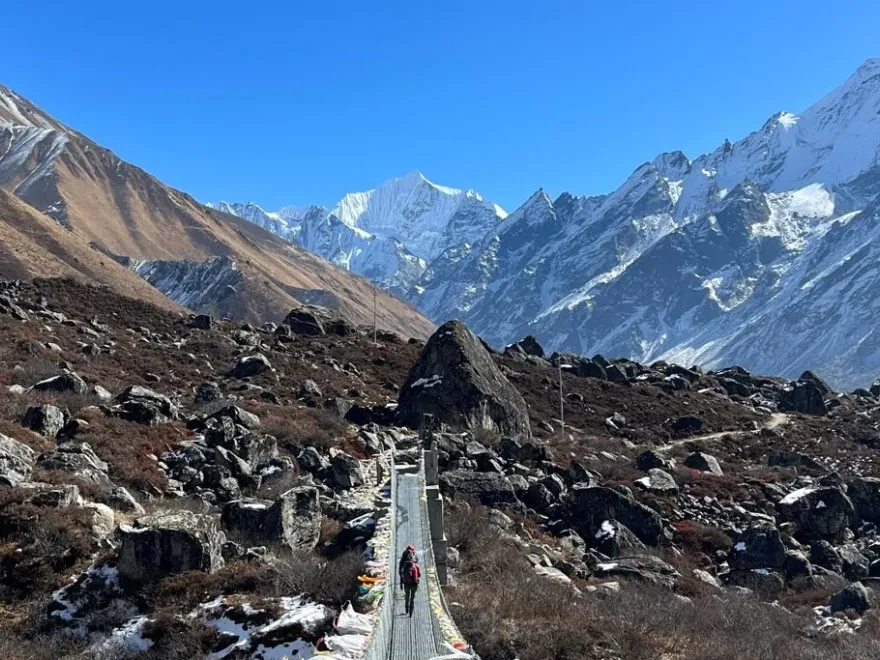
The Manaslu Circuit Trek is generally rated as moderately difficult to challenging, making it more demanding than the Annapurna Base Camp Trek but less technical than mountaineering expeditions. Trekkers typically walk 6 to 8 hours daily, with the Larke Pass crossing requiring up to 10 hours of hiking. The route reaches 5,106 meters, where thinner air significantly increases physical demands. Long ascents, rocky trails, suspension bridges, and remote mountain terrain require good endurance and steady pacing. Although no climbing experience is necessary, participants should have previous hiking experience or prepare thoroughly with cardiovascular exercise, strength training, and regular long-distance walks before arriving in Nepal.
Larke Pass stands at 5,106 meters (16,752 feet), making it one of Nepal's highest trekking passes. At this altitude, oxygen availability is only about 50 to 55 percent of what it is at sea level, increasing the likelihood of Acute Mountain Sickness (AMS). Symptoms may include headaches, dizziness, nausea, fatigue, difficulty sleeping, and loss of appetite. The itinerary is designed to allow gradual acclimatization, reducing the risk for most trekkers. Staying hydrated, maintaining a slow walking pace, eating nutritious meals, and immediately reporting symptoms to your guide are essential for a safe crossing of the pass.
The Manaslu Circuit Trek is not generally recommended as a first high-altitude trek for complete beginners. Although no technical climbing skills are required, the combination of long walking days, remote trails, high elevation, and the challenging Larke Pass crossing demands good physical fitness and mental endurance. Beginners who have completed multi-day hikes or who prepare with several weeks of endurance training may still complete the trek successfully under the guidance of an experienced trekking guide. Choosing a reputable trekking company and following proper acclimatization practices greatly improves the chances of a safe and enjoyable journey.
The Manaslu Circuit Trek offers a quieter and more remote Himalayan experience compared to Nepal's more famous trekking regions. While Everest Base Camp and Annapurna Base Camp attract tens of thousands of trekkers annually, the restricted status of the Manaslu region limits visitor numbers, preserving its peaceful atmosphere. Trekkers experience dramatic mountain scenery, authentic Tibetan Buddhist culture, centuries-old monasteries, suspension bridges, glacier valleys, and one of Nepal's finest high mountain passes. Those seeking fewer crowds, untouched landscapes, rich cultural experiences, and a genuine wilderness adventure often consider the Manaslu Circuit one of Nepal's best trekking routes.
The Manaslu Circuit Trek is physically demanding and requires good endurance due to its high altitude, long trekking days, and rugged terrain. It is recommended to begin training at least 6 to 8 weeks before your departure. Focus on cardiovascular activities such as hiking, jogging, cycling, swimming, and stair climbing for 30 to 60 minutes, four to five times per week. Incorporating strength exercises for your legs, core, and back will improve balance and stability on uneven mountain trails. If possible, practice hiking with a backpack weighing 6 to 10 kg to simulate actual trekking conditions. Regular stretching and flexibility exercises also help reduce muscle soreness and improve recovery. A well-prepared body not only makes the trek more enjoyable but also reduces the risk of fatigue and injury.
The Manaslu Circuit passes through multiple climate zones, so packing a proper layering system is essential. Lower elevations are generally warm during the day, with temperatures ranging from 15°C to 25°C, while nights near Larke Pass can fall below -10°C, especially during spring and autumn. Your clothing should include moisture-wicking base layers, trekking shirts, fleece jackets, an insulated down jacket, waterproof jacket and pants, thermal underwear, gloves, a warm hat, gaiters (during snowy seasons), and several pairs of trekking socks. Waterproof trekking boots that have already been broken in are essential for comfort and preventing blisters. Layering allows you to easily adjust your clothing throughout the day as temperatures change with altitude.
Besides appropriate clothing, several pieces of trekking equipment are crucial for a successful Manaslu Circuit Trek. A 30 to 40-liter daypack is ideal for carrying water, snacks, spare clothing, personal items, and rain gear during daily hikes. Trekking poles are highly recommended because they reduce stress on your knees during steep ascents and descents, especially while crossing Larke Pass. Other essential items include a reusable water bottle or hydration bladder, UV-protection sunglasses, sunscreen, lip balm, headlamp with spare batteries, power bank, rain cover, basic first-aid kit, water purification tablets, and personal medications. Proper equipment improves comfort, safety, and confidence while trekking in the remote Himalayas.
Yes. Although teahouses provide beds, mattresses, pillows, and blankets, a quality sleeping bag is highly recommended due to the cold temperatures encountered at higher elevations. Rooms are generally unheated, and nighttime temperatures near Dharamsala and Larke Pass often drop below -10°C. A sleeping bag rated between -15°C and -20°C provides sufficient warmth for most trekking seasons. Many trekking agencies in Kathmandu offer sleeping bags for rent, making it easy for travelers who prefer not to carry one from home. A warm sleeping bag not only improves sleeping comfort but also helps maintain body heat, ensuring better rest before long trekking days.
Yes. Kathmandu has numerous trekking shops where visitors can rent or purchase high-quality trekking equipment at reasonable prices. Popular rental items include down jackets, sleeping bags, trekking poles, backpacks, crampons (during snowy conditions), and duffel bags. Renting equipment is a practical option for travelers who trek occasionally and wish to reduce airline baggage. However, personal items such as trekking boots, thermal clothing, socks, and base layers should ideally be brought from home to ensure proper fit and hygiene. Most rental equipment is specifically designed for Himalayan conditions and is suitable for the Manaslu Circuit Trek.
Accommodation throughout the Manaslu Circuit consists mainly of traditional teahouses, which are family-run lodges providing simple but comfortable facilities. Rooms are generally twin-sharing with two single beds, mattresses, pillows, and blankets. Bathrooms are shared in most villages, while attached bathrooms are available only in a few lower-elevation lodges. As the trail enters more remote areas, facilities become increasingly basic, reflecting the isolated nature of the region. Dining halls usually feature a central stove that provides warmth during the evening, creating a comfortable place to eat and socialize with fellow trekkers. Although luxury accommodations are not available, teahouses provide everything necessary for a comfortable mountain trekking experience.
Teahouses along the Manaslu Circuit offer a surprisingly varied selection of freshly prepared meals. The most common and recommended dish is Dal Bhat, Nepal's traditional combination of rice, lentil soup, seasonal vegetables, curry, and pickles. Because Dal Bhat is rich in carbohydrates and nutrients, it is an excellent source of energy for long trekking days. Other menu options include fried rice, noodles, pasta, momos, Tibetan bread, soups, pancakes, porridge, eggs, potatoes, and seasonal vegetables. As food supplies are transported by porters or mules, menu prices gradually increase with altitude. Fresh meat is generally not recommended in higher villages due to limited refrigeration facilities.
Safe drinking water is available throughout the Manaslu Circuit, but trekkers should avoid drinking untreated tap or river water. Most teahouses sell boiled or filtered drinking water, while some villages provide refill stations that promote environmentally friendly trekking. Carrying a reusable bottle with a capacity of 1 to 2 liters is highly recommended. Water purification tablets, portable filters, or UV purification devices offer additional safety and convenience. Due to the combination of physical exertion and high altitude, trekkers should aim to drink approximately 3 to 4 liters of water daily, helping maintain hydration and reducing the risk of altitude sickness.
Yes. Vegetarian meals are widely available throughout the Manaslu region, and many teahouses can also prepare simple vegan dishes upon request. Popular vegetarian choices include Dal Bhat, vegetable curry, fried rice, noodle soup, potatoes, chapati, and pasta. Vegan travelers should inform their trekking company before departure so that guides can communicate dietary requirements to lodge owners whenever possible. Due to the remoteness of the region, menu choices become more limited at higher elevations, but nutritious plant-based meals remain readily available throughout most of the trek.
Many villages along the Manaslu Circuit offer electricity, Wi-Fi, and hot shower facilities, although availability decreases as you approach higher elevations. Charging electronic devices typically costs between NPR 300 and NPR 600, depending on the village and power source. Solar panels provide electricity in many remote settlements, meaning charging may not always be available during poor weather. Wi-Fi is offered in some teahouses but is generally slower and less reliable than in more developed trekking regions. Carrying a fully charged power bank is highly recommended, particularly for longer trekking days.
The best seasons for the Manaslu Circuit Trek are spring (March to May) and autumn (September to November). Spring offers pleasant temperatures, blooming rhododendron forests, and excellent visibility, while autumn provides stable weather, dry trails, and some of the clearest mountain views of the year. Daytime temperatures at lower elevations generally range between 15°C and 25°C, while temperatures near Larke Pass may fall below freezing. These seasons also provide the safest conditions for crossing the high mountain pass, making them the preferred choice for most trekkers.
Yes, but winter trekking is recommended only for experienced trekkers. Between December and February, temperatures near Larke Pass frequently drop below -15°C, and heavy snowfall can temporarily close the pass. Winter offers exceptional mountain scenery, peaceful trails, and fewer visitors, but also requires proper winter clothing, flexible itineraries, and experienced guides. Weather conditions can change rapidly, making careful planning essential for a safe winter crossing.
Although trekking is possible during the June to August monsoon season, it presents additional challenges. Heavy rainfall increases the likelihood of muddy trails, landslides, swollen rivers, and reduced mountain visibility. Leeches are also common in lower forested sections. On the positive side, the forests become lush and vibrant, waterfalls are at their most impressive, and trekking routes remain relatively quiet. Waterproof clothing, backpack rain covers, trekking poles, and extra caution are essential for monsoon trekking.
Temperature varies greatly with altitude. Lower villages remain relatively warm, often reaching 20°C to 25°C during sunny afternoons. As you ascend, temperatures decrease significantly, particularly above 3,500 meters. Around Dharamsala and Larke Pass, nighttime temperatures commonly fall below -10°C, while winter conditions can be considerably colder. Strong winds at high elevations also increase the perceived cold. Packing quality insulated clothing and appropriate sleeping gear is essential for staying comfortable throughout the trek.
Yes. Mountain weather is highly unpredictable and may require changes to the planned itinerary. Snowfall, heavy rain, landslides, or strong winds may delay the crossing of Larke Pass or affect transportation schedules. Professional guides continually monitor weather forecasts and trail conditions to make safe decisions throughout the trek. Travelers are advised to keep one or two extra days available in their Nepal travel plans in case weather-related delays occur.
The Manaslu region is designated as a restricted trekking area by the Government of Nepal, making licensed guides mandatory for foreign trekkers. Guides not only ensure compliance with permit regulations but also provide navigation, cultural interpretation, emergency support, and altitude monitoring throughout the trek. Their local knowledge of weather conditions, trail safety, accommodation, and remote mountain villages greatly enhances the trekking experience while improving overall safety in one of Nepal's more isolated trekking regions.
Hiring a porter is strongly recommended because the trek involves long walking days and significant elevation gain. A porter typically carries 20 to 25 kg, usually shared between two trekkers, allowing each person to carry only a lightweight daypack. This reduces physical strain, especially during steep climbs and the challenging Larke Pass crossing. Employing local porters also provides valuable economic support to mountain communities, making your trek both easier and more socially responsible.
The Manaslu Circuit is considered a safe trekking route when undertaken with a licensed guide and proper preparation. Guides monitor trekkers for signs of altitude sickness, carry first-aid equipment, coordinate accommodation, and respond to emergencies when necessary. Helicopter evacuation is available for severe medical situations, provided comprehensive travel insurance is in place. Following your guide's instructions, maintaining a comfortable pace, and staying hydrated significantly reduce potential risks throughout the journey.
Reducing the risk of altitude sickness begins with gradual acclimatization and maintaining a steady trekking pace. Drink 3 to 4 liters of water daily, eat balanced meals rich in carbohydrates, sleep well, and avoid excessive alcohol or smoking. Never ignore symptoms such as headaches, dizziness, nausea, or unusual fatigue. Inform your guide immediately if symptoms develop. Early recognition and appropriate action are the safest ways to prevent serious altitude-related illnesses while trekking above 5,000 meters.
The Manaslu Circuit requires several government-issued permits because it passes through a restricted region. Trekkers must obtain the Restricted Area Permit (RAP), the Manaslu Conservation Area Permit (MCAP), and the Annapurna Conservation Area Permit (ACAP) after crossing Larke Pass into the Annapurna region. Additionally, you also need to obtain Tsum Nubri Chumnubri Rural Municipality Entry Permit. These permits help preserve the area's natural environment, cultural heritage, and local communities. A registered trekking agency typically arranges all necessary documentation before the trek begins, ensuring compliance with current government regulations.
Besides the package price, trekkers should budget for drinks, snacks, hot showers, Wi-Fi, charging electronic devices, laundry, tips for guides and porters, and souvenirs. Due to the remoteness of the region, prices increase as altitude rises because supplies are transported by porters or pack animals. A daily budget of approximately USD 15 to 30 is usually sufficient for most personal expenses. Since there are no reliable ATMs along the trekking route, carrying enough Nepalese Rupees in cash before leaving Kathmandu is essential.
Yes, solo trekker is now allowed to trek in the Manaslu Circuit Trek route conditionally. The condition is that even a solo trekker must hire a licensed trekking guide. Unguided drifting style trekking is not allowed inside any restricted areas of Nepal.
| No of people | Price per person |
|---|---|
| 2 - 3 | $950 |
| 3 - 6 | $900 |
| 6 - 10 | $850 |
| 10 - 20 | $800 |