Need help with booking? Send us a message.
3 Star or similar Hotel in City and Tea House in Trail
The 10 Days Annapurna Base Camp Trek is a classic Himalayan adventure that takes you from the vibrant streets of Kathmandu to the heart of the Annapurna Sanctuary. This carefully paced itinerary combines scenic road journeys, beautiful mountain trails, traditional villages, lush forests, and spectacular Himalayan views before reaching Annapurna Base Camp at 4,130 meters.
The 10-Day Annapurna Base Camp (ABC) trek is widely regarded as one of the most rewarding high-altitude adventures in the Nepalese Himalayas. Designed to balance manageable daily walking hours with steady altitude gain, this 10-day timeframe provides a balanced journey into the heart of the Annapurna Massif. Compared with shorter ABC itineraries, this 10-day journey provides more time to enjoy the landscapes and local culture without rushing through every section of the trail. The route begins with your arrival in Kathmandu, continues by road to Pokhara, and then enters the Annapurna region through Jhinu Danda and Chhomrong. From there, you gradually climb through Dovan, Himalaya, and Deurali before reaching Machhapuchhre Base Camp and Annapurna Base Camp.
After experiencing the incredible mountain scenery at ABC, the trail descends through Bamboo and Jhinu Danda before returning to Pokhara and Kathmandu. Along the way, you’ll experience the changing landscapes of the Annapurna region, from subtropical forests and terraced hillsides to high-altitude alpine terrain.
Geographic and Ecological Diversity
One of the defining characteristics of the Annapurna Base Camp trail is its rapid ecological progression. Within a span of just a few days, trekkers experience a dramatic shift in landscapes, climates, and ecosystems.
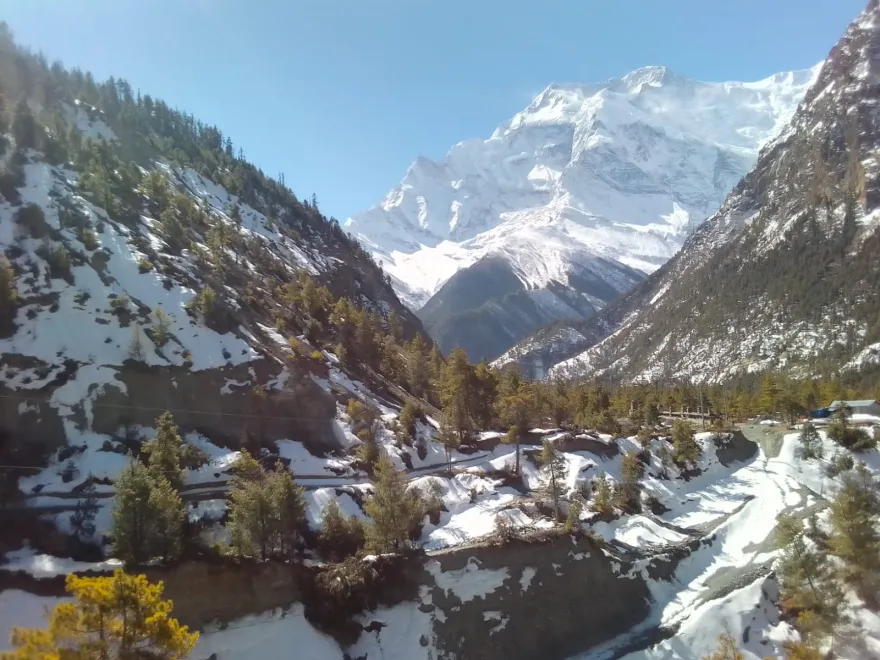
· Subtropical Valleys & Foothills: The lower trail winds along the roaring Modi Khola river. Here, the landscape is characterized by emerald-green rice paddies, traditional stone-built farming villages, and humid subtropical forests.
· Temperate Rhododendron & Bamboo Belts: As the trail gains elevation above 2,000 meters, the landscape transforms into dense forests dominated by bamboo, oak, and rhododendron trees. During the spring months, these forests bloom in vibrant shades of pink, red, and white.
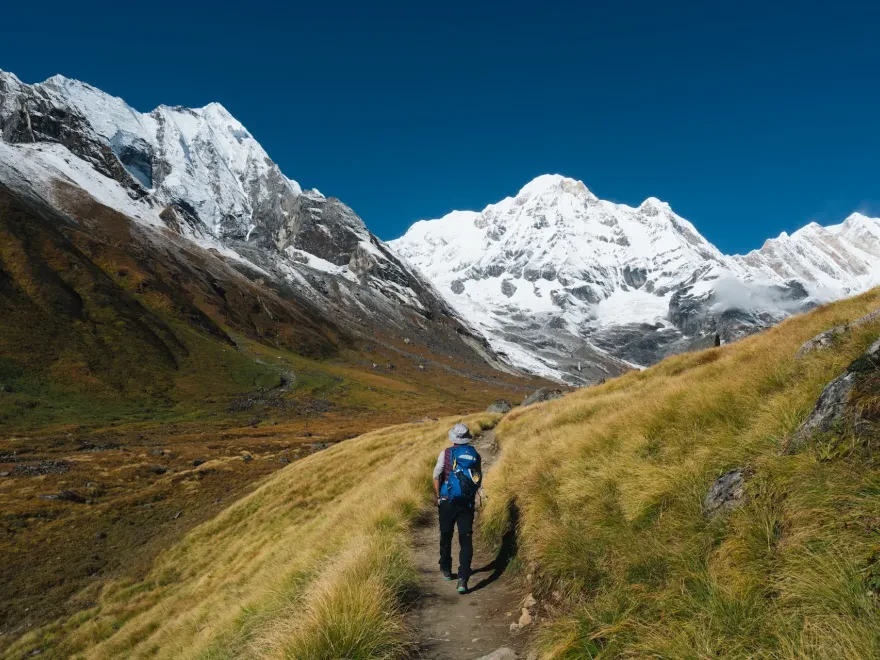
· Alpine Sanctuary & Glacial Moraines: Above the treeline at approximately 3,000 meters, tree canopy gives way to alpine meadows, sub-alpine scrub, and eventually rugged, exposed glacial terrain. The final leg leads directly into the Annapurna Sanctuary—a natural, high-altitude basin completely encircled by massive Himalayan giants.
The standard 10-day trekking package forms a linear route with a slight loop near the lower stages. The total walking distance spans roughly 110 to 115 kilometers round trip, starting and ending near the lakeside city of Pokhara.
| Metric | Details |
|---|---|
| Total Duration | 10 Days (including transfers to/from Kathmandu or Pokhara) |
| Total Distance | Approximately 110–115 km |
| Maximum Altitude | 4,130 meters (13,550 feet) at Annapurna Base Camp |
| Average Daily Walk | 5 to 7 hours |
| Trek Difficulty | Moderate to Moderately Challenging |
| Starting Point | Nayapul / Jhinu Danda / Syauli Bazar (via Pokhara) |
The terrain is famous for its extensive stone staircases. The trail involves thousands of paved stone steps carved into the mountainsides—most notably the steep climbs around Ulleri and Chhomrong. Beyond the canyon village of Deurali, the trail crosses glacial moraines, riverbeds, and narrow mountain corridors, demanding sure-footedness and steady pacing.
Beyond its natural beauty, the Annapurna region is rich in indigenous culture and heritage. The trail passes through several historic mountain settlements primarily inhabited by the Gurung and Magar ethnic groups.
· Gurung Heritage: Villages such as Ghandruk and Chhomrong offer insight into Gurung tradition, architecture, and lifestyle. Many young men from these villages have historically served in the famous British and Indian Gurkha regiments.
· Mountain Hospitality: The local inhabitants operate local teahouses that line the entire trail. Staying in these family-run lodges gives travelers an authentic glimpse into daily mountain life, traditional slate-roofed architecture, and local cuisine, including the national staple, Dal Bhat (a spiced lentil soup served with rice and vegetable curry).
The Annapurna Base Camp trek provides continuous views of several world-renowned Himalayan peaks. As you move deeper into the gorge, the mountain vistas become increasingly intimate and immersive.
· Annapurna I (8,091 m): The 10th highest mountain in the world. Its imposing south face dominates the view from the base camp.
· Machhapuchhre / "Fishtail" (6,993 m): Considered sacred to the Lord Shiva and strictly closed to climbing, this double-peaked mountain acts as a visual anchor throughout almost the entire journey.
· Annapurna South (7,219 m) & Hiunchuli (6,441 m): Guarding the southern side of the sanctuary, these peaks tower directly above the trail during the upper approach.
· Natural Hot Springs: At Jhinu Danda on the return leg, natural geothermal hot springs sit along the banks of the Modi Khola river, offering a relaxing spot for tired trekkers.
Starting from elevations under 1,000 meters, the trek culminates at 4,130 meters at Annapurna Base Camp. Because altitude sickness (Acute Mountain Sickness, or AMS) can affect anyone above 2,500 to 3,000 meters, maintaining a slow, steady walking pace and drinking plenty of water are critical safety protocols. The 10-day timeline builds in gradual elevation gain across multiple days, giving the body sufficient time to adapt naturally.
Trekkers should possess a solid level of cardiovascular endurance and leg strength. Preparing for the trek 6 to 8 weeks in advance with regular cardio exercises (running, swimming, cycling) and leg-focused strength training (squats, stair-master workouts with a loaded pack) significantly enhances comfort on the long uphill and downhill staircase sections.
The Annapurna region features one of the most well-established teahouse networks in the world. This eliminates the need for heavy camping gear or cooked meals on the trail.
Accommodation: Teahouses offer simple twin-share rooms with wooden beds, mattresses, and blankets. Lower-altitude teahouses often feature attached bathrooms and hot showers, while higher-altitude lodges (from Deurali onward) rely on shared, basic toilet facilities and bucket showers.
Food & Hydration: Lodge menus are regulated by local sanctuary committees to maintain standard pricing and safety. Dishes range from traditional Nepalese meals to Western options like pasta, soup, and pancakes. Safe drinking water is available via boiled water purchases or personal water purification tablets/filters.
The experience on the trail is heavily shaped by the weather. The two primary seasons for trekking to Annapurna Base Camp offer ideal conditions:
Autumn (September to November)
Considered the premier season for trekking in Nepal. The post-monsoon air is clear, resulting in unobstructed, sharp mountain views. Daytime temperatures in the lower and middle elevations remain pleasant, though nights at base camp drop below freezing.
Spring (March to May)
The second most popular time to trek. Days are warmer and longer, and the hillsides come alive with colorful rhododendron blossoms. While afternoon clouds can build up in lower valleys, morning mountain views are consistently clear.
The 10 Days Annapurna Base Camp Trek is an excellent option for travelers who want to experience the Annapurna region at a comfortable pace while still completing the trek within a limited holiday period.
The itinerary gives you enough time to appreciate the journey rather than focusing only on reaching the destination. You’ll have opportunities to stop at mountain villages, enjoy local meals, photograph waterfalls and forests, and take in changing views of the Himalayan peaks.
The combination of trekking and road transportation also makes this itinerary efficient. You can experience the major highlights of the Annapurna Base Camp route without spending several additional days on approach and return trails.
The journey begins at 1,400 meters in Kathmandu before continuing to Pokhara at approximately 800 meters. From Pokhara, a scenic drive takes you toward Jhinu Danda, where the trekking section begins.
The route then climbs toward Chhomrong, followed by several days of trekking deeper into the Annapurna Sanctuary. Important overnight stops include Himalaya and the higher alpine settlement of Deurali.
The highest point is Annapurna Base Camp at 4,130 meters. After enjoying the spectacular mountain views, you descend through Bamboo and Jhinu Danda before returning by road to Pokhara and then Kathmandu.
The overall route is designed to balance trekking, acclimatization, scenery, cultural experiences, and relaxation.
Your adventure begins with a scenic drive from Kathmandu to Pokhara. The journey takes approximately 6–7 hours, depending on road and traffic conditions. The drive offers an interesting introduction to Nepal's countryside. You’ll pass through winding hill roads, river valleys, terraced farmland, small settlements, and traditional villages.
Pokhara provides a pleasant contrast to Kathmandu. Situated beside Phewa Lake and surrounded by mountains and green hills, it is the perfect place to relax before beginning the trek.
The trekking adventure begins after the drive to Jhinu Danda. From here, you follow the trail toward Chhomrong, one of the most important villages on the Annapurna Base Camp route. The trail passes through green hills and traditional Gurung settlements. Stone stairways, forested sections, and mountain views make this a rewarding introduction to the trek. Chhomrong is also an excellent viewpoint for surrounding peaks and serves as a gateway to the upper Modi Khola Valley.
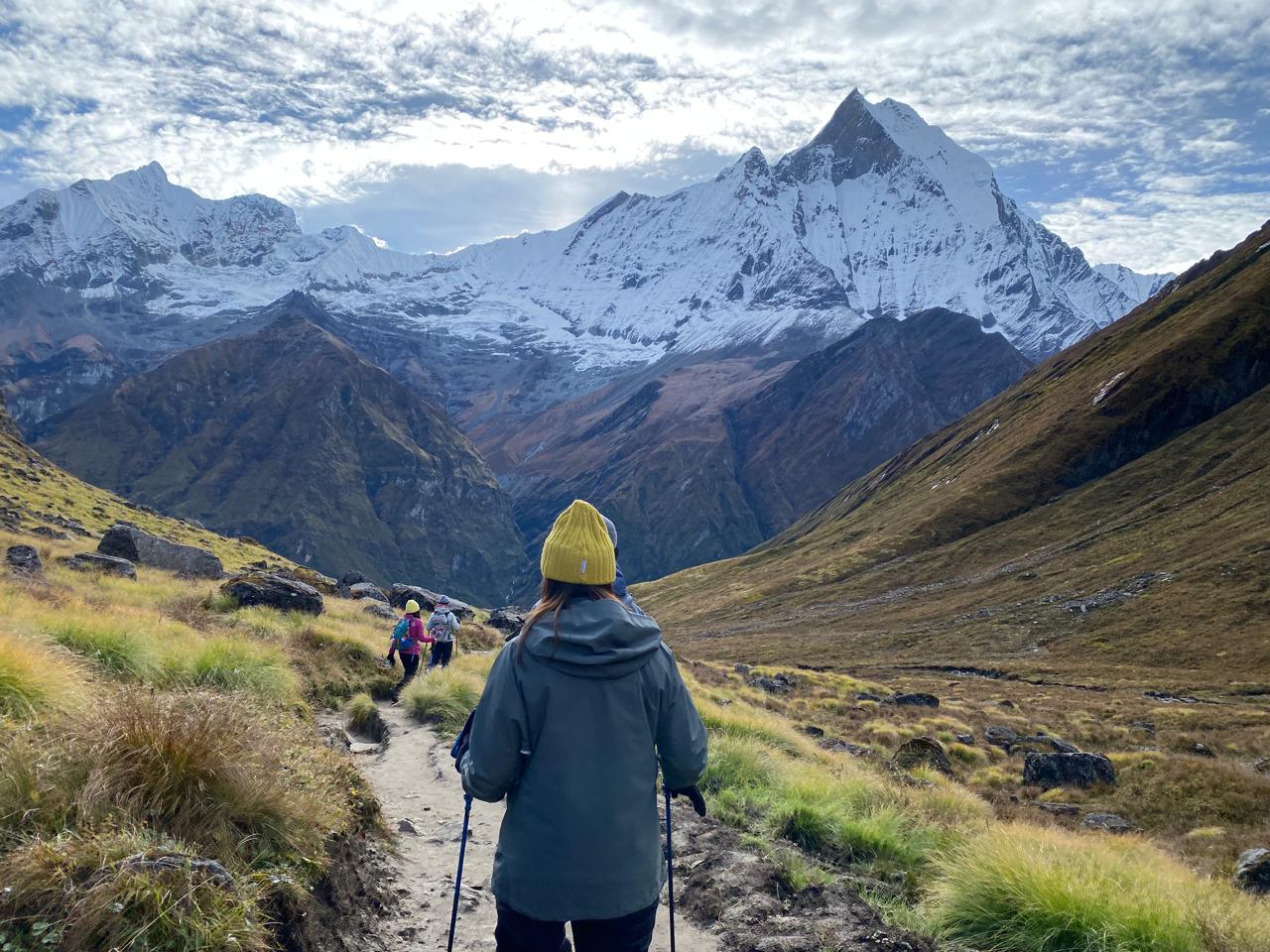
From Chhomrong, the trail continues deeper into the Annapurna region. You’ll descend toward the Chhomrong Khola before climbing through dense forests of bamboo, oak, and rhododendron. The trail passes through several settlements, including Sinuwa, Bamboo, and Dovan, before reaching Himalaya at approximately 2,920 meters. This section of the trek is particularly beautiful because of its combination of dense forest, waterfalls, steep mountain slopes, and glimpses of the surrounding peaks.
As you climb higher, the landscape gradually changes and the air becomes cooler and thinner.
From Himalaya, the trail continues toward Deurali at approximately 3,230 meters. The forest begins to thin as you approach the higher reaches of the Modi Khola Valley. The scenery becomes increasingly dramatic, with steep cliffs, rocky terrain, waterfalls, and towering Himalayan peaks.
Deurali is an important stopping point before continuing toward Machhapuchhre Base Camp and Annapurna Base Camp. Spending the night in this area also allows trekkers to experience the transition from forested mountain terrain to the alpine environment of the Annapurna Sanctuary.
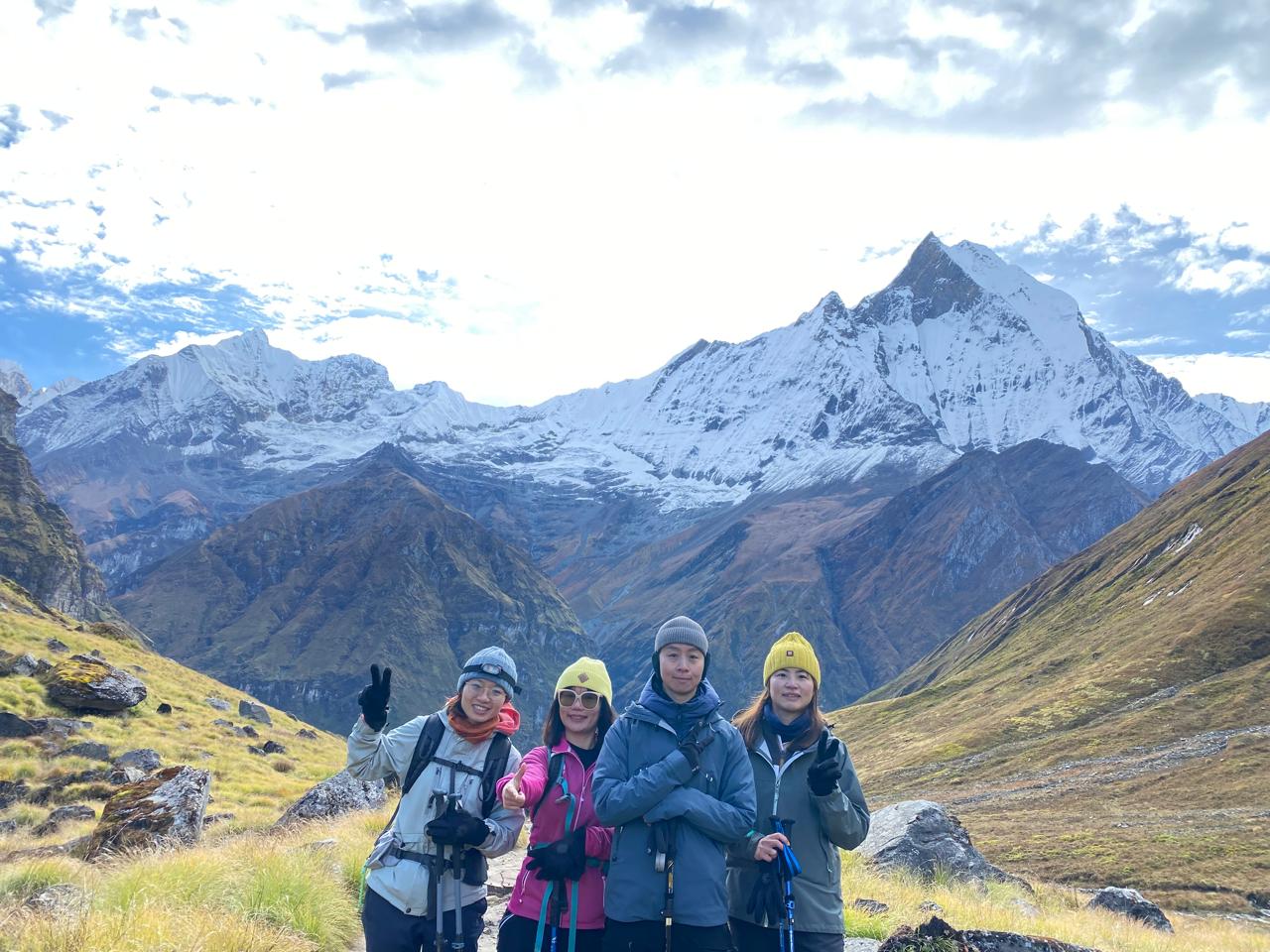
One of the most spectacular sections of the trek begins after Deurali. The trail continues toward Machhapuchhre Base Camp, located at approximately 3,700 meters. Machhapuchhre, also known as Fishtail Mountain, is famous for its distinctive double summit. The mountain dominates the landscape and provides an unforgettable backdrop along the trail.
From MBC, the route enters the Annapurna Sanctuary. The landscape opens dramatically, with enormous Himalayan peaks surrounding the valley. The sense of entering a natural mountain amphitheater is one of the defining experiences of the Annapurna Base Camp trek.
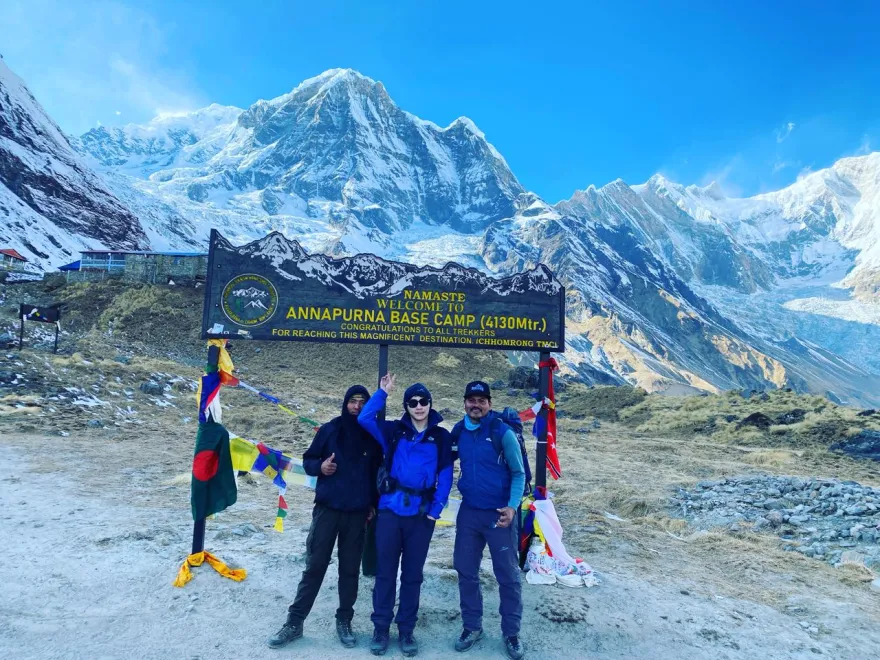
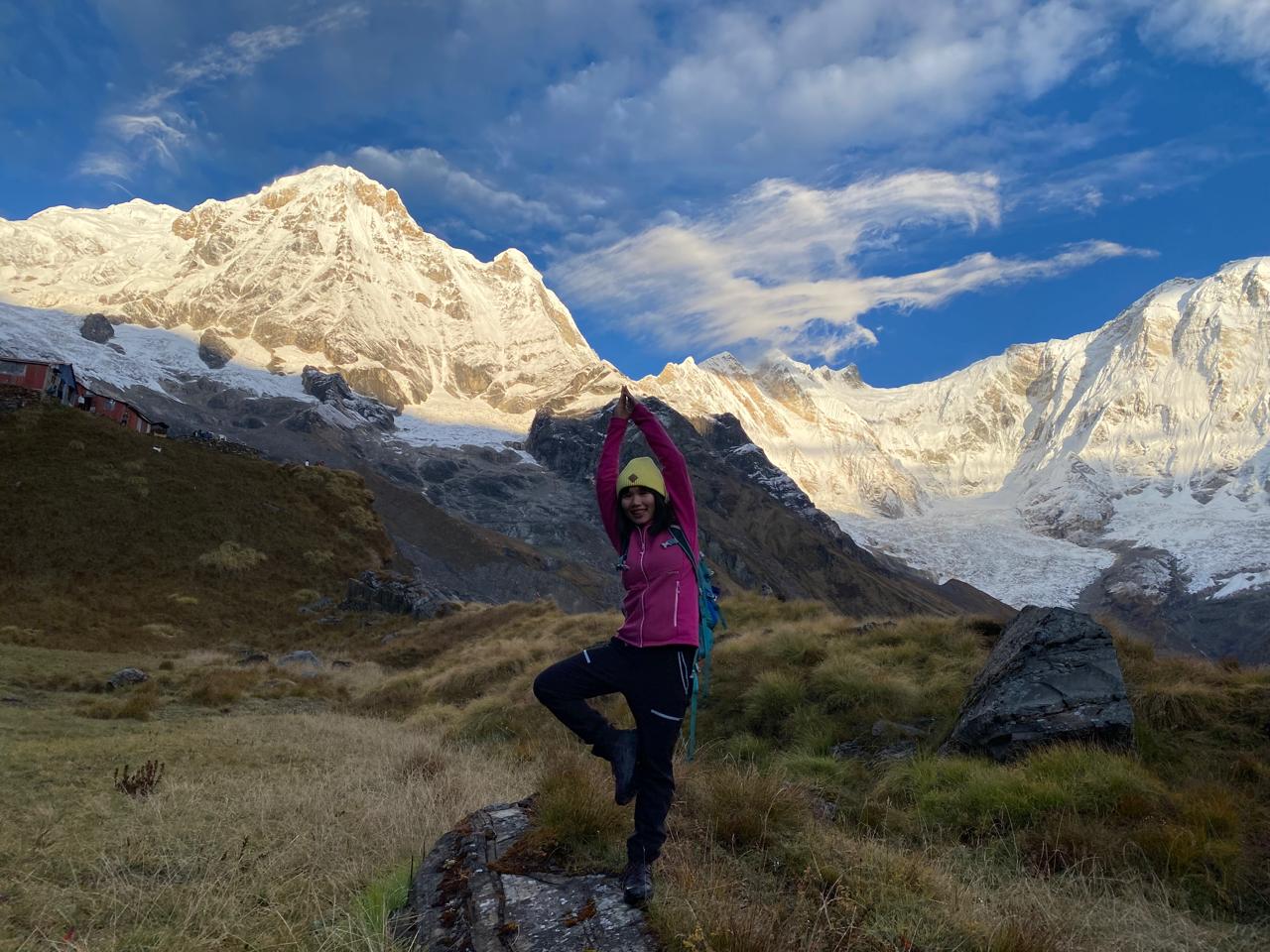
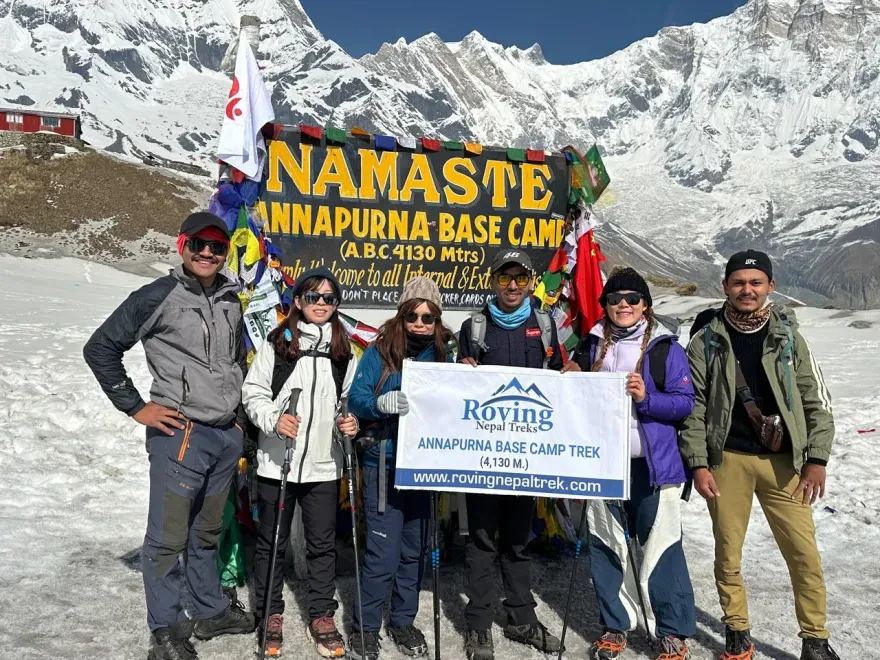
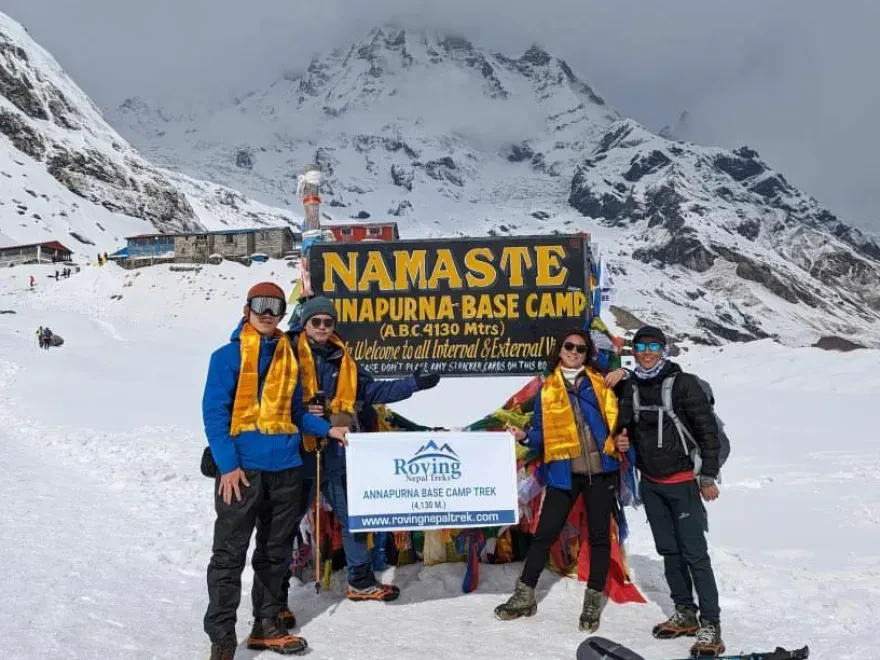
The main objective of the journey is finally reached at Annapurna Base Camp, 4,130 meters above sea level. As you approach ABC, the trail gradually opens up and the surrounding peaks become more imposing. Once at base camp, you are surrounded by some of the most famous mountains in the Annapurna range.
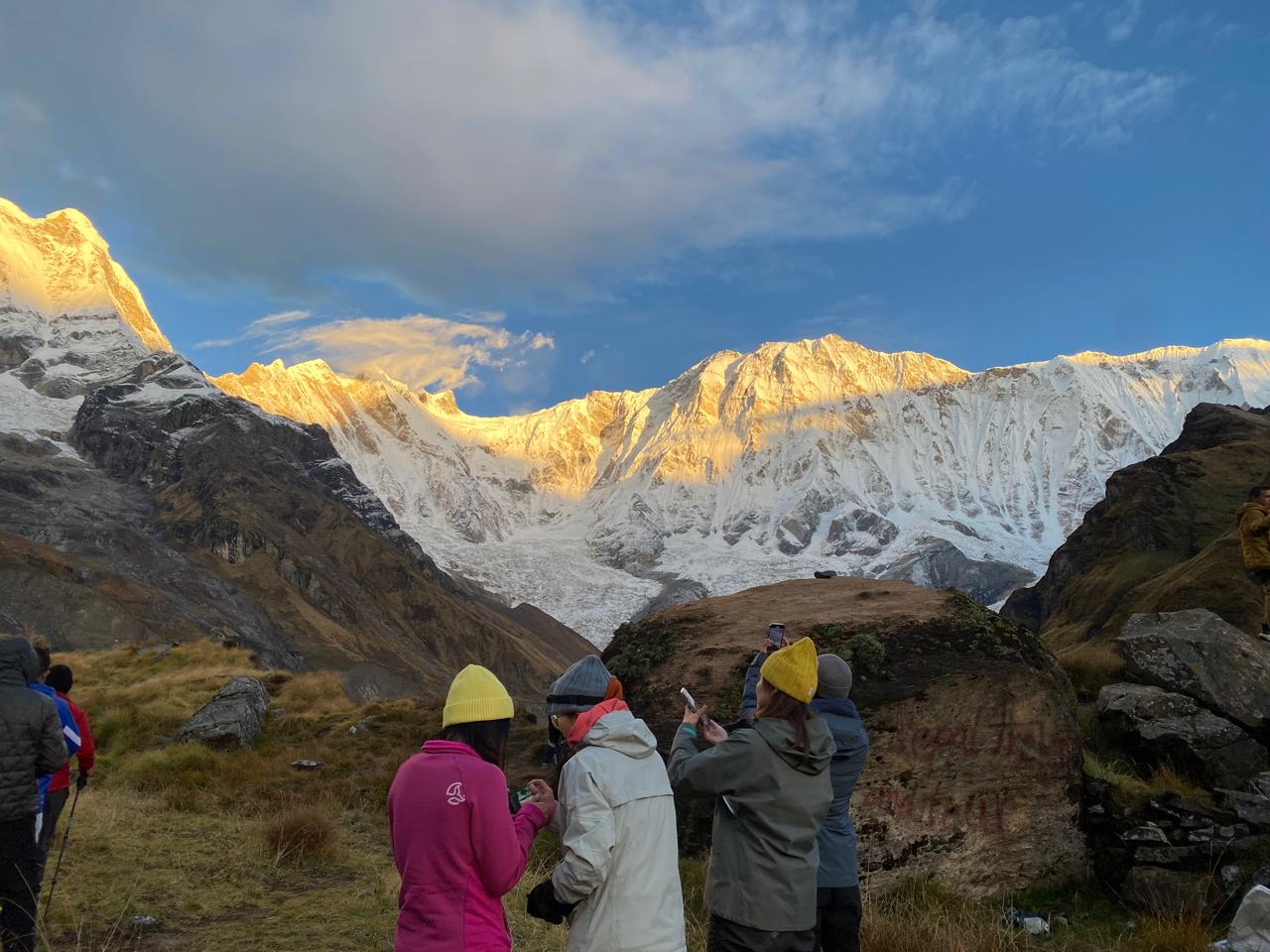
Depending on weather conditions, you may enjoy magnificent views of Annapurna I, Annapurna South, Hiunchuli, Machhapuchhre, and other peaks. Take time to appreciate the achievement, photograph the spectacular scenery, and enjoy the unique atmosphere of being inside the Annapurna Sanctuary.
An early morning at Annapurna Base Camp can be one of the most memorable parts of the trek. If the weather is clear, the first sunlight gradually illuminates the surrounding peaks, creating dramatic colors across the Himalayan landscape. The cold morning air and towering mountains create an atmosphere that is very different from the lower villages.
Mountain weather is unpredictable, however, so clear sunrise views cannot be guaranteed. Even when clouds appear, the experience of waking up at 4,130 meters surrounded by the Annapurna mountains remains special.
After spending time at Annapurna Base Camp, the journey begins to retrace its route toward lower elevations. The descent takes you through Machhapuchhre Base Camp and back toward Deurali, Himalaya, and Dovan before reaching Bamboo. Although descending is generally easier for breathing, long downhill sections can be demanding on the knees and legs. Trekking poles can be particularly useful during this part of the journey. The landscape also changes noticeably as you lose altitude. The barren alpine environment gradually gives way to greener forests.
The return journey continues toward Jhinu Danda, one of the most enjoyable stops on the lower section of the trail. Jhinu is famous for its natural hot springs. After several days of trekking, spending time in the warm water provides a relaxing way to soothe tired muscles. The hot springs are also a wonderful way to celebrate completing the main Annapurna Base Camp trekking section.
After enjoying Jhinu Danda, you’ll continue by road toward Pokhara, where you can relax in a comfortable hotel and enjoy the city's restaurants, cafés, and lakeside atmosphere.
The biggest strength of the 10-day itinerary is that it allows you to enjoy the journey as well as the destination. You’ll experience Nepal at several different levels, beginning with Kathmandu's cultural atmosphere and Pokhara's lakeside setting before entering the foothills and forests of the Annapurna region.
As the trail climbs, you’ll experience traditional mountain communities, rhododendron forests, waterfalls, dramatic valleys, alpine landscapes, and eventually the enormous peaks surrounding Annapurna Base Camp. The return journey provides a completely different perspective as you descend from the high mountains toward warmer forests and Jhinu Danda.
This itinerary is a good choice if you want a classic Himalayan trekking experience without rushing through the route. It provides a balanced combination of mountain scenery, local culture, physical adventure, teahouse experiences, and time in Pokhara and Kathmandu.
Compared with a five-day ABC trek, the 10-day version offers a more relaxed experience and gives you more time to appreciate the trail. At the same time, it remains compact enough to fit comfortably into a typical Nepal holiday. If your goal is to stand at Annapurna Base Camp, experience the Annapurna Sanctuary, and enjoy the journey at a manageable pace, the 10 Days Annapurna Base Camp Trek is an excellent choice.
From the first mountain views outside Pokhara to the unforgettable moment of standing beneath the towering peaks at 4,130 meters, this trek offers a rewarding introduction to the Nepal Himalayas.
The 10-day Annapurna Base Camp trek remains a quintessential Himalayan experience—combining rich cultural traditions with breathtaking mountain scenery into a classic adventure accessible to fit recreational hikers.
The 10 Days Annapurna Base Camp Trek involves sustained walking, steep stone staircases, changing weather, and significant altitude gain. Reaching ABC should never be treated as a race. Follow your guide’s recommended pace and immediately report symptoms such as persistent headache, dizziness, unusual fatigue, nausea, or breathing difficulties.
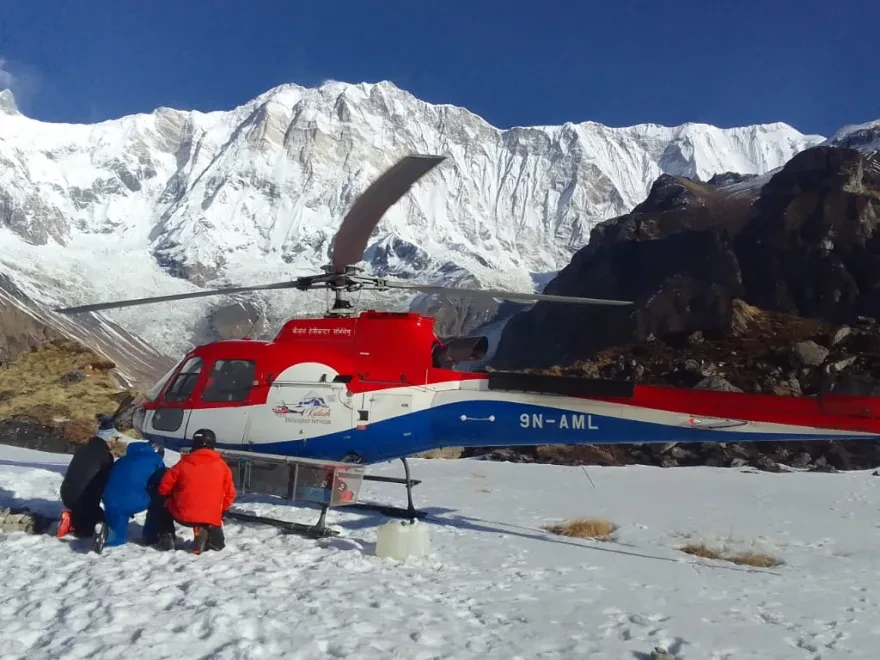
Travel insurance covering high-altitude trekking and emergency evacuation is strongly recommended. Helicopter evacuation, medical treatment, personal expenses, international flights, Nepal visa fees, and other services should be checked carefully against your package’s inclusion and exclusion list.
Weather and trail conditions can change rapidly in the mountains. The exact itinerary may need to be adjusted for safety because of weather, road conditions, trail damage, health concerns, or other unforeseen circumstances.
Trekkers should also prepare appropriately for changing temperatures. Nights at higher elevations can be very cold, even when daytime conditions are pleasant. Proper layering, warm clothing, comfortable trekking footwear, sun protection, and a good-quality sleeping bag are recommended.
Welcome to Nepal! Upon arrival at Tribhuvan International Airport, you’ll be welcomed by our representative and transferred to your hotel in Kathmandu. The drive takes approximately 25 minutes, depending on traffic.
After checking in, you can relax and recover from your journey. If you arrive early, you can take a short walk around the vibrant streets of Kathmandu.
In the evening, you’ll meet your trekking guide for a briefing. Your guide will explain the trekking route, check your equipment, and make sure everything is ready for the adventure ahead.
 Max. altitude 1,400m / 4,593ft.
 After breakfast, we leave Kathmandu and drive toward Pokhara, the beautiful gateway to the Annapurna region. The journey takes around 6–7 hours and takes us through scenic hills, river valleys, terraced farmland, forests, and traditional villages. As we approach Pokhara, you may get your first views of the magnificent Himalayan range. After arriving in Pokhara, check into your hotel and enjoy some free time. You can explore Lakeside, take a relaxing walk beside Phewa Lake, or simply rest before the trek begins.
Max. altitude 800m / 2,625ft. After breakfast, we drive from Pokhara toward Jhinu Danda. The road winds through green hills, terraced farmland, and traditional mountain villages. From Jhinu Danda, we begin our trek toward Chhomrong. The trail takes us through lush vegetation and Gurung settlements, gradually bringing us deeper into the Annapurna region. After reaching Chhomrong, we settle into our teahouse and enjoy the surrounding mountain scenery. This is an important village on the route to Annapurna Base Camp and a great place to spend our first night in the mountains.
Max. altitude 2,170m / 7,119ft. After breakfast, we begin our trek toward Dovan. The trail descends from Chhomrong toward the Chhomrong Khola before climbing again through beautiful rhododendron, bamboo, and oak forests. Along the way, we pass through small settlements and enjoy views of the surrounding mountains and waterfalls. As we move deeper into the Modi Khola Valley, the landscape becomes quieter and more dramatic. We eventually reach Dovan, a peaceful stopping point surrounded by forest. After checking into our teahouse, we can relax and enjoy the mountain atmosphere.
Max. altitude 2,600m / 8,530ft. Today, we continue deeper into the Annapurna Sanctuary. After breakfast, the trail follows the Modi Khola Valley toward Deurali. The forest gradually becomes thinner as we gain altitude, and the surrounding mountains begin to dominate the landscape. We pass through Himal and continue along the increasingly rugged trail. Along the way, we’ll see waterfalls, steep cliffs, and dramatic mountain scenery. By afternoon, we arrive at Deurali, located at around 3,230 m. Since we are now at a higher altitude, we’ll take the evening slowly, stay hydrated, and allow our bodies to adjust to the elevation.
Max. altitude 3,230m / 10,597ft. Today is the most exciting day of our journey as we make our way to Annapurna Base Camp.
After breakfast, we leave Deurali and continue along the Modi Khola Valley. The landscape becomes increasingly alpine, with fewer trees and spectacular mountain views all around us. We first reach Machhapuchhre Base Camp, situated at approximately 3,700 m. From here, the views of Machhapuchhre, Annapurna South, Hiunchuli, and the surrounding peaks are breathtaking. After taking a break, we continue toward Annapurna Base Camp. As the trail opens into the magnificent Annapurna Sanctuary, enormous Himalayan peaks surround us.
Finally, we arrive at Annapurna Base Camp at 4,130 m. This is the moment we’ve been working toward throughout the trek. Take some time to enjoy the incredible surroundings, take photographs, and celebrate reaching the base camp.
Max. altitude 4,130m / 13,550ft. If the weather is clear, wake up early to witness the sunrise over the Annapurna Mountains. The morning light illuminating the surrounding peaks can be an unforgettable experience. After breakfast, we begin our descent from Annapurna Base Camp. We retrace our route toward Machhapuchhre Base Camp and then continue downhill through the Modi Khola Valley. As we lose altitude, the landscape gradually becomes greener. After several hours of walking, we reach Bamboo, where we can relax and enjoy a well-earned dinner. Although today is mostly downhill, the long descent can be tiring, so we take our time and enjoy the beautiful scenery along the way.
Max. altitude 2,310m / 7,579ft. Today is our final trekking day. After breakfast, we continue descending from Bamboo toward Jhinu Danda. The trail passes through lush forests and traditional villages, giving us another opportunity to experience the culture and natural beauty of the Annapurna region. Once we reach Jhinu Danda, we can take some time to relax. If time and conditions permit, you can also enjoy the famous natural hot springs near the village—an excellent way to soothe tired muscles after the trek. Afterward, we meet our vehicle and drive toward Pokhara. The road takes us through beautiful mountain landscapes and rural settlements. Upon reaching Pokhara, we check into our hotel and enjoy a comfortable evening. After several days of trekking, a hot shower, comfortable bed, and good meal will certainly feel rewarding!
Max. altitude 800m / 2,625ft. After breakfast, we begin our journey back to Kathmandu. The drive takes approximately 6–7 hours, following Nepal’s scenic highway through hills, villages, terraced farmland, and river valleys. After arriving in Kathmandu, check into your hotel and enjoy the rest of the day at leisure. You can explore Thamel, do some last-minute souvenir shopping, visit a cultural site, or simply relax after completing your Annapurna Base Camp adventure. In the evening, you may enjoy a farewell dinner and celebrate the successful completion of your trek.
Max. altitude 1,400m / 4,593ft. Today marks the end of your Nepal adventure. Depending on your flight schedule, you’ll have some free time for breakfast, shopping, or relaxing at the hotel. Our representative will transfer you to Tribhuvan International Airport approximately 25 minutes before your scheduled departure, allowing you plenty of time for check-in. As you leave Nepal, you’ll take home unforgettable memories of the Himalayas, traditional mountain villages, beautiful forests, and the incredible achievement of reaching Annapurna Base Camp.
The 10 Days Annapurna Base Camp Trek is one of Nepal’s most rewarding short Himalayan adventures, taking you deep into the spectacular Annapurna Sanctuary. The trek reaches Annapurna Base Camp at 4,130 meters (13,550 feet) and combines dramatic mountain scenery with rhododendron forests, traditional Gurung villages, terraced farmland, waterfalls, and welcoming mountain communities.
This itinerary is ideal for travelers who want to experience the Himalayas within a limited timeframe. Depending on the route and package design, the 10-day program may include Kathmandu, Pokhara, transportation to the trailhead, several trekking days, and the return journey.
Trekking Difficulty
The Annapurna Base Camp Trek is generally considered moderate. You do not need technical mountaineering skills, but you should be comfortable walking uphill and downhill for several hours a day. Regular walking, hiking, stair climbing, and cardiovascular training before departure can make the trek considerably easier.
Maximum Altitude
The highest point is Annapurna Base Camp at 4,130 meters (13,550 feet). Because altitude affects everyone differently, maintaining a steady pace, drinking enough fluids, eating properly, and following your guide’s advice are important.
Accommodation
Accommodation during the trek is generally provided in local teahouses or mountain lodges. Facilities become more basic as you gain altitude, while private rooms, hot showers, Wi-Fi, and charging facilities may cost extra depending on the lodge.
Best Time to Trek
The most popular seasons are spring (March–May) and autumn (September–November). Spring brings blooming rhododendrons, while autumn generally offers clear mountain views after the monsoon. Winter and monsoon trekking are possible with suitable preparation, but snow, rain, slippery trails, and weather-related changes can affect the experience.
Permits and Guide
The Annapurna Base Camp route is located within the Annapurna Conservation Area. Trekkers need the applicable conservation area permit and other permits required under current Nepal trekking regulations. A licensed trekking guide may also be required depending on the current regulations and route. Your trekking agency should confirm and arrange the necessary permits before your trek.
Weather and Flexibility
Mountain weather can change quickly. Your itinerary should remain flexible enough to accommodate trail conditions, transportation delays, illness, or unexpected weather. A responsible itinerary prioritizes safety over maintaining an exact schedule.
Your Start Date is the day you land in Nepal, and your End Date is when you fly home.
If the set 10 Days Annapurna Base Camp Trek group dates don’t suit your schedule, we can offer alternative dates upon request.
Because temperatures fluctuate from warm and humid at lower elevations to sub-zero conditions at the base camp, packing requires a layered clothing strategy.
· Layering System: Thermal base layers, fleece mid-layers, and a windproof/waterproof outer shell jacket. A warm down jacket is essential for evenings above 3,000 meters.
· Footwear: Sturdy, well-broken-in trekking boots with good ankle support are mandatory for stone steps and uneven moraine trails.
· Trekking Poles: Strongly recommended to reduce strain on knees during prolonged downhill steps.
· Gear Protection: A lightweight daypack (30–40L) with a rain cover for personal essentials, along with a dry bag or duffel bag if utilizing porter services.
The 10 Days Annapurna Base Camp Trek is a classic Himalayan trekking journey that takes you from Kathmandu through Pokhara and into the Annapurna Sanctuary. The trek combines scenic road travel, traditional mountain villages, lush forests, and high-altitude landscapes before reaching Annapurna Base Camp at 4,130 meters. The itinerary also includes Machhapuchhre Base Camp, Dovan, Himalaya, Chhomrong, and Jhinu Danda. After reaching ABC, you descend through the same mountain valley before returning to Pokhara and Kathmandu. It is a rewarding option for travelers who want a relatively comfortable pace without committing to a much longer trekking itinerary.
The trek is generally considered moderate to challenging. You do not need advanced mountaineering skills, but you should be comfortable walking for several hours a day on uneven mountain trails. The route includes steep stone staircases, uphill climbs, downhill sections, and some rocky terrain. Altitude also makes the trek more demanding as you approach 4,130 meters. The 10-day schedule is less rushed than shorter ABC itineraries, which gives your body more time to adjust. Good physical preparation, regular walking before the trip, proper hydration, and following your guide's advice will help make the experience more enjoyable.
Daily trekking hours vary depending on the route, trail conditions, weather, and the pace of the group. Most trekking days involve approximately 5–7 hours of walking, although some days may be shorter and others longer. The walking time includes regular breaks for photographs, water, snacks, lunch, and rest. The trail contains many stone steps and gradual as well as steep climbs, so distance alone does not indicate how difficult a particular day will feel. Your guide will normally establish a comfortable pace and schedule breaks according to the group's condition and the day's terrain.
The highest point of the Annapurna Base Camp Trek is 4,130 meters (13,550 feet). You reach this altitude at Annapurna Base Camp, inside the spectacular Annapurna Sanctuary. Before reaching ABC, you pass through higher settlements such as Deurali and Machhapuchhre Base Camp, which help you gradually enter the high-altitude environment. Because the trek reaches above 4,000 meters, altitude awareness is important. You should walk at a steady pace, stay hydrated, eat adequately, and inform your guide immediately if you experience unusual symptoms such as persistent headache, dizziness, nausea, or difficulty breathing.
You should begin preparing several weeks before your trek, particularly if you are not accustomed to long-distance walking. Regular hiking, brisk walking, stair climbing, cycling, and cardiovascular exercise can improve your endurance. It is also helpful to include longer walks on consecutive days because the trek requires repeated days of physical activity. Practice walking uphill and downhill if possible, as the ABC trail contains numerous stone steps. You do not need to be an athlete, but arriving with good cardiovascular fitness and strong legs will make the experience considerably more comfortable and enjoyable.
Pack according to the season while keeping your overall luggage as light as possible. Essential items generally include comfortable trekking boots, trekking trousers, moisture-wicking shirts, warm layers, a fleece or insulated jacket, waterproof outerwear, gloves, a warm hat, sunglasses, sunscreen, a reusable water bottle, personal toiletries, and necessary medications. A headlamp, power bank, small first-aid kit, trekking poles, and a good-quality daypack are also useful. Since temperatures can become very cold around ABC, proper warm clothing is particularly important even if Kathmandu and Pokhara feel warm.
Trekking poles are not compulsory, but they are strongly recommended for many trekkers. The Annapurna Base Camp trail contains numerous stone steps, steep uphill sections, and long descents. Poles can help provide balance on uneven surfaces and reduce some of the strain on your knees during downhill sections. They can also be useful when trails are wet or slippery. If you are not accustomed to using poles, practice with them before your trip so that they feel natural. Adjustable poles are particularly convenient because you can shorten or lengthen them depending on the terrain.
Accommodation on the trekking section is generally provided in local teahouses and mountain lodges. These are simple but comfortable establishments designed specifically for trekkers. Rooms generally contain beds with mattresses, pillows, and blankets, although facilities become more basic as you climb higher. Bathrooms may be shared, and hot showers may cost extra. At popular stops, teahouses can become busy during peak trekking seasons, so advance arrangements through your trekking agency are useful. The experience is part of the adventure, allowing you to stay overnight in traditional mountain communities rather than conventional hotels.
Teahouses along the Annapurna route offer a surprisingly broad selection of meals. Common options include dal bhat, noodles, fried rice, pasta, soups, potatoes, eggs, bread, pancakes, momos, and seasonal vegetables. Dal bhat, consisting primarily of rice, lentils, vegetables, and accompanying dishes, is particularly popular because it is filling and provides plenty of energy for trekking. Breakfast choices often include eggs, bread, porridge, pancakes, and hot drinks. Vegetarian food is widely available. Food choices may become more limited at higher elevations, but you should generally be able to find nourishing meals throughout the route.
Basic services such as electricity, Wi-Fi, and hot showers are available at many teahouses, but they should not be expected to operate like services in a city hotel. Hot showers are often available for an additional fee and may become less reliable at higher elevations. Wi-Fi can be slow or intermittent, while mobile connectivity varies between locations. Electricity is generally available for charging, although charging fees may apply. Carrying a power bank is highly recommended. Remember that the higher you travel, the more basic the facilities may become, so it is best to prepare for limited connectivity.
The most popular trekking seasons are spring and autumn. Spring, from March through May, usually offers pleasant daytime temperatures, good trekking conditions, and beautiful rhododendron blooms along the lower sections of the trail. Autumn, especially September through November, is another excellent period because weather is often stable and mountain visibility can be very good. Winter is possible but brings colder temperatures and potential snow at higher elevations. The monsoon months can bring heavy rain, slippery trails, clouds, and road disruptions. Your choice should depend on your preferred scenery, temperature, and tolerance for variable weather.
Temperatures at Annapurna Base Camp can become very cold, especially at night and before sunrise. Conditions vary considerably according to the season and weather, so it is better to prepare for cold conditions rather than rely on a specific temperature forecast far in advance. A warm insulated jacket, thermal layers, gloves, warm socks, a hat, and appropriate sleeping equipment are important. During winter, temperatures can be particularly harsh and snow may affect the trail. Even during spring and autumn, the combination of altitude, wind, and nighttime conditions can make ABC feel considerably colder than lower villages.
Yes, the trek can technically be completed during the monsoon, but June to August generally brings more challenging conditions. Rain can make sections of the trail muddy and slippery, while clouds may obscure the mountain views that are one of the main attractions of the trek. Heavy rainfall can also affect mountain roads and cause delays on the journeys to and from Pokhara. Leeches can be present on wetter lower sections. If you travel during monsoon, waterproof clothing, good footwear, flexible scheduling, and realistic expectations about mountain visibility are particularly important.
A professional guide is highly recommended because the trek involves high-altitude walking, changing trail conditions, and multiple logistical arrangements. A guide can help with navigation, accommodation, communication with teahouses, meals, transportation, and recognizing potential altitude-related problems. They can also provide valuable insight into local culture, mountain communities, and the natural environment. Having someone experienced with the route is especially helpful when weather or trail conditions change.The best approach is to take altitude seriously and pay attention to how your body responds as you climb. Walk at a steady pace, avoid unnecessary exertion, drink sufficient fluids, eat regularly, and get adequate rest. Avoid excessive alcohol, particularly at higher elevations. Symptoms such as headache, dizziness, nausea, unusual fatigue, or difficulty breathing should be reported to your guide immediately. Do not try to hide symptoms simply to maintain the itinerary. Your guide can recommend rest A guide does not remove every risk, but good local support can make the journey considerably smoother, safer, and more enjoyable.
The best approach is to take altitude seriously and pay attention to how your body responds as you climb. Walk at a steady pace, avoid unnecessary exertion, drink sufficient fluids, eat regularly, and get adequate rest. Avoid excessive alcohol, particularly at higher elevations. Symptoms such as headache, dizziness, nausea, unusual fatigue, or difficulty breathing should be reported to your guide immediately. Do not try to hide symptoms simply to maintain the itinerary. Your guide can recommend rest, a change in schedule, or descent when necessary. The itinerary may need to change if continuing upward is considered unsafe.
Mountain conditions can change quickly, so the itinerary should always have some flexibility. Heavy rain, snowfall, landslides, poor visibility, or difficult road conditions can occasionally cause delays or require route adjustments. Your guide and trekking operator will monitor local conditions and make decisions based on safety. This could mean changing departure times, adjusting walking distances, spending additional time at a particular village, or modifying transportation arrangements. The priority should always be the safety of the trekking group rather than maintaining an exact schedule. Travelers should therefore allow some flexibility in their overall Nepal travel plans.
The Annapurna Base Camp Trek requires the relevant permits and documentation for entering and trekking through the Annapurna region. Requirements can change based on current government and local regulations, so your trekking agency should confirm the latest requirements before departure. Depending on the applicable rules, permits can include documentation associated with the Annapurna Conservation Area and the Trekkers' Information Management System (TIMS). If you book through a trekking company, permit arrangements are commonly handledPackage inclusions vary between trekking companies, so you should carefully compare the details before booking. A typical package may include accommodation during the trek, meals according to the agreed package, an experienced guide, required permits, and transportation between Kathmandu, Pokhara, and the trekking trailhead. Some packages may also include porter support, hotel accommodation in Kathmandu and Pokhara, airport transfers, or travel insurance assistance. Personal expenses such as snacks, alcoholic drinks, hot showers, Wi as part of the pre-trek preparation. Always confirm exactly which permits and fees are included in your package.
Package inclusions vary between trekking companies, so you should carefully compare the details before booking. A typical package may include accommodation during the trek, meals according to the agreed package, an experienced guide, required permits, and transportation between Kathmandu, Pokhara, and the trekking trailhead. Some packages may also include porter support, hotel accommodation in Kathmandu and Pokhara, airport transfers, or travel insurance assistance. Personal expenses such as snacks, alcoholic drinks, hot showers, Wi-Fi, charging, laundry, tips, and additional accommodation caused by delays are commonly excluded unless specifically stated.
The amount depends on your personal spending habits and what your trekking package already covers. It is advisable to carry some Nepali rupees in cash because card payment facilities can be limited or unavailable in remote mountain villages. You may need extra money for snacks, bottled or filtered drinks, hot showers, charging electronic devices, Wi-Fi, souvenirs, and other personal expenses. Having some emergency cash is also sensible. Before leaving Kathmandu or Pokhara, confirm which expenses are already included in your package so you can estimate your personal budget more accurately.
Booking in advance is recommended, particularly if you plan to travel during the popular spring and autumn trekking seasons. Early booking gives you better flexibility with preferred dates, guides, transportation, accommodation, and hotel choices in Kathmandu and Pokhara. It is also helpful if you have international flights with fixed departure dates because the trekking itinerary can then be coordinated around your travel schedule. While last-minute arrangements may be possible, advance booking is preferable for a 10-day itinerary because it allows your trekking operator to organize permits, transportation, accommodation, and support staff before you arrive in Nepal.
| No of people | Price per person |
|---|---|
| 2 - 4 | $999 |
| 4 - 6 | $899 |
| 6 - 10 | $790 |
| No of people | Price per person |
|---|---|
| 1 - 3 | $1,049 |
| 3 - 6 | $999 |
| 6 - 10 | $849 |
| 10 - 20 | $800 |