If you have ever stared at a photograph of the morning light hitting the icy peak of Mount Ama Dablam or watched dust swirl behind a yak train on the Annapurna Circuit, you already know the pull. Nepal calls to travelers in a way few other places on Earth manage to do. It isn’t just a destination; for many, it is a pilgrimage of dirt, endurance, and quiet wonder.
Yet, almost immediately after the daydream takes hold, practical reality barges in: How much is this actually going to cost me?
There is a popular myth floating around travel forums and Instagram comment sections that Nepal is strictly a dirt-cheap haven where you can live like royalty on twenty dollars a day. While it’s true that Kathmandu’s street food and budget hostels are gentle on the wallet, high-altitude trekking is a completely different beast. Once you leave the asphalt behind, the economics of the mountains take over.
Here at Roving Nepal Trek, we believe that financial transparency shouldn't be a mystery solved only after you’ve run out of cash in a remote mountain village. Trekking in the Himalayas can be remarkably budget-friendly, but only if you understand where your money actually goes—and where the surprise expenses are lurking behind the pine trees.
Grab a cup of hot lemon tea. Let’s break down every rupee, permit, and hidden fee so you can step onto the trail with full confidence and a healthy bank account.
Let’s clear the air right away. You do not need to be a wealthy mountaineer with corporate sponsorship to walk beneath the world’s highest peaks. Thousands of university students, solo backpackers, and budget-conscious travelers complete major Himalayan circuits every single year.
However, "budget trekking" does not mean cutting safety corners or expecting five-star comforts for five-star prices. The Himalayas are rugged, isolated, and logistically complex. The moment you step past the trailheads in Pokhara, Besisahar, or Lukla, every apple, every roll of toilet paper, and every drop of kerosene has been carried up on the back of a mule, a porter, or a human hauling a basket with a head strap (a namlo).
Understanding this fundamental reality changes how you view prices on the trail. When a bottle of water costs four times more at 4,000 meters than it did in Kathmandu, you aren't getting ripped off—you are paying for the massive physical effort required to lift that bottle three miles into the sky.
One of the biggest mental hurdles for first-time trekkers in Nepal is the economic gradient. In Kathmandu or Pokhara, five US dollars will buy you a massive, delicious plate of momos, a cold beer, and a taxi ride across town.
As you ascend, the cost of food, hot water, and basic amenities increases exponentially, while the quality of accommodation inevitably becomes simpler. Down low, room rates might be nominal, but up high, the cost of keeping yourself warm and fed scales upward with every meter of elevation gained.
If you plan your budget using city prices as a baseline, you will run out of cash before you even catch your first glimpse of the high mountain passes. Budgeting for a trek requires a dynamic mindset: cheap at the bottom, deliberate in the middle, and realistic at the top.
Before your boots touch the trail, you need to clear the bureaucratic hurdles. Nepal takes the conservation of its delicate mountain ecosystems seriously, and permits are non-negotiable. Walking onto a trail without the proper documentation will result in heavy fines at checkpoint gates (and yes, there are many checkpoints).
Here is what you actually need to pay for the major regions:
Most classic routes pass through protected conservation areas or national parks:
If you want to step off the beaten track into wilderness zones like Upper Mustang, Manaslu Circuit, Tsum Valley, or Nar Phu, expect significantly higher permit fees. These regions operate under strict seasonal quotas to preserve local heritage and limit environmental impact:
Pro Tip: Permit fees must almost always be paid in Nepalese Rupees (NPR) in cash if you are securing them yourself in Kathmandu or Pokhara, though registered local agencies handle all of this paperwork seamless on your behalf.
In recent years, Nepal’s government updated rules regarding solo trekking in certain conservation areas to enhance safety and support the local economy. While enforcement varies by specific region, hiring local support is hands-down the single best decision you can make—not just for your safety, but for the depth of your experience.
A licensed guide isn't just a navigation tool; they are your cultural interpreter, weather forecaster, medical first responder, and lodge negotiator. A licensed guide typically costs between $25 to $35 USD per day, which covers their daily wages, food, accommodation, equipment, and insurance.
If carrying a 15-kilogram backpack over a 5,000-meter pass sounds like torture rather than a vacation, hiring a porter changes everything. A porter carries up to 20 kg of gear and usually costs $18 to $25 USD per day (inclusive of their food, wage, and insurance).
For solo budget travelers or couples, hiring a "porter-guide"—someone who carries a lighter load (around 10–12 kg) while offering navigation and basic English guidance—costs around $22 to $28 USD per day. It is often the ideal middle ground for those watching their wallet.
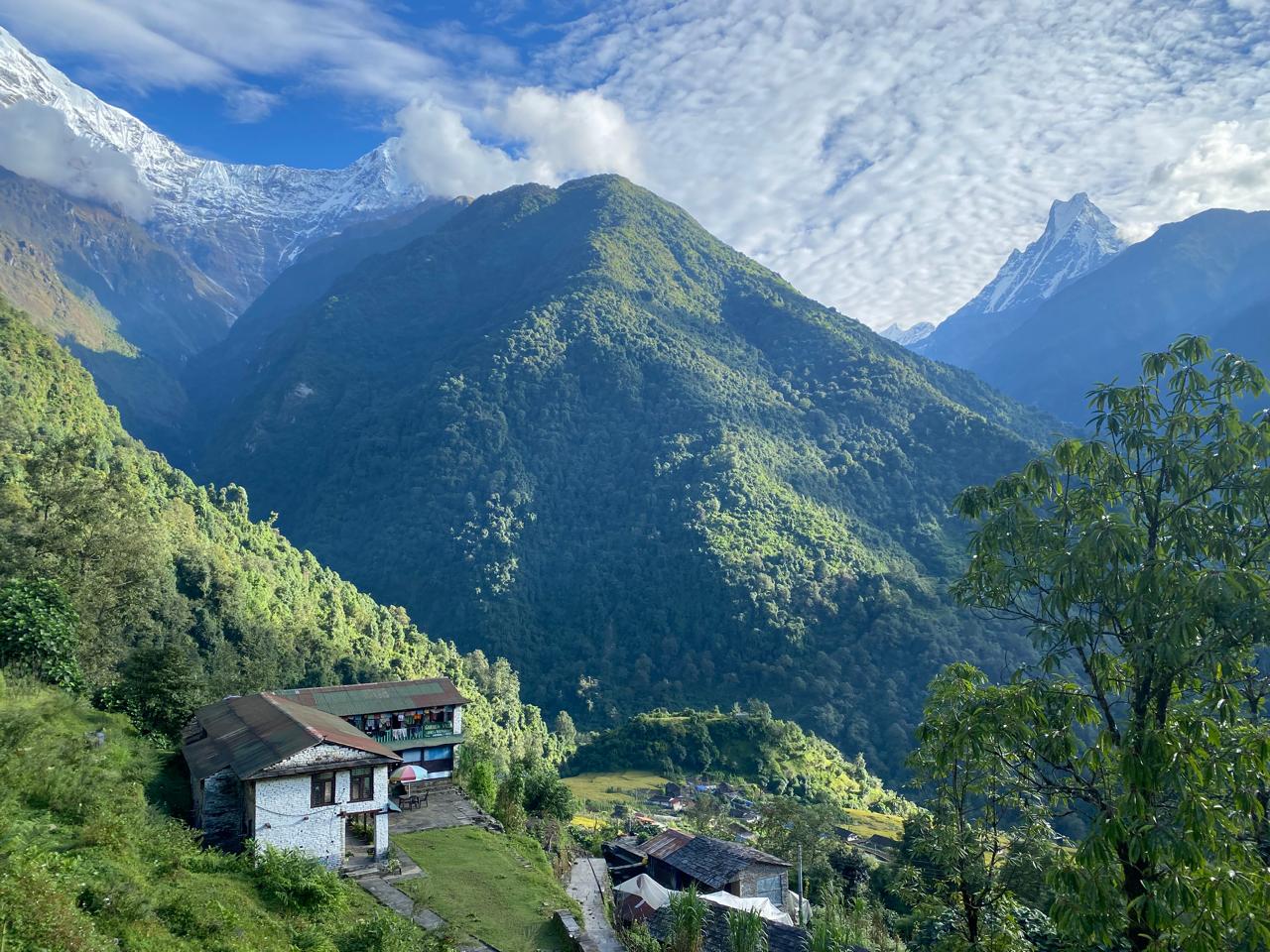
If you browse trekking brochures, you will often see claims that rooms in mountain teahouses cost a mere $3 to $5 USD a night. This is technically true, but there is a massive catch that surprises uninitiated travelers.
Teahouses run on a unique micro-economic model: Cheap rooms, expensive food.
When a lodge owner rents you a twin-share room for 500 Rupees ($4 USD), they are doing so under the strict contractual understanding that you will eat both dinner and breakfast at their establishment. If you choose to eat your meals at a rival teahouse down the path, the lodge owner will routinely charge you three to four times the standard room rate (or refuse you accommodation entirely).
In higher villages like Gorakshep (Everest region) or High Camp (Annapurna Circuit), room prices can rise during peak season, but the core rule remains: Your room fee is essentially a deposit for your right to buy food at the table.
Food will swallow the largest chunk of your daily mountain budget. As elevation increases, energy requirements surge, and menu prices follow suit.
If you remember only one piece of advice from this guide, let it be this iconic mountain phrase: "Dal Bhat Power, 24 Hour!"
Dal Bhat—a traditional Nepalese meal consisting of steamed rice, lentil soup (dal), vegetable curry (tarkari), spinaches, and spicy pickles—is the undisputed king of trekker food. Why? Because in almost every teahouse across Nepal, Dal Bhat comes with free seconds (and often thirds).
While a plate of Western-style spaghetti or a personal pizza might look tempting, it comes in a fixed, often small portion. A plate of Dal Bhat guarantees you walk away completely full for roughly $5 to $8 USD, making it the most cost-effective calorie intake on the planet.
Expect to spend around $25 to $40 USD per day on food and hot drinks, depending on how high you are and how hearty your appetite is.
Now we arrive at the heart of the budget problem: the hidden daily micro-transactions. These are the small, seemingly insignificant fees that don't appear on standard trekking itineraries, yet silently eat away at your cash reserves day after day.
Up to around 2,500 meters, warm showers might still be included in your room rate or cost a nominal $1–$2 USD. Above that line, water must be heated via gas canisters, solar panels, or firewood. A piping-hot bucket or gas shower will cost anywhere from 300 to 700 NPR ($2.50 – $5.50 USD).
Budget Tip: Wet wipes are your best friend. Warm showers become a luxury every 3–4 days rather than a daily habit.
There are no free wall outlets in high-altitude teahouse bedrooms. Central charging stations are powered by solar panels or diesel generators. Lodges charge hourly or per device:
If you are charging a phone, a camera battery, and a power bank every single night, you can easily add $10 USD to your daily expenditure.
Want to upload that mountain selfie or check in with family back home? High-altitude Wi-Fi networks (like Everest Link or local lodge routers) cost between 300 to 600 NPR ($2.50 – $5 USD) for a code valid for 24 hours or a fixed data limit. Coverage can be temperamental at best.
Teahouse toilets do not supply toilet paper. Buying a roll on the trail costs about $1 USD at low elevation, spiking to $3.50 or $4.00 USD above 4,000 meters.
Getting to the start of your trek can either swallow half your budget or save you hundreds of dollars, depending on how you choose to travel and how much time you have.
Flying from Kathmandu/Ramechhap to Lukla is iconic, breathtaking, and notoriously weather-dependent. A return flight for foreign nationals costs roughly $400 to $450 USD.
The Budget Alternative: You can take a long, bumpy overland Jeep ride from Kathmandu to Tham Danda or Paiya, followed by a day or two of trekking into the main trail. This cuts transport costs significantly (around $30–$40 USD each way), though it adds 3 to 4 days to your trip.
You do not need to max out your credit cards at brand-name outdoor stores in London, New York, or Sydney before flying to Nepal. Kathmandu’s Thamel district and Pokhara’s Lakeside are arguably the gear-shopping capitals of the world.
Certain high-quality items are expensive to purchase for a single trip and bulky to haul on international flights. Renting them in Thamel is a budget game-changer:
Make sure to test zippers, check down fill density, and inspect seams carefully before leaving the rental shop.
You can purchase knockoff or locally produced brand items (often labeled "Sonam" or "North Fake") in Thamel for a fraction of Western prices:
Never compromise on trekking boots. Buy your boots at home months before your trip, break them in thoroughly, and make sure they fit your feet comfortably. Blisters at 4,000 meters due to brand-new, stiff boots bought the night before in Thamel will ruin your entire trek.
Here is a critical warning that saves trekkers from disaster every season: There are virtually no reliable ATMs in the mountains.
While Namche Bazaar and Jomsom technically have ATM machines, they are notoriously out of service, out of cash, or unable to communicate with international bank networks due to power cuts or internet outages. Credit card readers are practically non-existent in teahouses (and those that have them charge steep 5% to 10% processing surcharges).
You must withdraw all the Nepalese cash you need for your entire trek while you are still in Kathmandu or Pokhara.
Trying to save money by skipping travel insurance is not a budget tip—it is a dangerous financial gamble.
High-altitude pulmonary edema (HAPE) and high-altitude cerebral edema (HACE) are serious medical emergencies. If you suffer severe acute mountain sickness or sustain an injury on a remote pass, the only way down is by helicopter evacuation.
A single helicopter rescue in Nepal costs between $2,500 and $5,000 USD, payable upfront or guaranteed by your insurance provider before the rotor blades even start spinning.
When purchasing travel insurance, inspect the fine print carefully:
Spending $100 to $150 USD on proper high-altitude insurance is the single most important investment you will make for your peace of mind.
In Nepal’s culture, tipping is not strictly mandatory, but in the trekking industry, it is a deeply ingrained and vital component of a guide’s or porter’s seasonal income. These mountain workers push their bodies to the limit so you can enjoy the trail safely.
When planning your overall budget, remember to set aside cash for tips:
Tips are usually presented in cash inside an envelope on the final evening of the trek, accompanied by a heartfelt Dhanyabad (thank you).
Want to stretch your rupees as far as possible without sacrificing your safety or enjoyment? Here are actionable, field-tested tricks straight from the team at Roving Nepal Trek:
Invest in a solid 20,000mAh power bank before you leave home. Charge it fully in Kathmandu or Pokhara. This will keep your phone and camera gear running for 4 to 6 days without paying nightly charging fees at teahouses.
Buying bottled water on the trail costs $1 to $4 USD per bottle. Over a 12-day trek, drinking 3–4 liters a day adds up to over $100 USD—and leaves behind a tragic trail of plastic waste.
Snack bars, snickers, nuts, and chocolate bars cost double or triple in high mountain villages. Buy your trail mix, peanut butter, dried fruit, and energy bars in bulk at supermarkets in Kathmandu or Pokhara before departing.
Peak seasons (October–November and March–April) mean packed lodges and fixed prices. Shoulder months (early September, late May, or early December) often offer better leverage for negotiating room upgrades or lower off-peak rates, while still delivering stunning mountain views.
If you are trekking with a partner or group, ordering a large pot of black, ginger, or lemon tea is significantly cheaper than ordering individual cups.
To give you a clear financial picture, here is a realistic budget blueprint for a standard 12-day teahouse trek (such as Annapurna Base Camp or Langtang Valley):
| Expense Category | Daily / Item Cost | Total Estimated Cost (USD) |
|---|---|---|
| Permits (ACAP/TIMS) | Flat Fees | $40 – $50 |
| Transportation (Roundtrip Bus/Jeep) | Flat Fees | $30 – $60 |
| Accommodation (11 Nights) | $4 – $6 / night | $44 – $66 |
| Food & Meals (12 Days) | $25 – $35 / day | $300 – $420 |
| Hot Showers & Charging | ~$5 / day average | $60 |
| Water Purification (Self) | Tablets / Filter | $15 |
| Local Support (Shared Porter-Guide) | ~$25 / day (Split between 2) | $150 per person |
| Miscellaneous / Tips Buffer | Lump Sum | $80 – $100 |
| TOTAL ESTIMATED COST | $719 – $906 USD |
Note: This sample excludes international flights, pre-trek city accommodation, and personal insurance, but covers practically all ground costs once your trek begins.
Trekking in Nepal doesn't have to be a confusing financial maze or an outrageously expensive luxury. With honest planning, local insight, and an adventurous spirit, the majesty of the Himalayas is accessible to anyone willing to put one foot in front of the other.
At Roving Nepal Trek, we pride ourselves on delivering authentic, high-quality, and transparently priced mountain experiences. Whether you are looking for a fully guided luxury itinerary, a flexible budget-friendly trek, or custom logistics, our local team in Kathmandu and Pokhara is here to make your Himalayan dream a seamless reality.
Ready to start planning your next great adventure? Explore our customized itineraries and get in touch with our expert local team today at the Roving Nepal Trek.
It is well known to all that Nepal is an ideal destination for trekking activities. The presence of mesmerizing Himalayas (over 1900 snow – capped mountains), diverse landscapes, diverse vegetation, and multi – ethnic communities (over 125 ethnic castes) makes it the best travel destination. Besides cultural tours, pilgrimage tours, and adventure mountain climbing activities, trekking is the most popular holiday choice. Therefore, lots of people visit Nepal for trekking to various destinations. Today’s blog is about the best beginner trek in Nepal. Walking in some of the trails in Nepal requires lots of physical fitness level and logistics management.
Trekking in Nepal is more than just a mountain vacation—it is a life-changing journey through ancient trade routes, sacred glacial valleys, and the highest mountain peaks on Earth. Whether you are stepping onto Himalayan trails for the first time or looking for your next high-pass challenge, choosing the right trek is the crucial first step.
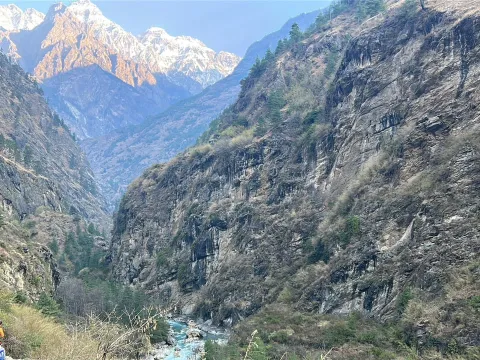
There is a precise moment in early October when the sky over the Himalayas shifts. The heavy, moisture-laden clouds of the summer monsoon break apart, chased away by high-altitude winds. What remains is an atmosphere so crisp and transparent it feels almost surreal. The air loses its humid weight, the dust is entirely washed from the leaves, and the great white walls of the world’s highest peaks emerge in absolute, unblemished clarity.