If you are planning an Everest Base Camp trek, you have likely heard of Lukla Airport—the tiny, thrilling mountain airstrip that acts as the primary gateway to the Khumbu region. Due to extreme air traffic congestion and single-runway limitations at Kathmandu's Tribhuvan International Airport (TIA), the Civil Aviation Authority of Nepal (CAAN) reroutes nearly all commercial tourist flights to Lukla out of Manthali Airport in Ramechhap during the peak spring (March to May) and autumn (September to November) trekking seasons.
But if you think you’re simply boarding a mid-morning flight from Kathmandu's domestic terminal, you are in for a massive logistical shock. Yes, before you board the flight to Lukla, you have to go through 5 hours of driving along the winding BP Highway to reach Ramechhap from Kathmandu.
This means your high-altitude journey doesn't start with a flight. It starts with a grueling, dark, bumpy drive. Here is the unfiltered reality of how to navigate the Ramechhap detour.
| Factor | What to Expect |
|---|---|
| The Location | Manthali Airport, Ramechhap District (approx. 132–145 km east of Kathmandu) |
| The Drive Time | 4.5 to 5.5 hours along the winding BP Highway |
| The Wake-Up Call | Departure from your Thamel hotel is typically between 1:00 AM and 2:00 AM |
| The Flight Time | A brief 18 to 20-minute jump (compared to 35 minutes from Kathmandu) |
| Airlines Operating | Tara Air, Summit Air, and Sita Air (using small STOL aircraft like Twin Otters) |
| Strict Weight Limits | 15 kg total (10 kg checked luggage + 5 kg hand carry) |
While waking up at midnight to sit in a van for five hours sounds like a nightmare, the diversion actually works in your favor once you reach the runway.
To avoid missing your window, the journey follows a rigid sequence of moves through the middle hills of Nepal.
1.The Midnight Pickup:1:00 AM - 2:00 AM.
Your trekking agency or private transport picks you up directly from your hotel in Kathmandu. You will board either a shared tourist van or a private 4x4 Jeep.
2.The Winding Descent:2:00 AM - 5:30 AM.
You will travel along the BP Highway in pitch darkness. The road is beautifully paved but incredibly narrow and comprised of endless, sharp switchbacks tracing the river valleys. Some areas are washed away by recent floods. Therefore, expect bumpy ride in some sections due to dirt road conditions with big boulders.
3.Arrival at Manthali Airport:5:30 AM - 6:00 AM.
You will arrive at Ramechhap just as dawn breaks. The environment here is a drastic shift from Kathmandu: it sits at a low altitude of just 474 meters and can quickly become hot, humid, and dusty. The airport has one runway and the surroundings used to be rural area but the frequency of flights has made this small vibrant town.
4.The Basic Check-In:6:00 AM - 7:30 AM.
Manthali is a small, non-digitalized airstrip reminiscent of mid-century travel. You will weigh your bags on manual scales, grab a hot tea and local biscuits from a basic stall, and wait for your flight block to be cleared via Visual Flight Rules (VFR).
You have two main strategies to handle this flight disruption. Each option requires sacrificing a different type of comfort.
Option A: The 1:00 AM Midnight Run (Recommended)
This is the choice made by 85% of trekkers and major guiding companies. You stay in your Kathmandu hotel, leave at midnight, and sleep as much as possible in the vehicle.
Option B: Heading Down the Day Before
You hire a jeep to take you to Manthali the afternoon before your flight, spending the night in a local lodge near the runway.
To beat the strict 15 kg baggage limit, do not pack your heaviest gear inside your duffel bag. Wear your heavy trekking boots, thick fleece layers, and your down jacket directly onto the plane. You can take them off and pack them into your daypack the second you touch down in the chilly air of Lukla. Also, you can keep your unwanted baggage in Kathmandu either in the trekking office or in the hotel.
Even though Ramechhap has a higher flight success rate, the weather at Lukla Airport remains the ultimate boss. If high winds or heavy cloud cover ground the planes, keep these three backup strategies in mind:
You can book jeep to Surke skipping Lukla flight from Manthali. For this, you must travel to Phaplu which takes around 4 to 5 hours. After reaching Phaplu, you can take the road via Bupsa and Tham Danda to reach Surke which takes another 5 hours. Therefore, in about 10 hours approximate time; you can reach Surke from Manthali. If incase, your flight from Manthali doesn’t happen, then you can choose this option too. Shared jeep costs around 400 $ to 600 $ per person. A jeep fits around 5 to 6 trekkers. Private jeep costs your around 350 $ to 450 $ for one way trip.
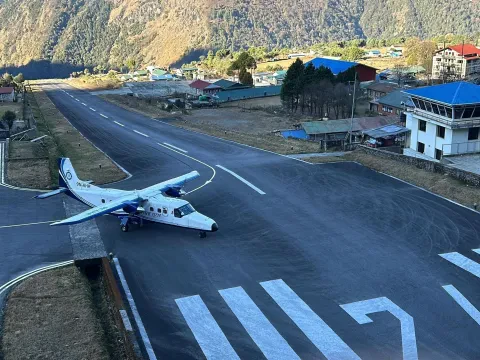
Everest trek. Everest trek.A journey from Lukla to Everest is filled with beautiful Sherpa villages, lush green forests, and many more. From peeking at the beautiful mountains like Lhotse and Nuptse there is much more to explore in the Lukla to Everest trek.
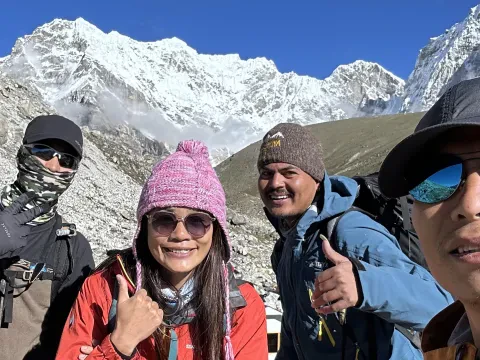
Well, Everest region of Nepal never fails to surprise you with its wonders of Himalayan wonders! The home of Sherpa people known for their mountaineering prowess, the region excels in trekking activities. Moreover, it is also an epitome for all kinds of Himalayan adventures from peak climbing to expeditions and luxury helicopter tours. The biggest hurdle to any kinds of activities in the region is the risk of altitude sickness. Therefore, today’s blog is all about finding out the best and authentic Everest Altitude Sickness Guide.
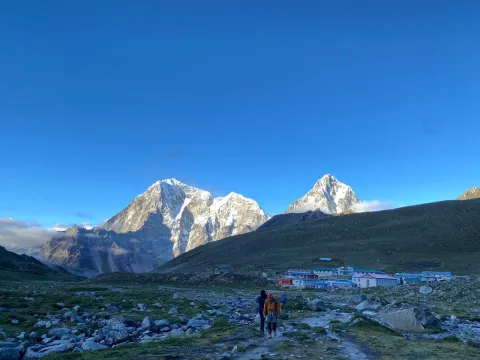
The Everest Base Camp Trek via Cho La Pass difficulty level for beginners can be hard due to its high altitude, rugged trails, and physically demanding pass crossing. First-time trekkers may struggle with long trekking days, steep ascents, and freezing temperatures at higher elevations.
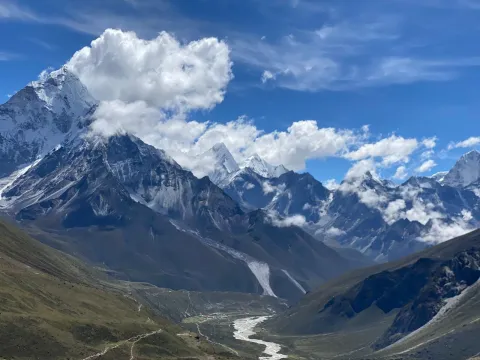
The blog features basic information about the Everest Base Camp Trek via Chola Pass Cost Breakdown 2026. Travelers must know about the cost of transportation, guide – porter salary, accommodation, meals, travel insurance, gear, permits, and miscellaneous things. Besides these things, travelers should also have information about the difference between package trek cost and independent travel cost.