The final stretch to the Everest Base Camp Trek in Nepal is from Gorakshep to Everest Base Camp. Today’s blog is about the difficulty, distance, trail conditions, and overall experiences of walking from the last village of the EBC Trek route to the base camp. We will talk in detail about this section.
For many trekkers in Nepal, reaching Everest Base Camp is the moment they've been dreaming about since the beginning of their journey. After days of walking through Sherpa villages, crossing suspension bridges, and gradually gaining altitude, the final stretch from Gorakshep to Everest Base Camp feels different.
There are no forests, green hills, or traditional villages here. Instead, trekkers enter a world of rock, ice, glaciers, and towering Himalayan peaks. Every step brings them closer to the foot of Mount Everest, the highest mountain on Earth at 8,848.86 meters.
Although the actual summit of Everest is not visible from Base Camp itself, the experience of standing where climbers prepare for their ascent remains unforgettable.
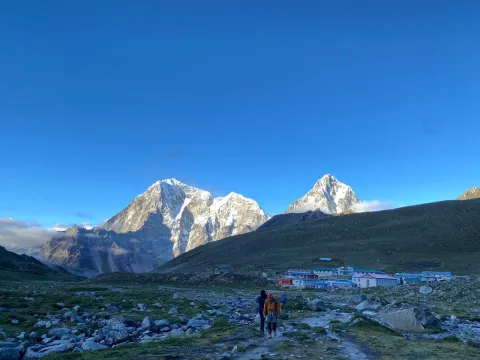
Gorakshep is the last permanent settlement on the Everest Base Camp Trek. Located at an altitude of approximately 5,164 meters (16,942 feet), it serves as the final overnight stop before visiting Everest Base Camp and Kala Patthar.
Decades ago, Gorakshep was the original Everest Base Camp. Over time, the Khumbu Glacier shifted, and the modern base camp moved further up the valley.
Today, the small settlement consists of a handful of tea houses that provide accommodation, meals, and basic facilities for trekkers.
Before beginning the hike, it helps to understand what lies ahead.
| Detail | Information |
|---|---|
| Starting Point | Gorakshep |
| Destination | Everest Base Camp |
| Distance (One Way) | Approximately 3.5 km |
| Round Trip Distance | 7 km |
| Starting Altitude | 5,164 m |
| Everest Base Camp Altitude | 5,364 m |
| Average Trekking Time | 2–3 Hours One Way |
| Difficulty | Moderate to Challenging |
The distance may seem short, but altitude makes every kilometer significantly more demanding.
Most trekkers reach Gorakshep during the late morning or around lunchtime after walking from Lobuche.
Rather than waiting until the next day, many choose to leave for Everest Base Camp shortly after checking into their lodge. Afternoon conditions are usually suitable, and reaching Base Camp on the same day allows time for the famous sunrise hike to Kala Patthar the following morning.
The trail begins immediately behind Gorakshep and gradually climbs over rocky terrain.
One of the biggest surprises for many trekkers is how difficult simple walking becomes at high altitude.
At over 5,000 meters, oxygen levels are significantly lower than at sea level. Even gentle uphill sections can leave hikers breathing heavily.
This is why experienced guides constantly remind trekkers to maintain a slow and steady pace. The goal is not speed but consistency.
A comfortable pace often includes:
Patience becomes one of the most valuable skills on this section of the trek.
One of the most fascinating aspects of the route is the opportunity to walk beside the Khumbu Glacier.
The glacier is the highest glacier in the world and stretches down from the Western Cwm near Everest. Along the trail, trekkers can hear the occasional cracking sounds of moving ice beneath layers of rock and debris.
The landscape feels almost lunar, with gray moraine ridges, massive ice formations, and rugged mountain scenery dominating the horizon.
Few trekking routes offer such close access to an active Himalayan glacier.
The journey from Gorakshep to Everest Base Camp differs dramatically from lower sections of the Everest region.
Gone are the colorful rhododendron forests and traditional stone villages. The environment becomes harsher, colder, and more exposed.
What remains is pure mountain wilderness.
The terrain consists mainly of:
Many trekkers describe this section as feeling like another planet.
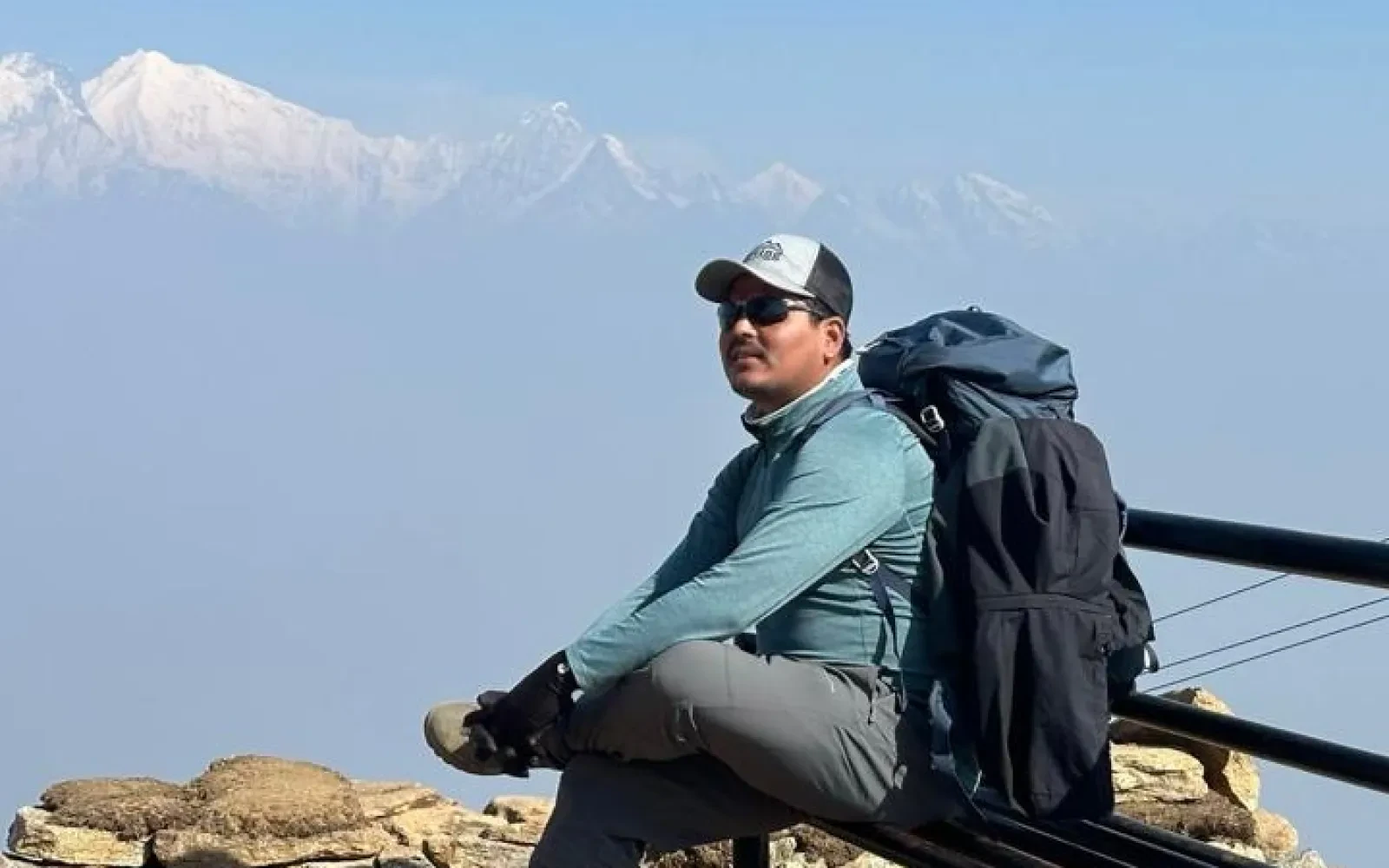
Although Mount Everest itself remains partially hidden during much of the trek to Base Camp, the surrounding mountains provide incredible scenery.
Some of the major peaks visible along the route include:
| Mountain | Elevation |
|---|---|
| Pumori | 7,161 m |
| Nuptse | 7,861 m |
| Lingtren | 6,749 m |
| Khumbutse | 6,665 m |
| Changtse | 7,543 m |
The sheer scale of these mountains becomes more impressive with every step.
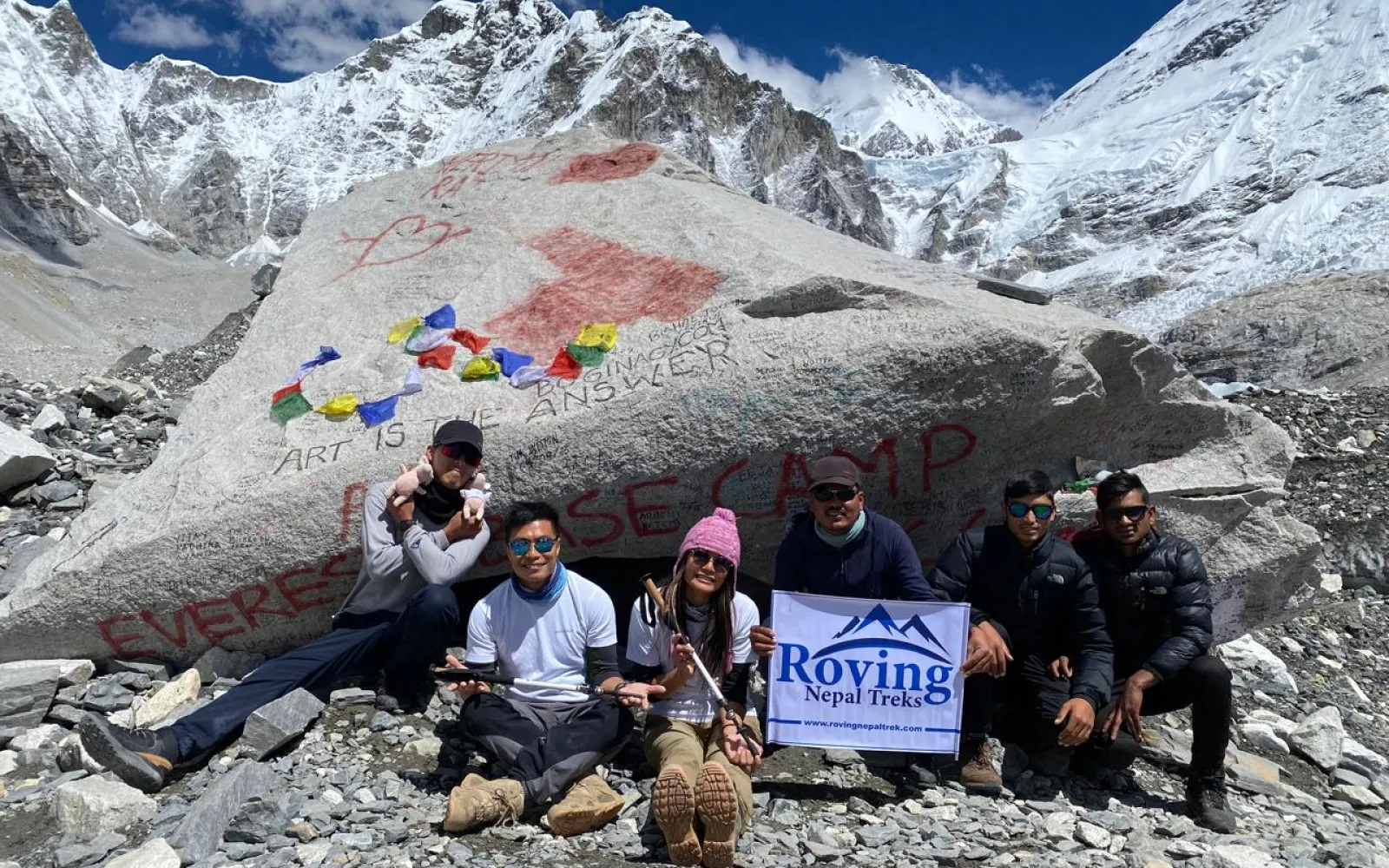
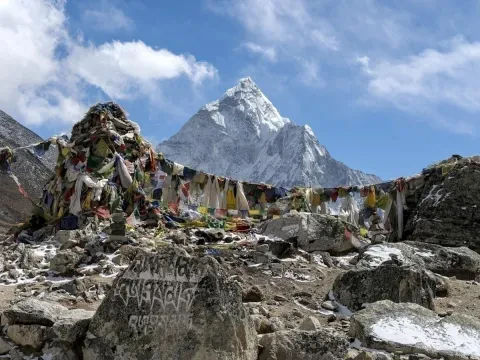
After approximately two to three hours of hiking, colorful prayer flags and large rocks painted with "Everest Base Camp" begin to appear.
For many trekkers, this is an emotional moment.
The achievement represents days of physical effort, acclimatization, and determination. Some celebrate quietly, while others take photographs and share the moment with fellow hikers.
Standing at 5,364 meters beside the Khumbu Glacier is a milestone that few people ever experience.
Outside the spring climbing season, Everest Base Camp may appear surprisingly quiet.
There are no permanent buildings. Instead, visitors find a rocky glacial environment surrounded by towering peaks and moving ice.
During the spring climbing season, however, the area transforms into a temporary mountain village filled with colorful expedition tents, climbers, guides, and support staff preparing for Everest summit attempts.
This creates a completely different atmosphere compared to the quieter autumn trekking season.
One of the most common questions asked by trekkers is whether Everest is visible from Base Camp.
Technically, yes—but not very clearly.
Nuptse blocks much of the direct view of Everest from the base camp area. This surprises many first-time visitors who expect a dramatic full view of the mountain.
The best viewpoint for Everest is actually Kala Patthar, which most trekkers visit the following morning.
Weather can change quickly in the Everest region.
Even on sunny days, temperatures near Everest Base Camp can remain close to freezing. Strong winds often make conditions feel much colder.
Typical temperatures include:
Layering clothing properly becomes essential for comfort and safety.
After spending time at Base Camp, trekkers retrace their steps back to Gorakshep.
The return journey usually takes between 1.5 and 2 hours.
Although the route is mostly downhill, fatigue and altitude can make the walk feel longer than expected. Most trekkers arrive back in Gorakshep feeling both exhausted and satisfied after completing one of the world's most famous hiking routes.
While Everest Base Camp is the official destination, many experienced trekkers consider Kala Patthar the true highlight of the Everest region.
Located at approximately 5,545 meters, Kala Patthar offers one of the best panoramic views of Mount Everest.
Most trekkers wake before dawn and climb to the viewpoint for sunrise.
The combination of golden morning light and panoramic Himalayan scenery often becomes the defining memory of the entire trek.
A successful journey from Gorakshep to Everest Base Camp depends largely on preparation and pacing.
A few practical recommendations include:
Small decisions can make a big difference when trekking above 5,000 meters.
Without question, this final section of the Everest Base Camp Trek is one of the most rewarding walks in the Himalayas.
The route is not famous because it is easy. It is famous because it offers something few places in the world can match—the opportunity to stand at the foot of the highest mountain on Earth.
From the rugged beauty of the Khumbu Glacier to the sense of accomplishment that comes with reaching Base Camp, every step between Gorakshep and Everest Base Camp contributes to an experience that remains unforgettable long after the trek ends. For many travelers, it becomes a lifelong memory and the highlight of their journey through Nepal.
If you are planning to go trek to Everest Base Camp, this thorough set of Everest Base Camp Trek FAQs answers your every question.
Choosing between a trek in the Annapurna Region and the Everest Region can be difficult. Roving Nepal Treks is here to help you make the right choice.

Book the Everest Base Camp Trek Cost 2026/2027 at just 1400 $ with special discounts from the Roving Nepal Trek, the best company in Nepal.
Well, Everest region of Nepal never fails to surprise you with its wonders of Himalayan wonders! The home of Sherpa people known for their mountaineering prowess, the region excels in trekking activities. Moreover, it is also an epitome for all kinds of Himalayan adventures from peak climbing to expeditions and luxury helicopter tours. The biggest hurdle to any kinds of activities in the region is the risk of altitude sickness. Therefore, today’s blog is all about finding out the best and authentic Everest Altitude Sickness Guide.
The Everest Base Camp Trek via Cho La Pass difficulty level for beginners can be hard due to its high altitude, rugged trails, and physically demanding pass crossing. First-time trekkers may struggle with long trekking days, steep ascents, and freezing temperatures at higher elevations.