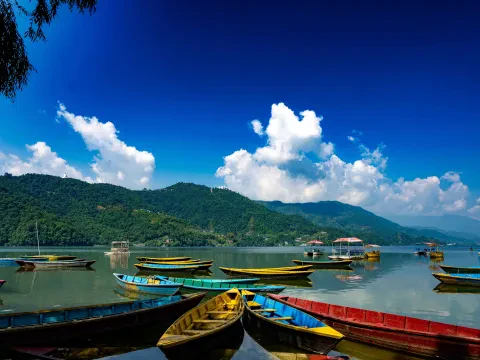
Roving Nepal Trek is pleased to present you the best tour package for wonderful holiday with friends and families. The company is one of the leading agencies for trekking activities but it is equally popular for tour packages. Our travel planners are highly experienced tour guides and they are academically qualified. Therefore, our trip itineraries are prepared scientifically to meet time factors. Nepal Tour package is specially designed to explore major touristic areas of Nepal from Kathmandu to Lumbini. Kathmandu Pokhara Chitwan Lumbini TourThe itinerary of the Nepal Tour package which is also known as the Kathmandu Pokhara Chitwan Lumbini Tour has 9 nights and 10 days including arrival and departure. Furthermore, the travel planners have included Kathmandu, Lalitpur (Patan), and Bhaktapur in the valley. These places are home of ancient temples and palaces. Similarly, the package includes adventurous jungle safari inside the Chitwan National Park and spiritual trip in the birthplace of Lord Buddha, Lumbini. Besides all these cultural and adventurous activities, travelers can also explore the Pokhara valley and end the trip in Nagarkot. It’s worth every penny. Why book Nepal Tour package with Roving Nepal Trek?We are the leading travel agency of Nepal both in trekking and tour activities. The main motto of the company is to provide sustainable tourism practices to all. Every trip is knitted with view to exceed guests’ expectations. Your trip investment must be returned in the form of momentous and hassle – free holiday activities. Lots of repeat clients visit Nepal and use our services. It proves our mettle in meeting the desired preferences of our valued clients. The company adopts the policy of flexible rates. Travelers can pay as per their services requirement. Open minded policy help you to knit hassle free travel itinerary. Moreover, our itinerary allows you to have enough time to explore places without rushing. Tourists must enjoy visit to destinations and understand the essence of the place fully. After the end of the trip, they must collect memories worthy to be shared with people proudly. It is guaranteed that you will recommend your friends and families to this company once you use the services rendered by the Roving Nepal Trek. Flexible itinerary, affordable rate, experienced tour guides; impeccable hospitality, quality services, and honest tourism practices make the Roving Nepal an ideal travel company for holidaying. Tour in UNESCO WORLD HERITAGE SITES of Kathmandu Valley & Nagarkot TourInside the Kathmandu Valley, the Nepal Tour itinerary features 6 UNESCO WORLD HERITAGE SITES and Nagarkot Tour. Explore majestic hill station near the valley, Nagarkot Hill. Get astounding scenery of mountains including Mt. Everest. Visit Kathmandu Durbar Square, Patan Durbar Square, Bhaktapur Durbar Square, Swyambhunath, Bouddhanath, and Pashupatinath. Exploring the ancient palaces can help you understand the unique craftsmanship of Nepalese ancestors. Similarly, you will also be able to connect with the rich history of Nepal. Newari architecture, food, and culture are included in the Kathmandu Valley excursion. Similarly, you can visit the most sacred religious site of Hindu People, Pashupatinath Temple. Find out the religious mindset of Nepalese people including the funeral rituals on the banks of Bagmati River. Visiting the Sywambhunath and Bouddhanath gives perspective of Buddhism in Nepal. Besides Buddhists’ major pilgrimage site, you can also observe the best religious harmony present in Nepal. Interestingly, you will find Hindu temple in the premises of Buddhists god. Both religion followers worship the gods and goddesses of both religions. Harmony and religious tolerance in Nepal is an example to follow to others in the time when world is fighting over a religious issues. End the tour with the sight of Mt. Everest from Nagarkot. In fact, one can see more than a dozen mountains including some of the top ten mountains of the world. Manaslu, Annapurna, Dhaulagiri, etc. are seen during the tour. Therefore, the Nepal Tour package worths every penny that you spend.Pokhara TourThe most popular touristic city of Nepal is Pokhara Valley. What kinds of things and activities that you can’t do in Pokhara? Yes, the Lake City Pokhara is the number one touristic destination for domestic and foreign tourists. Travelers can perform adventure, leisurely, pilgrimage, and city tourism activities inside the city. From sightseeing to paragliding and from boating to temple visits including cave exploration; Pokhara provides all. The itinerary has 2 nights and 3 days in Pokhara where you can rest and relax.Iconic places included in the Pokhara tour section are Sarangkot, Pumdikot Shiva Statue, Fewa Lake, Mountain Museum, Bat Cave, Mahendra Cave, Gupteshwor Cave, and Davis Falls. On optional note, you can also book paragliding, ultra - light flight, and bungee in Pokhara but it is not included in the package. You can do these activities on your own but our tour guide will assist you to book these activities. Chitwan Jungle Safari and Tharu Village TourAnother UNESCO WORLD HERITAGE SITE outside the Kathmandu valley is the Chitwan National Park. Knit wonderful memories of jungle safari either by jeep or on an Elephant back inside the park. Witness many endangered species of flora and fauna including one horned rhino, royal Bengal tiger, deer, wild buffalo, boar, etc. Boating in Narayani River can give you lots of ideas about the river civilization in Nepal. Moreover, you can also experience indigenous Tharu community’s culture and traditions. Lumbini Tour: Spiritual Trip in the Birthplace of Lord BuddhaThe birthplace of Lord Buddha, Lumbini provides sacred and spiritual holiday moments. Leave your footprints in the place where Lord Buddha was born and meditate below the banyan tree inside the Mayadevi Temple. Besides the main temple, there are countless monasteries inside the Buddha Trust Park built by different countries in their own architectural design. Book the Nepal Tour package with us and visit Nepal like never before.
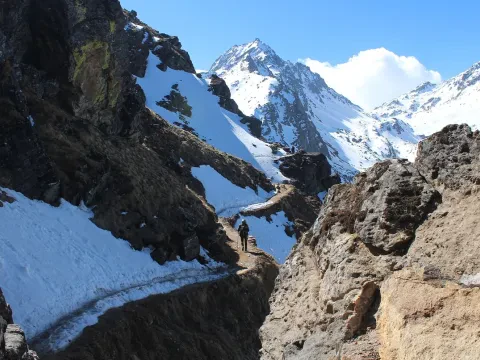
Exploring the Enchanting Beauty of Langtang Valley is probably the most interesting short trekking route of Nepal. It is undoubtedly the Trekker's Paradise. Get ready to fully immerse into the Lama Culture and mystical Himalayan landscape. The journey of Langtang Valley Trek is the most pristine adventure up in the Himalayas that is nearby Kathmandu Valley.Nestled in the heart of the Himalayas, the Langtang Valley Trek stands as a testament to the raw, untouched beauty of nature. This journey takes trekkers through a mesmerizing landscape, offering a unique blend of cultural richness and breathtaking scenery. In this exploration, we delve into the enchanting allure of the Langtang Valley, uncovering its hidden gems and unparalleled vistas.How to Reach Langtang Valley from Kathmandu?The journey commences in the bustling capital of Nepal, Kathmandu, where trekkers gear up for the expedition. A scenic drive leads to Syabrubesi, the gateway to Langtang, where the true adventure begins. As the urban landscape fades away, lush greenery and the promise of high-altitude wonders unfold. Syabrubesi serves as an introduction to the local Tamang culture, with traditional houses dotting the landscape. Trekkers have the opportunity to interact with the friendly locals, immersing themselves in the rich tapestry of Tamang traditions, folklore, and daily life. Traversing the trail meanders through dense rhododendron and bamboo forests, revealing glimpses of Langtang River below. The symphony of birdsong accompanies trekkers as they ascend, creating a serene ambiance. Lama Hotel, nestled amidst the verdant landscape, offers a tranquil overnight stay.As the altitude increases, so does the grandeur of the landscape. Langtang Village, with its terraced fields and the backdrop of towering mountains, captivates trekkers. The local yak cheese factory is a must-visit, providing insights into the region's economy and traditional practices. The trek culminates in the spiritual haven of Kyanjin Gompa. This ancient monastery, set against the backdrop of snow-capped peaks, is a surreal sight. Beyond the monastery, trekkers can explore the glacial terrain, with opportunities for photography and encounters with the elusive Himalayan wildlife.Tserko Ri HikingThe Tserko Ri (5033 m), a vantage point near Kyanjin Gompa, is a trekker's paradise. The early morning ascent rewards with a breathtaking sunrise panorama, unveiling the Langtang Lirung and other peaks. The crisp mountain air and the play of colors on the snow-clad mountains create an unforgettable experience.The return journey retraces the steps through Langtang Valley, allowing trekkers to savor the memories created along the way. Descending through familiar landscapes, one gains a deeper appreciation for the unique blend of natural beauty and cultural richness that defines Langtang.Conservation and Responsible TourismLangtang Valley is not only a trekker's haven but also an ecosystem of great ecological importance. Trekkers are encouraged to adopt responsible tourism practices, respecting the delicate balance of nature and supporting local conservation initiatives. You can find the century old practices. Even if there are modern houses in the villages like Kyanjin Gompa, Langtang, and Syaprubeshi; you can find plethora of traditional practices. The harmony between people and nature is splendid. Most of the people on this area still indulge in the traditional farming and animal husbandry.The monastery present in Kyanjin Gompa is century old landmark. Therefore, visiting the monastery in itself is legend in making. Therefore, relish the chance to witness nature, history, and culture in one single trekking trip to Nepal.2015 Earthquake in Langtang ValleyDuring the 2015 earthquake, lots of lives were lost and buildings collapsed. More than 14 districts of Nepal were affected. In comparison to other trekking regions of Nepal, Langtang region tolled the highest. In fact, the entire village of Langtang Valley was washed away. Callously, the earthquake caused the Langtang Lirung Avalanche. Many people lost their lives and houses. However, people of Langtang Region are very intrepid and tenacious. They revived again. You will not find any difference between before and after the earthquake in terms of lodging and food. Moreover, the services and hospitality now is better than before.Diverse Vegetation & LandscapeAn entire trekking trail of Langtang Valley Trek in Nepal is within the Langtang National Park. It is renowned for the diverse flora and fauna. Interestingly, the park is famous for the two different types of vegetation. In the early part of the trekking, trekkers can experience the temperate deciduous forests. As the trekking ascends higher, the vegetation starts to turn into alpine. Around Tserko Ri area, trekkers can experience the Tundra vegetation as well.The Landscape is unique too. The waterfalls and rivers make the trail rich in natural resources as well. Raging white water rapids and the lakes mirroring the image of snowcapped mountains is truly a magnificent experience to gather during this trek. If you wish to experience cultural side of the region, then you can choose Gosaikunda Lake Trek. This stretch can be included in the Langtang Valley Trekking itinerary or can be done in a separate itinerary. Best Time to do Langtang Valley TrekAn ideal time to do trekking in Langtang region is either spring season or autumn season. The highly recommended time to do the Langtang Valley Trek is spring. During the months of spring season, the trail gets engulfed by the green lush and colorfully blooming flower forests. The weather is nice and warm. Therefore, we recommend you to do the trek on these seasons. Please avoid the rainy season to do the Langtang Trek. During this season, there is high risk of landslide. The trail is highly prone to the landslides and flood. Along the trail, there are numerous streams. These streams become ragingly big during the monsoon season. The Chisapani Nagarkot Trek route from this region is okay to trek during monsoon season. The Langtang Valley Trek is more than just a physical journey; it is a soul-stirring odyssey through a land where nature and culture intertwine seamlessly. From the vibrant streets of Kathmandu to the serene heights of Kyanjin Gompa, every step echoes the grandeur of the Himalayas and the indomitable spirit of the people who call Langtang home. This trek is a celebration of the extraordinary, a testament to the enduring allure of the world's highest mountain range.
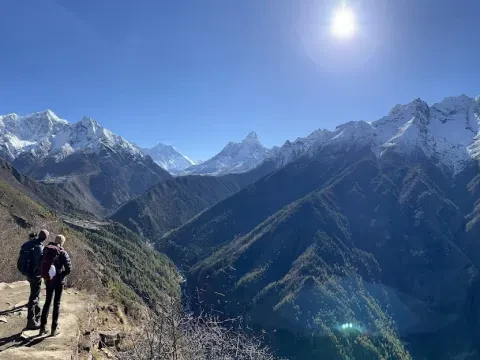
Everest View Trek is a captivating journey that takes you through the breathtaking landscapes of the Everest region in Nepal. This trek offers a unique opportunity to witness the grandeur of the world's highest peak, Mount Everest, along with other majestic mountains, without the need for technical climbing skills. The trek is designed for those who want to experience the beauty of the Himalayas and immerse themselves in the Sherpa culture.The adventure begins with a scenic flight from Kathmandu to Lukla, a small mountain airstrip situated at an altitude of 2,860 meters. The flight itself is an exhilarating experience as you soar above the picturesque landscapes of hills and valleys, with glimpses of snow-capped peaks in the distance. Upon landing in Lukla, you will immediately feel the mountainous ambiance and the warm hospitality of the Sherpa people. From Lukla, you embark on a trek towards Phakding, a charming village situated at an altitude of 2,652 meters. The trail takes you through dense forests of rhododendrons and pine, with the melodious sound of the Dudh Koshi River accompanying your journey. Along the way, you'll pass through traditional Sherpa settlements, where you can observe the unique cultural practices and lifestyle of the local people.Continuing, the trek leads to Namche Bazaar, the bustling market town and gateway to the Everest region. The trail gradually ascends, offering stunning views of Everest and its neighboring peaks. Namche Bazaar is a vibrant hub filled with teahouses, shops, and lodges, where trekkers from different parts of the world converge. Here, you'll have a rest day to acclimatize to the increasing altitude, which is crucial for a successful and safe trekking experience.To further indulge in the panoramic beauty of the Everest region, you'll trek to Tengboche, a serene village renowned for its ancient monastery. The trail meanders through rhododendron forests, and as you approach Tengboche, the majestic peaks of Everest, Lhotse, Nuptse, and Ama Dablam come into full view. The Tengboche Monastery, surrounded by awe-inspiring mountain vistas, provides a spiritual retreat and an opportunity to witness the Sherpa culture and religious practices.From Tengboche, the trek takes you to Khumjung, another traditional Sherpa village nestled beneath the sacred Khumbila peak. This village offers a chance to explore the local lifestyle and visit the Khumjung Hillary School, established by the legendary mountaineer Sir Edmund Hillary. The school provides education and opportunities to the Sherpa children of the region.As you descend back towards Lukla, you'll traverse through charming villages and beautiful landscapes, soaking in the tranquil ambiance of the Himalayas. Passing through Monjo, you retrace your steps to Namche Bazaar, where you can relish the vibrant atmosphere and perhaps pick up some souvenirs.After reaching Lukla, you'll conclude your trek with a sense of accomplishment and satisfaction. The journey back to Kathmandu by flight allows you to reflect upon the incredible adventure you've just experienced. Upon your return to Kathmandu, you can spend some time exploring the historical and cultural landmarks of the city, such as Durbar Square and the sacred site of Swayambhunath. The Everest View Trek is a remarkable experience that blends natural beauty, cultural immersion, and personal achievement. It offers a glimpse into the majestic Himalayan world, leaving trekkers with lasting memories and a profound appreciation for the wonders of nature.
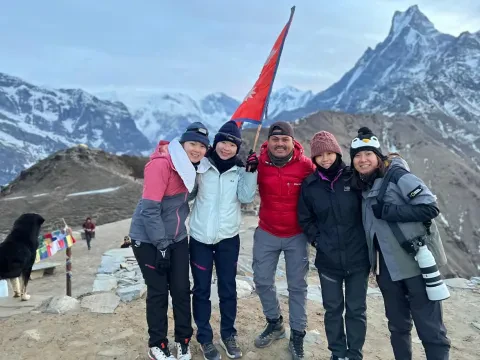
Mardi Himal Trek is a relatively new and less crowded trekking route in the Annapurna region of Nepal. This off-the-beaten-path trek in Nepal offers stunning mountain views, pristine forests, and an opportunity to experience the local culture. Here is a detailed overview of the Mardi Himal Trek:The trek starts from either Pokhara or Kande and follows a less-traveled route through charming villages, lush rhododendron forests, and high alpine landscapes. Here are the key features of the Mardi Himal Trek:Scenic Drive to Kande (1,770m) or Phedi (1,130m): After an early morning drive from Pokhara, reach Kande or Phedi, the starting point of the trek. The road journey provides breathtaking views of the surrounding hills and valleys.Trek to Australian Camp (2,050m): Begin the trek with a gradual ascent through rhododendron forests to reach Australian Camp. Enjoy panoramic views of the Annapurna and Dhaulagiri mountain ranges.Trek to Forest Camp (2,520m): Continue through dense forests filled with oak, maple, and rhododendron trees. The trail offers glimpses of the Machhapuchhre (Fishtail) and Mardi Himal peaks.Trek to Low Camp (2,970m): Ascend through the rhododendron forests, with occasional views of Annapurna South and Hiunchuli. Reach Low Camp, a peaceful settlement with stunning sunset views.Trek to High Camp (3,580m): Continue ascending through alpine meadows and sparse vegetation. The trail opens up to magnificent views of the Mardi Himal, Machhapuchhre, and Annapurna ranges. Reach High Camp, the highest point of the trek.Hike to Mardi Himal Base Camp (4,500m): Wake up early and hike to Mardi Himal Base Camp to witness breathtaking sunrise views over the Annapurna Sanctuary. Marvel at the panoramic vistas of Mardi Himal, Annapurna I, Annapurna South, Hiunchuli, and other peaks. Descend to Siding Village (1,750m): Begin the descent, passing through beautiful forests and traditional villages. Enjoy interactions with the locals and immerse yourself in their rich cultural heritage.Drive back to Pokhara: From Siding Village, drive back to Pokhara, where you can relax by the lakeside and explore the city's attractions.The Secret Ridge: Why the Mardi Himal Trek Deserves a Spot on Your Bucket ListIf you’ve ever looked at photos of the Annapurna region in Nepal, chances are you’ve seen the iconic fishtail peak of Machapuchare towering over lush green valleys. But while thousands of hikers flock to Annapurna Base Camp or Poon Hill every year, a quieter, equally breathtaking trail sits right beside them.The Mardi Himal Trek is Nepal’s hidden jewel—a short, rewarding, and dramatically scenic ridge walk that brings you face-to-face with giant snow-capped mountains without requiring weeks of your life or extreme mountaineering experience.What Makes Mardi Himal So Special?Unlike classic valley routes that weave down along rivers for days before opening up, Mardi Himal is almost entirely a ridge trek. Within a day or two of walking, you break through the dense tree line and find yourself stepping along narrow grassy spines with steep drop-offs on either side. To your left lies the Annapurna Sanctuary valley; to your right, the Modi Khola river valley. The sensation of walking high above the clouds with sweeping 360-degree views is hard to match anywhere else in the Himalayas.A Perfect Short EscapeOne of the biggest perks of this trek is its length. While Everest Base Camp or the Annapurna Circuit demand two to three weeks, Mardi Himal can easily be completed in 4 to 6 days round-trip from Pokhara. This makes it ideal if you're tight on time, adding trekking onto a broader Nepal itinerary, or looking for a high-reward adventure that won't completely exhaust your vacation days.The Journey Through Enchanted ForestsYour journey typically begins at Kande or Phedi, a short drive from Pokhara. The first couple of days feel like walking through a fairy tale. You’ll climb gentle stone staircases surrounded by ancient moss-draped oak forests and giant rhododendron trees. If you visit in spring, the entire mountainside explodes in shades of crimson, pink, and white. The peaceful silence in these woods—punctuated only by bird calls and the crunch of your boots—is the ultimate way to decompress.Breaking Above the Tree Line at High CampBy the time you reach Forest Camp and push upward toward Low Camp and Badal Danda, the landscape shifts dramatically. The dense trees give way to alpine shrubbery, and suddenly, Machapuchare (Fishtail Mountain) seems so close you could reach out and touch it. Reaching High Camp (3,580m / 11,745 ft) feels like entering a different world. Tea houses here sit directly on the narrow ridge, giving you front-row seats to incredible cloud inversions where the valleys below fill with a sea of white mist while you sit above under bright blue skies.The Sunrise Push to Base CampThe absolute highlight of the trip starts well before dawn. Headlamps glowing in the crisp, freezing morning air, you’ll start the final push from High Camp up to Mardi Himal Base Camp (4,500m / 14,763 ft). As the first rays of sunlight hit the peaks, the snow transforms from icy blue to fiery gold. Standing at the base camp viewpoint, directly underneath the towering wall of Mardi Himal and the sacred double peaks of Machapuchare, is a moment that stays with you forever.How Difficult Is the Trek?Mardi Himal is generally rated as moderate. You don't need technical climbing skills, ropes, or crampons during standard trekking seasons. However, don't let the short duration fool you—there are plenty of steep stone steps and continuous uphill climbs. The elevation gain is rapid, so taking a steady pace, staying hydrated, and giving your body time to acclimatize at High Camp are essential to preventing altitude sickness.Teahouse Life and Local CultureAccommodation along Mardi Himal consists of cozy, family-run teahouses. While simple, they offer everything a tired hiker needs: warm meals (from classic dal bhat to piping-hot noodle soups), hot tea, and a warm communal dining hall centered around a wood stove. The local Gurung and Magar communities running these lodges are famous for their warmth and hospitality, adding a rich cultural layer to your mountain adventure.Best Time to Hit the Trail· Autumn (September to November): Offers crystal-clear skies, stable weather, and comfortable daytime temperatures. It's the most popular season for a reason.· Spring (March to May): Brings warm days and stunning rhododendron blooms that paint the hillsides in vibrant colors.If you want a Himalayan adventure that delivers massive views, authentic local hospitality, and quiet trails—all packaged into less than a week—Mardi Himal is hard to beat.The Mardi Himal Trek offers a peaceful and less-crowded experience, allowing trekkers to immerse themselves in the natural beauty and tranquility of the Himalayas. With awe-inspiring mountain views, diverse landscapes, and cultural encounters, this trek is a hidden gem for those seeking a unique adventure in Nepal.
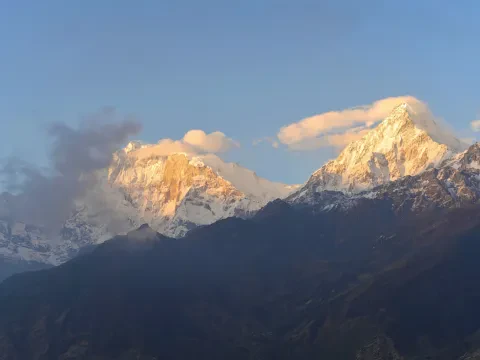
Embark on a journey to explore one of Nepal’s best-kept secrets in the heart of the Annapurna Region. Experience ultimate tranquility and serenity while undertaking the new and relatively unknown Khopra Danda Trek in Nepal. This trek offers something for everyone, from beginners to even the most seasoned hikers. Topping out at an altitude of 3640 m, Khopra Ridge provides unparalleled views mountains such as Dhaulagiri, Annapurna I, Annapurna South, Nilgiri, and countless other mountains in the Dhaulagiri and Annapurna Ranges. Mulde Viewpoint near the village of Dobato provides even better views of the Annapurna Range and Machhapuchhare (aka Fish Tail Mountain) than does the famed Poon Hill, while also having a mere fraction of the tourists.The Annapurna Region offers a wide variety of treks with some of the best mountain views on earth, and every year thousands of trekkers from around the world flock to the Annapurna Region for famous treks like Annapurna Base Camp, Mardi Himal, Ghorepani - Poon Hill, and the legendary Annapurna Circuit. Unfortunately, due to the fame of these well-known treks, the trails along these treks are always crowded. For those that want to experience unspoiled nature and escape the crowd, while still witnessing breathtaking views of the Annapurna Range, Dhaulagiri Range, Nilgiri Himal Range, and of course Machhapucchare, the Khopra Danda Trek is the perfect alternative! Khopra Danda Trek ItineraryAlthough there are many articles written about the Khopra Danda Trek, the information from these articles can be confusing, and even contradictory. This is because the Khopra Danda trail is quite new and relatively untouched. Currently, there is no consensus for the best route to accomplish the Khopra Danda Trek, with treks having different start points, endpoints, and stops along the way. In order to come up with the best itinerary for our clients, Roving Nepal Treks sent its travel planners to the region in search of the best route. The itinerary offered by Roving Nepal Treks represents what we believe to be the best route, combining safe and comfortable trekking with the best views possible. The trekking starts from Ghandruk, which is reached via jeep from Pokhara. This village is home to a large community of local Gurung people, and is a model cultural village of Nepal. After leaving Ghandruk, you will traverse through lush, green forests before stopping at Tadapani for the night. Trekkers will continue to enjoy the serene, forest environment on their way to Dobato, the home of Mulde Viewpoint, a relatively unknown hilltop with incredible views of the Annapurna Range and Machhapuchhare. After watching sunrise from Mulde View Point, the trek continues along a mountain ridge with the same views as Mulde, before heading downhill towards the village of Sistabong, passing through dense forests and by impressive waterfalls along the way. After spending the night at Sistabong, there will be a brief, but physically demanding trek uphill to reach Khopra, a small settlement on a narrow mountain ridge, 3,660 meters above sea level which boast up close views of the legendary Annapurna, Dhalagiri, and Nilgiri Himal ranges. Khopra will make you feel as if you are inside a postcard, the stunning views of the incredible mountains surrounding all around will leave you feeling breathless, in awe of the true scale of the mighty Himalayas. The following morning the trek continues mountain ridges and through dense forests, passing mountain streams and waterfalls until reaching Swanta, a picturesque village dotted with small, hillside farms. After spending the rest of the day Swanta, enjoying the beautiful views and vibrant local community, the next morning the trek will continue downhill towards Tatopani, a village that is home to famous hot springs which provide the perfect location to relax and recuperate after your long and arduous trek. The next day a jeep will drive you back to Pokhara where you can spend the rest of the afternoon strolling along Phewa Lake and reminiscing about the incredible journey you have just completed.Does this trek visit Khayer Lake?No, this particular trek does not visit Khayer Lake. Roving Nepal Treks does offer two treks that visit Khayer Lake, our Khopra Danda with Khayer Lake Trek and our Khopra Danda with Khayer Lake & Poon Hill Trek. Please note, the trek to Khayer Lake is considerably more difficult than any other day on the Khopra Danda Trek. Please see the FAQ's for more information and contact us if you have any questions about whether Khayer Lake is right for you. Can I see Pool Hill on the Khopra Danda Trek?Yes, it is certainly possible to visit Poon Hill on a trek to Khopra Danda. Although this particular trek does not visit Poon Hill, we do offer two Khopra Danda Treks with visits to Poon Hill: the Khopra Danda with Poon Hill Trek and the Khopra Danda with Khayer Lake & Poon Hill Trek. All of our Khopra Treks include a visit to Mulde Viewpoint in Dobato which boast similar (and arguably better) views with a fraction of the visitors that Poon Hill gets, but if you also want to witness the iconic sunrise over Poon Hill, we have trekking packages that allow you to do both on the same trek. In addition, if you are interesting the Mohare Danda Trek, this trek can be started from Poon Hill as well. Contact the travel planners of Roving Nepal Treks and plan your trek today!
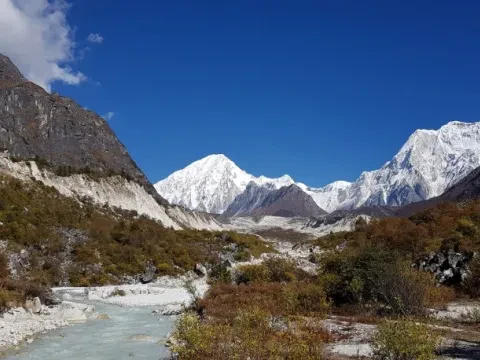
Tsum Valley Trek is the walking trip to the hidden spiritual valley of Manaslu Region of Nepal Trekking. The trip will not only become the walking adventure but also becomes the awakening journey. Imagine yourself being at the place where Milarepa Monk and 8th Eons Monks meditated! It is truly a magnificent place to be at least once in a lifetime. Roving Nepal Trek offers the 10 days and 12 days itinerary of Tsum Trekking for the trekkers to relish the swashbuckling natural beauty and cultural grandeurs of the region. What is Tsum? The word Tsum is derived from the Tibetan word Tsombo that means bright. Yes, the place is bright and happening in terms of natural solace. The place is the valley surrounded by the lofty Himalayas. Noticeably, Ganesh Himal, Sringi Himal, and Bouddha Himal surround the valley. Ancient myth is that during the time of famine, people survived in the valley for years! Therefore, the place holds the special place in the heart of people as well. If you visit the place, the vibes and aura around you will only become positive all the way. Difficulty in Tsum Valley Trek Trekking in Nepal is both tiring and adventurous. You can find the trekking routes ranging from arduous to easy. However, Tsum Valley Trek is moderately easy trekking trail in the Manaslu region of Nepal Trekking. The maximum altitude during the trek is 3500 to 3700 m from sea level. Therefore, the high altitude risk is lower. Moreover, you need to walk at least 6 – 7 hours a day. Walking and maintaining the stamina is the challenging aspect. Altitude Sickness & Travel Insurance The highest altitude on this trek is 3700 m. The risk of altitude sickness is from three thousands meter altitude. Therefore, there is a risk of altitude sickness but it is not heavily risky too. The trekking is of gradual ascent. Our trekking guides take note of every action that you take while trekking. So, trek without worries. Exploring the Tsum Valley is relatively easy in comparison to the Manaslu Circuit Trek. Food & Accommodation The food during trekking in Nepal is standard. Wherever you go for the trekking trekkers can enjoy local delicacies to the continental as well as Chinese cuisine. Most of the trekkers order from the menu. Like in all trekking routes of Nepal, the more higher you go the lesser the choice of items become. Therefore, expect basic foods. Accommodation is Spartan. Don’t expect luxury lodging. Manaslu Circuit Trek Vs Tsum Valley Trek Both of these trekking routes are within the Manaslu Region of Nepal. Therefore, things to remember and requirements are similar. In most of the cases the trail is the same. However, Tsum is relatively easier trekking trail of the region. During Manaslu Trekking, trekkers have to cross the high altitude mountain pass the Larke La (5106 m) but it’s not in Tsum. The final destination is also within the limit of the altitude sickness. The people looking to explore the Manaslu region without the risk of altitude sickness can choose the Tsum Valley Trek. However, for more adventure combine these two trekking trails into one. The final trekking trip would be Manaslu Circuit Tsum Valley Trek. Typical Day to Day Itinerary of Tsum Valley Trek There are numerous itineraries of Tsum Valley Trekking. Some prefer to do the trekking for 14 days or some prefer to do it for 17 days. However, elongating the number of days is not an issue. The Roving Nepal Trek always conducts the trekking trips in order to provide the authentic experience to the trekkers. We are always trying to create the sustainable tourism in Nepal. Therefore, our itinerary focuses on lesser days but more activities. Tsum Trekking is all about cultural exploration and relishing the natural wonders. The first day’s activity on this trek is the experience of drive from Kathmandu to Machha Khola. The Machha Khola is a small river side hamlet with few teahouses on the bank of Budi Gandaki River. You may choose to make Lapubeshi as the trailhead. However, traditional Tsum Valley Trek is from either Soti Khola or Machha Khola. After the construction of rural highway, it is possible to reach Machha Khola in just 6 – 7 hours of drive in a jeep from Kathmandu. 2nd, 3rd, and 4th day’s hiking is well below 2500 m from sea level. Trekkers traverse through the villages of Jagat, Lokpa, and Chumling. These villages are densely habituated by Gurung people. However, as we trek higher from 5th day onwards, you will start to see the Nepalese Tibetan origin people. There are numerous monasteries and Mane Walls where trekkers can find the inner peace. The final destination during the Tsum Valley Trek is Monastery of Mu Gompa. At an altitude of 3700 m, the monastery is truly magnificent. The surrounding scenery makes it more jovial too. Therefore, all the hardship endured during the trekking will become fruitful once we make it to the Mu Gaon. Trekkers retrace back to Machha Khola via Chhekamparo village. Finally, a jeep will take trekkers back to Kathmandu. Choose Roving Nepal Trek for the outstanding cultural and natural excursion of Manaslu Region. Tsum Valley will offer the great experience of Nepal’s authentic rural environment. Please don’t miss out to understand the diverse culture of Nepal along with its natural diversity.
Annapurna region of Nepal is an abode of Nepal’s most famous and beautiful trekking routes. Annapurna Base Camp Trek, Annapurna Circuit Trek, Ghorepani Poon Hill Trek, and Mardi Himal Trek are the most famous trekking routes of the region. Along with its popularity, these trails attract thousands of trekkers every year. Therefore, these trekking trails are always bustling. If you love to trek in a tranquil environment yet want to experience the mountain thrill like in those trekking routes of the Annapurna region, Mohare Danda Trek is an ideal choice. Mohare Danda (Hill) is nearby Poon Hill. It is 100 m higher than Poon Hill. Interestingly, you can see the Poon Hill from the top of Mohare Hill. To avoid the bustling crowd of Ghorepani Poon Hill, trekkers are choosing the Mohare Danda Trek as an alternative. The view is similar to or more scenic from Mohare than from Poon Hill. Where can I see the best close-up view of Mt. Dhaulagiri (8167 m)?The top of the Mohare Danda is the best place to get a close-up view of Mt. Dhaulagiri. The gorgeous view of Mt. Dhaulagiri is possible during this trek. Along with the view of this mountain, trekkers can relish the vista of mountains like the Annapurna Himalayas, Nilgiri, Machhapuchhre, Himchuli, Gangapurna, etc. Moreover, the trail offers the chance to witness more than 20 snowy mountains. Community-Based Lodge Trek in NepalFar from the bustling commercial trekking routes, the Mohare Danda Trek is the best community-based lodge trek in Nepal. Trekkers can get an authentic taste of the local lifestyle while trekking on the trail. Almost all the lodges and restaurants on this trekking route are run by the community. The place is inhabited by the Magar people. These people are the inhabitants of the western hilly region of Nepal mainly districts like Myagdi, Kaski, and Parbat. During the trek, trekkers can explore the villages, local community farms, grassy meadows, and splendid vantage points. The local way of living can be a fascinating thing to experience for foreigners. The lifestyle here is very laidback and pure. Throughout the trip, trekkers can get the astounding experience of the Magar people’s culture harmoniously synchronized with the magnificent natural beauty. Is it possible to combine Annapurna Base Camp Trek or Poon Hill Trek with Mohare Danda Trek?Yes, it is possible to extend Mohare Danda Trek with an itinerary of Annapurna Base Camp Trek or Poon Hill Trek. The location of the Mohare Danda Trek is in the vicinity of the ABC Trek route and Poon Hill Trek route. Therefore, ask the travel planners of Roving Nepal Trek to include the itinerary of the place that you want to add to the trip. What is the altitude of Mohare Danda and How difficult is Mohare Danda Trek?The maximum altitude in this trek is Mohare Danda (3313 m). It is within the limit of the place from where the risk of altitude sickness appears. Normally, altitude sickness occurs from a place above 2500 m. The high-risk zone is beyond 4000 m from sea level. Therefore, the Mohare Danda Trek can be termed as a fair altitude sickness risk-free trekking trail. This doesn’t mean that the trek is easy to trek on. Under the grading difficulty, the trek is a moderately easy trekking route. In some sections of the trekking, trekkers have to make the challenging steep uphill and downhill walking. Therefore, it is a tiring and physically demanding trekking route. Best Time to do this Dhaulagiri Community TrekThe months of spring season are the best time to do Mohare Danda Trek. The route is also called the Dhaulagiri Community Trek. All the accommodations and food services in the trail are operated by the community. Therefore, it is called the community trek trail. During the spring season, the forest of rhododendrons gets colorful. The skies are clear and you can get a mesmerizing view of cascading hills and snow-capped mountains. Avoid the wet monsoon season! The months like July and early August are not appropriate to do this trekking. However, you can do trekking in the autumn season as well as the winter season. Poon Hill vs Khopra Hill vs Mohare Danda (Hill)Find out the difference between Poon Hill, Khopra Hill, and Mohare Danda. These three hilltops are the famous vantage point of the Annapurna region of Nepal. These places host the best short Annapurna Trekking route inside the Annapurna Conservation Area Project (ACAP) region. Factors Poon Hill Mohare Danda Khopra Hill Altitude 3210 m 3313 m 3640 m Difficulty Level Easy Moderately Easy Moderate Mountain Vista Good Best Outstanding Trail Condition Commercial Semi-Commercial Off the Beaten Accommodation & Food Commercial Community-Based Basic Cost 600 $ in an average 800 $ in an average 850 $ in an average Major Attraction Annapurna South Dhaulagiri Annapurna South Among these three trekking routes, the Poon Hill Trek route is the most commercial. You can find a plethora of accommodations and restaurants of different levels. In the Mohare Danda Trek route and Khopra Hill Trek route, these amenities are barely available in abundance. However, these two trek routes are tranquil and untouched by many. Therefore, to enjoy nature peacefully choose the Mohare Danda Trek. You can extend your trek to Poon Hill too if you would like. Book the Mohare Danda Trek in Nepal and experience the authentic rural environment of Nepal. The trek route is the perfect example of an eco-friendly community-operated tourist trail. The construction of the road up to Ghorepani has curtailed the number of trekking days on the Poon Hill Trek route. Moreover, the latest development works have ruined the natural beauty of the area too. Gradually, people are noticing the attractions of the Mohare Danda. Before the trail gets crowded, pack your bags and tie your trekking shoelaces! Embark on the remarkable trekking journey of Mohare Danda. You will be rewarded with organic food, fresh mountain air, green lush forests, laidback village life, and enchanting mountain vistas. Roving Nepal Trek has the best alternative itineraries to do the trek. Contact our travel planners now!
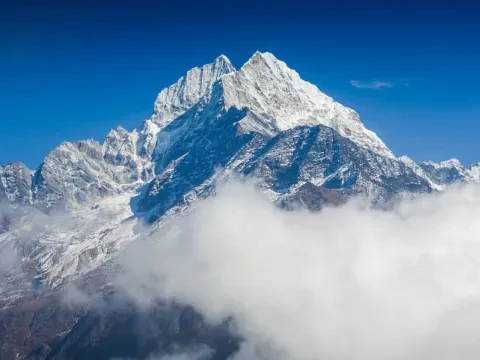
The best time to do the Everest Base Camp trek is during the autumn and spring seasons. But some of the courageous trekkers also choose the winter Everest trek which talks about their strength. Just to answer the query yes performing the Everest trek during the winter is possible. But you will need to be part of a rigorous process just to get your body right. Yes, Winter Everest Trek is possible in every way but the best trekking agency is a must if you want to achieve the expected results. Roving Nepal Trek for a very long time have been doing winter Everest trek in the right way to get brilliant results. Things to know before doing Winter Everest Trek Temperature gets down below the freezing points inviting snowstorms and strong winds. A lot of the teahouses remain closed and you have to entertain basic facilities There could be snowfall during the day and the roads can be foggy and tough to walk. If you are lucky there is a chance to spot snow leopards, Himalayan Thar, and winter birds. Fewer people due to the extreme weather in the trails. What is the temperature and weather of EBC during winter? This could be the very first question that pops into your mind. During the winter season, weather drops drastically even in the hilly regions so the mountains of Everest could be a challenge. The months of December, January, and February are the peak winter months. The temperature tends to get down drastically behind the freezing point. The weather is different in different places during the winter Everest trek.What's different in Winter Everest Trek in comparison to peak seasons?The winter Everest trek is far more different compared to that of the peak season trek. Although the number of days needed might be the same other factors tend to change one after the other.As the temperature goes below negative you will have to pack more clothes inroder get protected from the winter season. Along with that trekkers will have to carry thermos to drink plenty of warm water.This will help in the protection from altitude sickness. Due to excessive snowfall, the view might be blurry and the landing in the Lukla airport can be risky for many. Sadly there are chances of flights being rescheduled due to the weather.As winter is not the peak season for the EBC trek, you will find very few people during the trek which is a plus. As the days get shorter trekking starts very early in the morning. So you will have to be mentally prepared.Be it from the cold the unclear trekking routes, or slippery walkways due to snow formation, things can be challenging. But an agency like Roving Nepal Trek will guide you along the way. Proper guidance and training from us will provide you with a memory for a lifetime.Ways to train for the Winter Everest TrekNo training for the peak season trek and the winter trek isn't different. Everest Base Camp trek is a moderate kind of trek so basic training will help you to achieve your goal.Having said that all the readers who are trekkers need to get ready three months before the actual trek. Training for the Everest trek doesn't always mean hitting the gym and getting sick packs.It means you will have to engage in cardiovascular exercises like cycling, swimming, running, jogging, etc. This will help you to boost your immunity. Basic short treks around your locality will also boost your physical stamina and strength.Reasons why Roving Nepal Trek believes Winter Everest Trek is the best optionThis could be a controversial topic to discuss but Roving Nepal Trek believes that Everest Base Camp trek during the winter seasons is the perfect thing to do.A lot of the readers might argue that the weather is harsh but Roving Nepal Trek believes tough situations bring beautiful opportunities. There are some major reasons why the Winter Everest Trek is the best. Less Crowded Trail One of the famous treks in the world is the Everest Base Camp trek. Every year hundreds of tourists visit Roving Nepal Trek for the EBC trek. Interestingly this is during the peak season.During the winter season, there aren't a lot of people who are willing to complete the EBC trek. They believe the trails are tough to walk through with snow and slippery nature. All of that can be overcome with great training. Enhanced Natural Beauty During the peak season, some too many trekkers block some most outstanding views during the EBC trek. But the winter Everest Base Camp trek is different. As the snow settles down on the mountain peaks, it's a delight to watch.The undeniable view of snow-capped mountains makes the journey worth it. Likewise, there is a golden chance to view the most amazing sunrises and sunsets during the winter trek. So it is advantageous on both fronts. Different Perspectives On Nepal The major reason why Roving Nepal Trek believes the winter Everest trek is the best option is due to the different perception opportunities of Nepal. As the crowd builds up during the peak season, trekkers tend to move quickly. But winter is tough, the days are shorter and you need to spend more time in the dark and with local people. This provides a moment more to interact with the local Sherpa and Tamang communities. You will get to know hidden secrets about the culture as you spend more time with them.
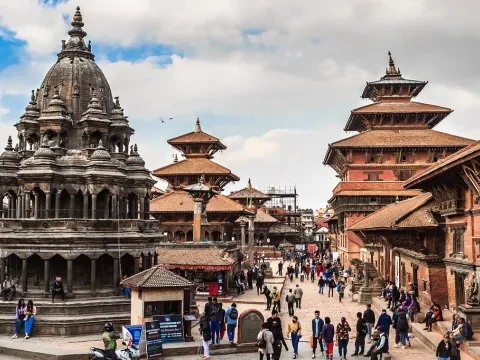
Not everyone likes to spend time while trekking around the mountains but some also love to spend quality time in the cultural and religious serenity. To meet the needs of every client, Roving Nepal Trek has brought in a Pokhara-Lumbini-Chitwan tour package which comprises 10 days. A lot of the tourists come through to Roving Nepal Trek with an interest in getting into the religious and spiritual terrains of Nepal. Therefore to meet the needs of these clients we have decided to launch a 10-day tour package which will be more than enough for understanding a different aspect of Nepal. Overview of Pokhara Lumbini Chitwan Tour Package It won't be a mistake to say that it is a Nepal tour to some extent. From culture, people, and religion to the spiritual part of Nepal we will be covering every aspect. There will be short hikes as well which makes the journey even more fascinating. We start the 10-day tour from Kathmandu and we move towards Chitwan, Lumbini, and Pokhara before returning to Kathmandu. This tour is feasible for people with any physical abilities. From a variety of wildlife to UNESCO World Heritage sites, welcoming people, and delicious food, the journey will take you to unexplored parts of Nepal. Isn't it fascinating at all? What Makes Pokhara Lumbini Chitwan Tour Package Special? An avid trekker who is associated with trekking every year with Roving Nepal Trek might not find the Pokhara Lumbini Chitwan tour package fascinating. However, that is a mistake from him. The interest group of the audience is different for this tour. You will need to have a broader sense of cultural understanding to enjoy this tour. However, some special reasons make the Pokhara, Lumbini, and Chitwan tour packages a special one. They are: Variety of Experiences The first reason that the Pokhara-Lumbini-Chitwan tour is special is due to the variety of experiences. Unlike trekking where you get to see mountains and focus on hiking, this Nepal tour is vastly different. From serene lakes to temples, and historical sites to unending wildlife, the chances of exploration are huge. You will also get the chance to watch birds, do jungle safaris, etc. Higher comfort and accessibility Mountains are unsure be it the facilities or also the weather. But the facility with this Nepal tour is top notch and there is no doubt about it. All the Roving Nepal Trek guests will be staying at the luxurious hotels and resorts in Kathmandu, Pokhara, Chitwan, etc. You will get the best quality food along with added services. Differences in adventure There is a vast difference between adventure levels when we compare trekking and tours. With trekking, you have an option to explore the mountains but things are different with the Pokhara-Lumbini-Chitwan tour. From boating to rafting, paragliding to bungee, hiking to jungle safari, and zipline there are plenty of adventures that fall under different facets which can be enjoyed separately. This creates a sense of more options. Scenic beauties This point could be debatable but the fact that Pokhara-Lumbini-Chitwan provides a higher chance of scenic beauty won't be a mistake. There is nothing as beautiful as a massive mountain but with variation in beauty, the Nepal Tour gets the higher point. A chance to see different lakes, caves, rivers, temples, world heritage sites, rafting situations, and biodiversity at Chitwan National Park along with the sacred and spiritual space of Lumbini things are more controlled and different compared to trekking. Best Season For Pokhara Lumbini Chitwan Tour Similar to a lot of trekking and tour options at Roving Nepal Trek, the Pokhara Lumbini Chitwan tour is also good during the spring and autumn seasons. During this season, the weather is clear and you can enjoy the natural beauty to the full tilt. Mainly during the autumn season festivals would be entering Nepal and the locals would be in a better mood. It is not impossible to do the tour during monsoon and winter seasons but Lumbini and Chitwan are in the Terai belt which gets massive temperature rise. This could affect the tour experience with extreme heat. Likewise, winter in places like Pokhara and Kathmandu can be harsh for many. So the ultimate choice goes to spring and autumn. Cost of Pokhara Lumbini Chitwan Tour It is easier to say that the cost of the Pokhara Lumbini Chitwan tour at Roving Nepal Trek depends on the particular person or group. Based on the quality of services he/she chooses to use, the price tends to get higher or lower. With high-end facilities available in all 10 days the cost is generally higher. Meanwhile, if the trekkers don't ask for private or 1on1 service then the overall cost of the trek won't be breaking the bank. If you are willing to know the exact cost, try and connect with Roving Nepal Trek and we will take it from there. Advantages of Booking with Roving Nepal Trek It won't be a mistake to say that Roving Nepal Trek is different. Having major experience of years in the field of trekking allows Roving Nepal Trek to provide a holistic experience. We don't believe in selling a package but in delivering an experience that will go way beyond the tour. There is some specialty that makes Roving Nepal Trek stand out from the rest. They are: Personalized package for person or group Immediate first aid service during emergency cases Experienced guides with better knowledge of historical, and spiritual monuments Private pickup and drop service for the guests Sustainable and responsible tourism practice
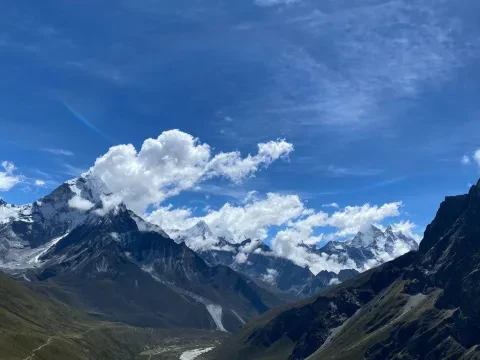
Do you have limited time like all of us? But want to travel and trek all over the world. Keeping in mind of people like you, we have introduced our brand new package. Everest Base Camp trek if done can be extended up to 21 days. However, if you are short on time this compressed package is what you are looking for. Our compressed Everest Base Camp (EBC) trek package is designed for trekkers who have limited time but still want to experience the beauty of the world’s highest peak. This short 10-day itinerary is what you are looking for if you want to have a short vacation in Nepal. Why Choose the Compressed Everest Base Camp Trek for Your Short Vacation?In today's fast-paced world, finding time for long holidays can be challenging. If you’re someone who has limited vacation days but still dreams of trekking to the foot of Mount Everest, our compressed EBC trek package is tailor-made for you. This trek is ideal for people on short vacations in Nepal, offering a condensed itinerary that covers the best parts of the traditional Everest Base Camp trek, without compromising on safety or experience. The compressed trek is designed to give you enough acclimatization stops while maintaining a steady pace. You’ll hike through diverse landscapes, from the bustling town of Lukla to the serene beauty of Namche Bazaar, the spiritual aura of Tengboche Monastery, and finally the awe-inspiring Everest Base Camp itself. If you have a limited time window but a big desire for adventure, this trek offers you the perfect balance between speed and experience. And for those wanting an even faster route, we offer a helicopter return option from GorakShep, allowing you to cut down on the descent time while enjoying a stunning aerial view of the Himalayas. Best Time to Experience the Compressed Everest Base Camp TrekThe best time to undertake the compressed Everest Base Camp trek is during the spring (March to May) and autumn (September to November) seasons. During these months, the weather is stable, the skies are clear, and the mountain views are at their best. Spring (March-May): Known for blooming rhododendrons and warmer temperatures.Autumn (September-November): Offers the clearest skies and excellent trekking conditions. While trekking is possible during the winter (December-February), colder temperatures and heavy snowfall can make the journey more challenging.Compressed EBC Trek Package : Perfect for Busy Traveler If you're a busy professional or an adventurer with limited time, this compressed Everest Base Camp trek package allows you to experience the grandeur of the Himalayas within a short vacation window. Whether you're looking for an unforgettable holiday or a quick yet fulfilling adventure, this trek is the perfect choice for time-conscious travelers. The compressed Everest Base Camp trek is a thrilling, time-efficient journey that allows you to experience the best of the Everest region a short vacation. With a 10-day itinerary that covers all the key highlights, including a helicopter return option, this package is perfect for adventurers who want to maximize their time in the Himalayas.Ready to EBC Trek? Book your compressed EBC trek now and get ready for a short but unforgettable adventure in the heart of the Himalayas!
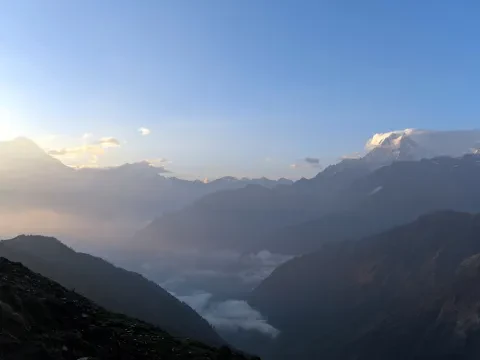
Embark on a journey to explore one of Nepal’s best-kept secrets in the heart of the Annapurna Region in the Himalayas. Experience ultimate tranquility and serenity while undertaking the new and relatively unknown Khopra Danda Trek with Poon Hill in Nepal. Khopra Danda is a great trek for nearly every kind of hiker, from novices to even the most seasoned hikers. At an altitude of 3640 m, the Khopra Ridge is the perfect destination for travelers to enjoy close-up views of mountains such as Dhaulagiri, Annapurna I, Annapurna South, Nilgiri, and countless other mountains in the Dhaulagiri and Annapurna Ranges.The Annapurna Region of Nepal is a true gem of the Himalayas. The Annapurna Region boasts a wide variety of trekking routes for the trekkers to enjoy. Some of the most famous trekking routes of the region include: the Annapurna Base Camp Trek, Ghorepani Poon Hill Trek, the Mardi Himal Trek, and the Annapurna Circuit Trek. These trekking routes attract thousands of trekkers from across the globe every year, and as a result, they are always crowded. Some people hike to escape the crowds and experience the peace and tranquility that only untouched nature can offer. For those that want to escape the crowds and still experience the amazing views that the Annapurna Region has to offer, the Khopra Hill Trek is perfect! In addition, this trekking package also includes a visit to the world-famous Poon Hill.Where is the Trailhead of the Khopra Danda Trek?There are many possible trailheads for the Khopra Danda Trek. Some of the possible starting locations for the Khopra Danda Trek are Tatopani, Nayapul, Tikhedhunga, and Ghandruk. However, the most popular and easiest way to start the Khopra Danda trek is from Ghandruk. Ghandruk can be reached from Pokhara by jeep, with the driving time between two and two and a half hours.Khopra Danda Trek ItineraryAlthough there are many articles written about the Khopra Danda Trek, the information from these articles can be confusing, and even contradictory. This is because the Khopra Danda trail is quite new and relatively untouched. Currently, there is no consensus for the best route to accomplish the Khopra Danda Trek, with treks having different start points, endpoints, and stops along the way. In order to come up with the best itinerary for our clients, Roving Nepal Treks sent its travel planners to the region in search of the best route. The itinerary offered by Roving Nepal Treks represents what we believe to be the best route, combining safe and comfortable trekking with the best views possible.The trekking starts from Ghandruk. This village is home to a large community of local Gurung people, and is a model cultural village of Nepal. Ghandruk village can be reached by bus or jeep from Pokhara. After leaving Ghandruk, you will traverse through lush, green forests before reaching Tadapani, your first sleeping location. Trekkers will continue to enjoy the serene, forest environment on their way to Dobato, the next sleeping location on the trek. Dobato is home to Mulde View Point, a relatively unknown location whose views are even more impressive than those found on the legendary Poon Hill. After watching sunrise from Mulde View Point, you will walk along a mountain ridge with incredible views of the Annapurna Range and Fish Tail Mountain, before hiking downhill towards Sistabong, encountering dense forests and impressive waterfalls along the way.After spending the night at Sistabong, you will have a brief, but physically demanding morning of trekking uphill to reach Khopra, a small settlement on a narrow mountain ridge, 3,660 meters above sea level. When you stand on Khopra Hill, you will feel as if you are inside a postcard, with stunning views of the Dhaulagiri and Annapurna Ranges looming above you. The close-up views of these legendary mountain ranges make for a truly an awe-inspiring experience, demonstrating the true scale of the mighty Himalayas. The following morning you will walk down the same hill that you came up the day before, but this time you will instead head towards Swanta, a picturesque village dotted with small, hillside farms. On the way to Swanta you will walk along mountain ridges and later through dense forests, passing mountain streams and waterfalls, with views of the mountains on all sides. You will spend the night in Swanta, enjoying the beautiful views and vibrant local community.As with the starting point of the trek, there are different places where the Khopra Danda Trek can end. Some trekkers choose to end the trek in Tatopani, a village famous for its hot springs and religious significance. However, this itinerary instead heads from Swanta to Ghodepani, the nearest village to Poon Hill. After waking up early and taking a 45 minute walk uphill, you will be met with one of the most famous views in Nepal, the view of sunrise from Poon Hill. After soaking up the views, you will walk downhill towards Ulleri, where you can catch a jeep ride back to Pokhara. Khopra Danda Trek DifficultyThe difficulty of the Khopra Danda Trek with Poon Hill is easy to moderate. You must possess a decent level of physical fitness, as the walking distance each day is substantial and there are long steep, ascents and descents along the way. The trail is narrow and and steep in some sections. The maximum altitude reached on this trek is firmly within in the altitude sickness zone. Therefore, proper planning and a reliable trekking companion are highly recommended. Don’t underestimate this trekking route even if it is suitable for both seasoned hikers and beginners.Do I have to do Khopra Danda and Poon Hill in the same trek?No, your trek to Khopra Danda doesn't have to include a trip to Poon Hill. In fact, we have just as many hikers who decide to skip Poon Hill as we do who opt for a visit. Roving Nepal Treks also offers a trekking package that goes to Tatopani instead of Ghodepani after overnighting in Swanta. Tatopani is a small village overlooking a river, nestled between mountains. Tatopani is an import recreational and religious destination in Nepal, as it is home to world-famous hot springs. These hot springs are a perfect way to relax and recuperate after a long and arduous trek. Whichever you choose, Roving Nepal Treks is here to help. Are the Khopra Danda Trek, Khopra Hill Trek, Khopra Ridge Trek, Khayer Lake Trek, and Khopra Khayer Lake Trek the same?The Khopra Danda Trek has many names, but they mean the same thing! Danda means "hill" in the Nepali language, so saying Khopra Danda and Khopra Hill is saying the same thing, only in a different language. The small village of Khopra is technically not a hill, but rather a mountain ridge that leads to the lower reaches of the Annapurna Range, and in fact, there are hills with higher elevations on either side of Khopra. Whether you hear someone say Khopra Hill, Khopra Danda, or Khopra Ridge, just know that these refer to the same place and the same trek.Khayer Lake is a picturesque mountain lake above Khopra, at an altitude of 4,660 meters. Some Khopra Danda Trek itineraries include a visit to this lake, but others, like this one, do not. The reason why some itineraries skip Khayer Lake is because the hike to Khayer Lake is considerably more difficult than any other day on the Khopra Danda Trek. The trek to Khayer Lake can take anywhere from 8-11 hours, with approximately 1,000 meters of elevation gain along the way. The Khayer Lake Trek is recommended only for experienced trekkers or people in good physical condition. If you are interested in seeing Khayer Lake as part of your Khopra Danda Trek, Roving Nepal Treks offers other treks which do include it in the itinerary. Contact the travel planners of Roving Nepal Trek and plan your trek today!
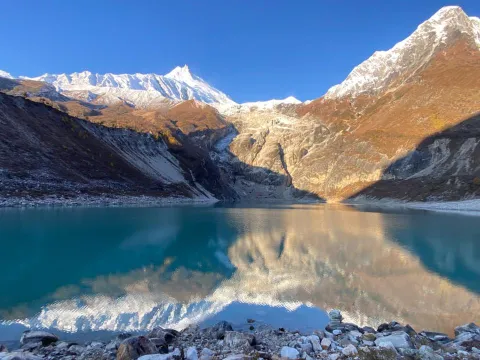
The Manaslu Circuit Short Trek is one of Nepal’s most rewarding Himalayan adventures, offering dramatic mountain scenery, authentic villages, and rich Tibetan-influenced culture. This trek circles the majestic Mount Manaslu, the world’s eighth-highest peak at 8,163 meters. Compared to longer Himalayan treks, the short itinerary is designed for trekkers with limited time but a strong desire to experience remote mountain landscapes. The route passes through deep river gorges, alpine forests, suspension bridges, and High Mountain passes. Trekkers enjoy panoramic views, peaceful trails, and warm local hospitality. The journey combines natural beauty, cultural immersion, and thrilling adventure into an unforgettable trekking experience in Nepal.Why Choose the Short Manaslu Circuit Trek?The Short Manaslu Circuit Trek is perfect for travelers seeking an off-the-beaten-path trekking experience within a limited timeframe. Unlike the crowded Everest and Annapurna regions, Manaslu offers peaceful trails and untouched natural beauty. This shorter itinerary allows trekkers to experience the major highlights of the region without committing to a long expedition. It combines spectacular Himalayan scenery, traditional Tibetan-influenced villages, and the exciting crossing of Larke Pass. The trek is ideal for adventure lovers who want a balanced mix of challenge and comfort. With fewer crowds, authentic local culture, and diverse landscapes, the short Manaslu trek provides a truly rewarding and memorable Himalayan journey.Best Time to Trek Manaslu CircuitThe best seasons for the Manaslu Circuit Short Trek are spring and autumn. Spring, from March to May, offers stable weather, blooming rhododendron forests, and clear mountain views. Temperatures are moderate, making trekking comfortable at both lower and higher elevations. Autumn, from September to November, is the most popular trekking season because of its dry weather, crystal-clear skies, and excellent visibility of Himalayan peaks. Winter trekking is possible but can be difficult due to heavy snowfall at Larke Pass. The monsoon season brings rain, muddy trails, and landslide risks. Choosing the right season greatly improves safety, visibility, and the overall trekking experience in the Manaslu region.Manaslu Circuit Short Trek Difficulty LevelThe Manaslu Circuit Short Trek is considered moderately challenging and suitable for physically fit trekkers with some hiking experience. The trail includes steep ascents, rocky paths, suspension bridges, and long walking days through remote mountain terrain. High altitude is one of the main challenges, especially while crossing Larke Pass at 5,106 meters. Trekkers usually walk between five to eight hours daily depending on the itinerary. Proper acclimatization and a steady pace are essential to avoid altitude-related problems. Although the trek demands good physical endurance, it does not require technical climbing skills. With preparation, determination, and proper guidance, most trekkers can successfully complete this incredible Himalayan adventure.Required Permits for Manaslu TrekkingTrekkers need several permits to enter and trek in the Manaslu region because it is a protected and restricted area of Nepal. The main permits required include the Manaslu Restricted Area Permit, the Manaslu Conservation Area Permit, and the Annapurna Conservation Area Permit. These permits help regulate tourism and support conservation efforts in the region. Trekkers are also required to travel with a licensed guide and in a group of at least two people. Permit fees vary depending on the trekking season and duration of stay. Carrying valid permits during the trek is mandatory, as checkpoints along the trail regularly inspect trekking documents and identification.Manaslu Restricted Area Permit InformationThe Manaslu Restricted Area Permit is mandatory for all foreign trekkers entering the restricted section between Jagat and Dharapani. This special permit is issued by the Government of Nepal to control tourism and preserve the region’s unique culture and environment. The permit cost depends on the season and number of trekking days. During autumn, the fee is generally higher because of peak trekking demand. Trekkers cannot obtain this permit independently and must arrange it through a registered Nepalese trekking agency. A licensed guide and at least two trekkers are compulsory requirements. Proper permit management ensures legal trekking access and supports sustainable tourism development in the Manaslu region.Accommodation and Meals during the TrekAccommodation during the Manaslu Circuit Short Trek mainly consists of local teahouses and mountain lodges. Rooms are usually simple but comfortable, often with twin beds, blankets, and shared bathrooms. In lower villages, some teahouses provide hot showers and internet access, although facilities become more basic at higher elevations. Meals along the trail include a variety of Nepali and international dishes such as dal bhat, noodles, soups, fried rice, pasta, potatoes, and Tibetan bread. Hot drinks like tea, coffee, and ginger lemon honey are widely available. Eating freshly prepared meals and staying hydrated are important for maintaining energy and adjusting properly to the high-altitude trekking environment.Transportation Options to Machha KholaTransportation to Machha Khola usually begins with a scenic drive from Kathmandu. Travelers can choose between local buses, shared jeeps, or private four-wheel-drive vehicles depending on budget and comfort preferences. The road journey passes through beautiful hills, rivers, terraced farms, and traditional villages before reaching the trekking starting point. Public buses are cheaper but often crowded and less comfortable. Shared jeeps offer faster travel and moderate comfort, while private jeeps provide the most convenient and flexible transportation option. Road conditions can be rough and bumpy, especially during the monsoon season. Despite the long drive, the changing landscapes and rural scenery make the journey itself an enjoyable adventure.Typical Daily Walking Distance and DurationDuring the Manaslu Circuit Short Trek, trekkers usually walk between ten to eighteen kilometers each day depending on terrain and elevation. Daily trekking durations generally range from five to eight hours, including rest breaks and lunch stops. Lower sections of the trail involve gradual climbs through villages and forests, while higher elevations require slower and more careful walking. The toughest day is crossing Larke Pass, which may take eight to nine hours due to altitude and steep terrain. Trekking schedules are designed to balance physical activity with proper acclimatization. Maintaining a comfortable pace, staying hydrated, and taking regular breaks help ensure a safer and more enjoyable trekking experience.Larke Pass Crossing ExperienceCrossing Larke Pass at 5,106 meters is the most exciting and challenging part of the Manaslu Circuit Short Trek. Trekkers usually begin early in the morning to avoid strong afternoon winds and changing weather conditions. The ascent involves steep rocky trails, snowy sections, and thin mountain air, making it physically demanding. However, the reward at the top is truly unforgettable. Panoramic views of Himlung Himal, Cheo Himal, Kang Guru, and Annapurna peaks create an incredible Himalayan experience. Prayer flags fluttering at the pass add spiritual beauty to the landscape. Descending toward Bimthang reveals stunning glaciers and alpine valleys, making the entire crossing a memorable achievement for trekkers.Altitude Sickness and Safety TipsAltitude sickness is a common concern during the Manaslu Circuit Short Trek because the trail reaches elevations above 5,000 meters. Symptoms may include headaches, nausea, dizziness, fatigue, and shortness of breath. Proper acclimatization is the best way to reduce risks. Trekkers should walk slowly, drink plenty of water, eat nutritious meals, and avoid alcohol during the trek. Taking rest days at higher elevations helps the body adjust naturally. It is important to recognize symptoms early and descend immediately if conditions worsen. Traveling with an experienced guide improves safety and emergency management. Carrying basic medications, warm clothing, and travel insurance also contributes to a safer trekking experience.Packing List for Manaslu Circuit Short TrekPacking properly for the Manaslu Circuit Short Trek is essential for comfort and safety in changing mountain conditions. Important clothing items include thermal layers, waterproof jackets, trekking pants, gloves, warm hats, and quality hiking boots. A sleeping bag suitable for cold temperatures is highly recommended at higher elevations. Trekkers should also carry sunglasses, sunscreen, lip balm, water bottles, trekking poles, and a headlamp. Personal medications, toiletries, and energy snacks are useful during long trekking days. Since weather conditions can change quickly, layering clothes is important for temperature management. Packing light but including all essential gear helps improve mobility and overall trekking enjoyment in remote Himalayan terrain.Culture and Lifestyle of Nubri and Tsum RegionThe Nubri and Tsum regions of the Manaslu area are rich in Tibetan Buddhist culture, ancient traditions, and spiritual heritage. Local communities maintain unique customs, languages, clothing, and religious practices that have remained unchanged for centuries. Trekkers encounter beautifully decorated monasteries, prayer wheels, mani walls, and colorful prayer flags throughout the journey. Agriculture, yak herding, and trade remain important parts of daily life in these remote mountain villages. The people are known for their hospitality, simplicity, and deep spiritual beliefs. Festivals, rituals, and monastery ceremonies offer valuable cultural experiences for visitors. Exploring these regions provides insight into one of Nepal’s most authentic and culturally preserved Himalayan communities.Why Trek with a Local Nepalese Guide of Roving Nepal Trek?Trekking with a local Nepalese guide from Roving Nepal Trek enhances both safety and cultural understanding during the Manaslu Circuit journey. Local guides possess deep knowledge of mountain trails, weather conditions, altitude management, and regional traditions. They help organize permits, accommodation, transportation, and daily logistics, allowing trekkers to focus fully on the adventure. Experienced guides also provide valuable information about local culture, Buddhist heritage, and village lifestyles. In emergencies, their quick decision-making and communication skills become extremely important. Choosing a local trekking company directly supports Nepalese communities and sustainable tourism. Personalized service, friendly support, and professional guidance make the overall trekking experience safer, smoother, and more memorable.